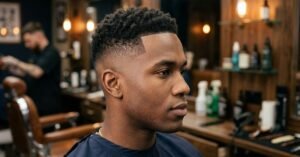
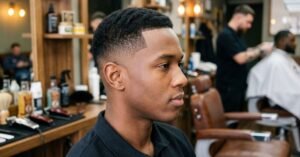
The high taper fade is one of the sharpest, most requested men’s haircuts in barbershops right now. It combines short, tightly blended sides that fade up near the temples with a longer, styleable top, giving you a haircut that looks intentional whether you wear it textured, slicked, or curly. This guide covers everything from the anatomy of the cut to the products, barber terminology, and maintenance schedule that keep it looking fresh between visits.
If you’re trying to decide whether a high taper fade suits your face shape, hair type, or lifestyle, or you just want to walk into your next appointment knowing exactly what to ask for, this page is built to answer that in full.
All Posts on High Taper Fade
Before diving into the full guide, here are related reads worth checking out if you’re comparing fade heights or looking for style inspiration by hair type.
Viral Fade Styles: The Coolest Haircuts Right Now
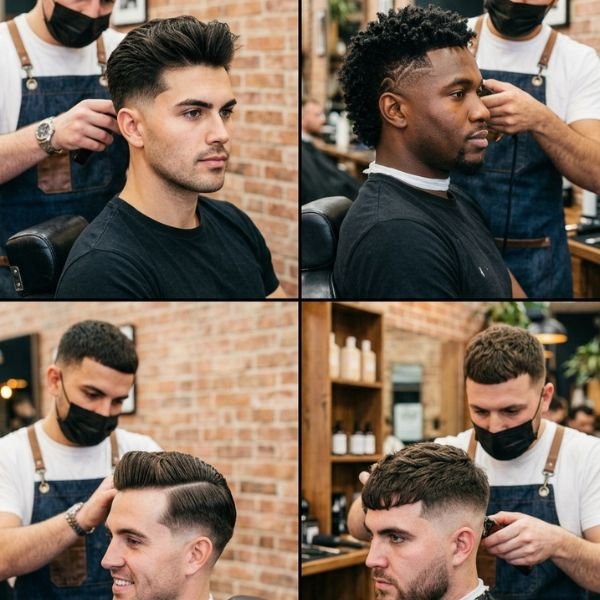
From the burst fade to the drop fade and the mullet fade, social media has turned barbering into a visual sport. These are the fade variations currently trending, and how each one differs from a standard taper.
Low vs Mid vs High Taper Fade: Which One Should You Choose?
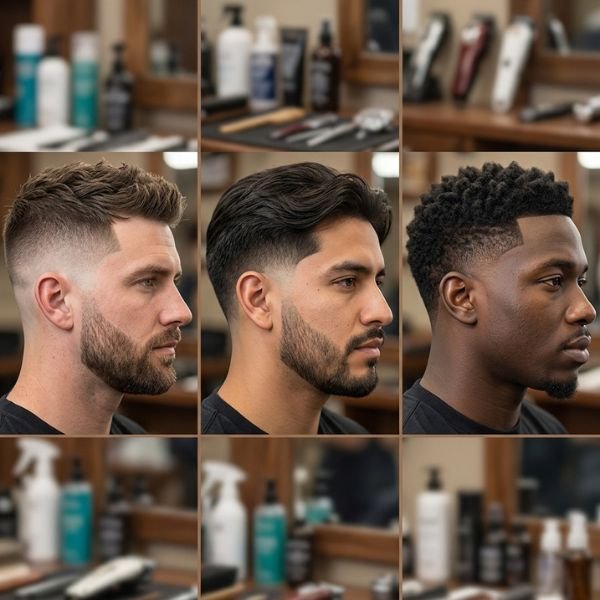
Fade height changes everything about how a haircut reads. Low fades start near the ears, mid fades sit around the temples, and high fades begin above them for maximum contrast. This comparison breaks down which one fits your face shape, job, and hair texture.
Hispanic Low Taper Fade Styles (Clean & Modern Guide)
A look at how low taper fades are styled with textured tops, sharp part lines, and clean edge work, a combination that has become a signature look in many Latino barbershops.
High Taper Fade Haircut Guide: Styles, Pairings & Barber Tips
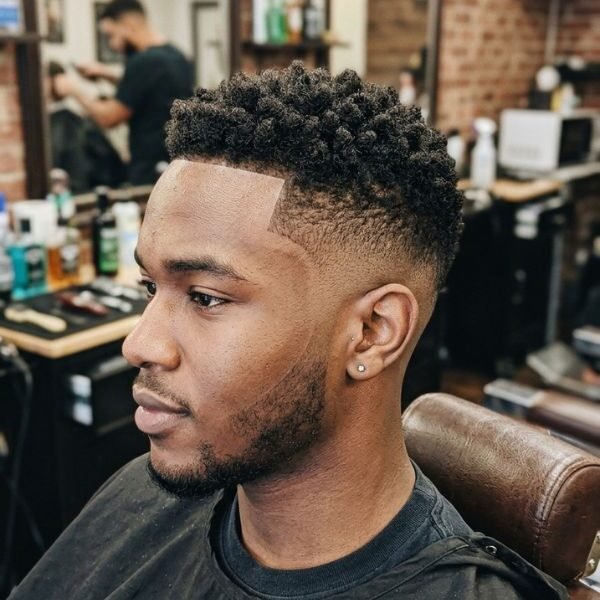
A high taper fade starts its blend near or above the temple line and tapers down to skin or a very short guard length near the neckline and ears. What separates it from a low or mid fade is contrast. Because more of the side hair is removed, whatever you keep on top, whether that’s a pompadour, a textured crop, curls, or a slick back, stands out sharply against the skin.
This cut works well because it’s adaptable. Barbers can pair it with:
- A textured crop for a low-maintenance, everyday look
- A pompadour or quiff for more formal or event-ready styling
- A curly or coily top for natural texture with sharp structure underneath
- A skin fade finish for the boldest possible contrast
The trade-off is upkeep. A high taper fade grows out faster visually than a low fade because the shaved or heavily tapered zone is larger and closer to the crown, so regrowth becomes noticeable sooner.
Historical Evolution and Cultural Context
Tapered haircuts trace back decades, but the modern high taper fade owes its shape to military-influenced flattops and 1980s and 1990s barbershop culture, where clippers began replacing scissors for side work. Hip hop and basketball culture in the 1990s pushed fades into mainstream fashion, and the high and precise skin fade became associated with sharp, confident self-presentation.
Over the last decade, the style has been reshaped again by social media. Barbers now post transformation clips and tutorials that spread specific variations, like the burst fade or the Mohawk fade, globally within days. What used to be regional barbershop knowledge is now searchable and visual, which is part of why fade terminology has become so specific and standardized across cultures and hair types.
Key Styles, Cut Anatomy, and Variations
A high taper fade is built in layers, or zones, that blend into one another:
- The skin or zero zone: the lowest point of the fade, often taken to skin with a foil shaver or a zero-gapped clipper.
- The blend zone: where clipper guards step up gradually, usually moving through several guard lengths to avoid visible lines.
- The transition point: where the fade meets the longer top hair, positioned above the temple for a true high fade.
- The top: left long enough to style, whether that’s a comb-over, textured spikes, curls, or a slicked pompadour.
Popular variations include:
- High skin taper fade, where the sides go all the way to bare skin for maximum contrast
- High taper fade with a hard part, adding a shaved line to define a side part
- High taper fade mohawk, keeping a raised strip of longer hair down the center
- High taper fade with dreads or locs, blending short sides into longer locked hair
- Curly high taper fade, where natural curl pattern is preserved on top
Face Shape and Hair Texture Compatibility Matrix
| Face Shape | Fit for High Taper Fade | Styling Note |
|---|---|---|
| Oval | Excellent | Almost any top length works; the safest face shape for this cut |
| Square | Excellent | Sharp fade lines complement a strong jaw |
| Round | Good | Keep more height on top to elongate the face |
| Diamond | Good | Pair with textured, slightly forward-styled top |
| Rectangular/Long | Use with caution | High contrast can emphasize face length; a low or mid fade may balance better |
| Hair Texture | Compatibility | Notes |
|---|---|---|
| Straight | High | Clean lines, easy to blow-dry into shape |
| Wavy | High | Adds natural texture without much product |
| Curly | Medium to high | Needs curl-defining product to avoid frizz on top |
| Coily/4A to 4B | Medium | Best with a skilled barber; density can make blending harder |
Step-by-Step Styling and Barber Execution Protocol
- Consultation: confirm fade height, guard numbers, and how much length stays on top.
- Clipper-over-comb or clipper work on top: establishes the base length before the fade begins.
- Guard blending: barber works from the lowest guard upward, blending in overlapping passes to avoid harsh lines.
- Foil shave or skin work: for a true skin fade, the lowest zone is shaved clean.
- Line up: hairline, temples, and neckline are edged for a crisp finish.
- Top styling: hair is cut to the desired shape, then styled with the chosen product.
- Final check: barber checks symmetry from multiple angles under bright light.
Essential Products, Formulations, and Styling Tools
- Texture clay: matte finish, strong hold, best for spiked or messy textured tops
- Pomade: adds shine and control, ideal for side parts and slicked looks
- Styling cream: lighter hold, good for natural, wavy movement
- Curl-defining cream: reduces frizz and enhances curl pattern on curly tops
- Sea salt spray: adds texture and volume before blow-drying
Tools worth keeping at home between barber visits include a round brush for blow-drying volume, a wide-tooth comb for curly hair, and a small trimmer for cleaning up neckline and edge regrowth.
Professional Barbershop Secrets and Edge Precision
Experienced barbers rarely fade in one straight pass. Instead, they blend using a series of diagonal, arcing clipper movements, checking the mirror from the side and back constantly. A few details separate an average fade from a sharp one:
- Edges are defined with a straight razor or clipper trimmer, not scissors
- The neckline is squared off or rounded based on natural hair growth pattern, not a fixed rule
- Guard lengths are tested on a small section first before committing to the full blend
- Good barbers reduce clipper pressure near the skin to avoid visible tracking lines
Common Haircut Mistakes and How to Avoid Them
- Choosing too high a contrast for a formal workplace. Ask your barber for a softer blend if you need a conservative look.
- Skipping the consultation. Vague requests like “just fade it” often lead to results you didn’t want.
- Waiting too long between trims. High fades lose their sharp line faster than low or mid fades.
- Using heavy pomade on curly tops. This weighs down curls; use a lighter curl cream instead.
- Not communicating hair growth patterns. Cowlicks and growth direction affect how a fade sits, so mention them upfront.
Seasonal Care and Maintenance Cadences
- Summer: sweat and humidity mean more frequent washing; consider a lighter, matte product to avoid a greasy look.
- Winter: dry indoor heat can dry out the scalp, so a light oil or moisturizing scalp treatment helps between cuts.
- Spring and fall: good seasons to experiment with a slightly higher or lower fade before settling into a summer or winter routine.
- General rule: a high taper fade typically needs a refresh every one to two weeks, compared to three to four weeks for a low taper fade.
Barbershop Communication, Terminology, and Consultation Guide for High Taper Fade
Walking in prepared makes a real difference. Use language like:
- “I want a high taper fade, starting above the temples.”
- “Take the sides down to skin” or “leave a slight shadow” depending on how bold you want it.
- “Blend it so there’s no visible line between the fade and the top.”
- Bring a reference photo. Barbers interpret “high” differently, so a picture removes ambiguity.
Common terms to know: guard number (clipper attachment size), blend (smooth transition between lengths), skin fade (faded to bare skin), line up (edging the hairline), and taper (gradual shortening rather than an abrupt cut).
Blow-Drying Mechanics, Directional Airflow, and Pre-Styling Chemistry
Blow-drying shapes how the top of a high taper fade sits before any product is applied. The basic principles:
- Start with towel-dried, not soaking wet, hair.
- Use a round brush for volume, directing airflow against the direction you want the final shape to fall.
- Finish with a cool shot of air to lock the style in place.
- Apply a lightweight heat protectant if you blow-dry regularly, since repeated heat exposure on top hair can cause dryness over time.
For curly tops, a diffuser attachment on low heat preserves curl pattern better than a direct nozzle, which can cause frizz.
Scalp Health, Follicular Longevity, and Trimming Schedules
Because a high taper fade exposes more scalp than lower fades, scalp care matters more here. A few habits that help:
- Use a gentle, sulfate-free shampoo two to three times a week to avoid drying out exposed skin.
- Apply a light, non-comedogenic oil to prevent flaking, especially in winter.
- Avoid excessive product buildup on the fade zone, which can clog follicles over time.
- Stick to a consistent trim schedule (every one to two weeks) rather than waiting until the line has fully grown out, since consistent short trims are gentler on the scalp than aggressive re-fading.
Summary and Personal Aesthetic Philosophy
The high taper fade earns its popularity because it’s both bold and flexible. It reads as confident and modern while still leaving room for personal expression on top, whether that’s curls, a pompadour, or a clean side part. The trade-off for that sharp contrast is more frequent maintenance, so it suits people who are comfortable booking regular barber visits. Ultimately, the best version of this cut is the one shaped around your face, your hair texture, and how much upkeep fits your routine, not just what’s trending this month.
Frequently Asked Questions
What makes a fade “high” instead of low or mid?
A high taper fade begins its blend above the temples, while mid fades start around the temples and low fades begin near the ears.
How often do I need to get a high taper fade touched up?
Most people need a refresh every one to two weeks since the sharp contrast grows out faster than lower fades.
Is a high taper fade good for curly or coily hair?
Yes, though it works best when the top is left with enough length for a skilled barber to blend the density evenly into the fade.
Can I wear a high taper fade in a professional workplace?
It depends on the office. Conservative environments may prefer a softer blend or a mid fade for a subtler look.
What products work best for styling the top of a high taper fade?
Texture clay and matte paste suit spiked or messy tops, while pomade works better for sleek, side-parted styles.
Does a high taper fade suit every face shape?
Oval and square face shapes suit it most easily. Round and long face shapes can still wear it well with the right amount of length left on top.
What should I tell my barber to get a high taper fade?
Ask for the fade to start above the temples, bring a reference photo, and specify whether you want it faded to skin or left with a slight shadow.