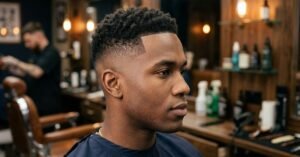
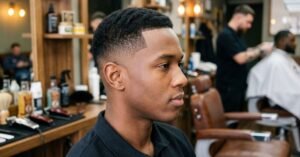
Getting a haircut used to be simple. Buzz it short, comb it over, done. Not anymore. Walk into any barbershop today and you will hear words like “skin fade,” “burst fade,” and “drop fade” thrown around like everyone already knows what they mean.
If you are a parent trying to explain what your son wants, or a teen trying to explain it yourself, this guide clears up the confusion. No jargon, no barber-only slang. Just plain answers about fade haircuts for kids and teens, how to pick one, and how to keep it looking sharp between trims.
What Is a Fade Haircuts?
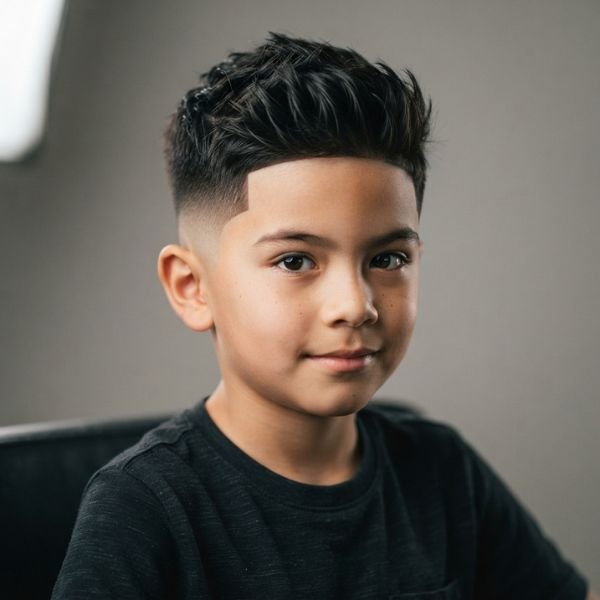
A fade haircut is a style where the hair gradually gets shorter as it moves down the head, from longer hair on top to very short or skin level near the ears and neckline. There is no harsh line. Instead, the hair blends smoothly from one length into the next, almost like a shadow fading into the wall.
This blending is what separates a fade from a regular short haircut. A basic buzz cut is one length all over. A fade changes length in stages, using clippers with different guard sizes, so the transition looks smooth rather than choppy.
Fades work for almost any hair type, including straight, wavy, curly, and coily hair. That is a big reason they have become the go-to choice for boys of nearly every age. They also grow out better than many other cuts, since there is no sharp line to lose its shape.
Barbers usually build a fade in three parts:
- The top: left longer for styling, whether that is spiky, messy, curly, or slicked back
- The blend zone: the middle section where the hair transitions in length
- The base: the shortest point, which can be very short or shaved down to the skin
Once you understand these three parts, every fade style on this list will make a lot more sense.
Fade Types Explained in Simple Words
Not every fade looks the same. The difference usually comes down to where the fade starts on the head. Here is a breakdown of the most requested fade types for kids and teens, explained without the confusing barber talk.
Low Fade
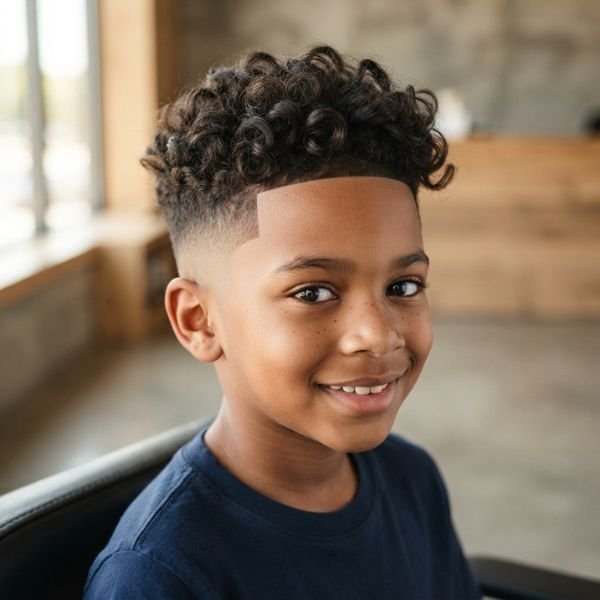
A low fade starts right above the ears and blends into the hair near the neckline. It is the gentlest fade on this list, since most of the head keeps its length and only the bottom edge gets short.
This is often the first fade barbers recommend for younger boys or for kids trying a fade for the first time. It looks neat and tidy without being too dramatic, which makes it a safe pick for school and family photos alike.
Mid Fade
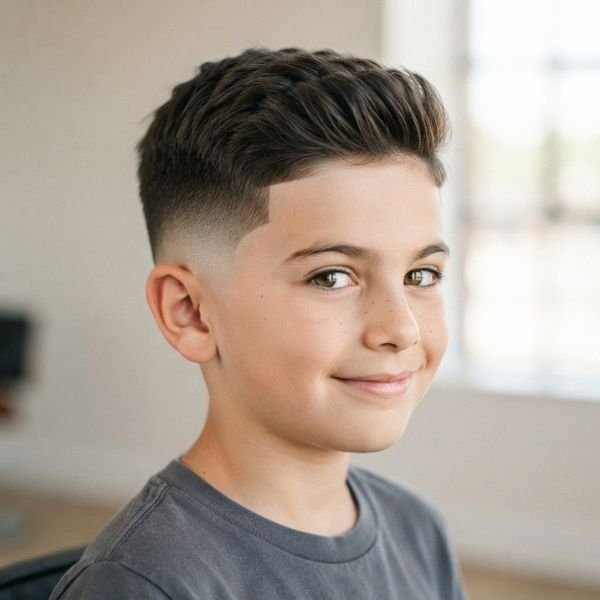
A mid fade begins around the temple area, roughly where the arm of a pair of glasses would sit. It sits right in the middle between subtle and bold, which is exactly why so many boys choose it.
If your son cannot decide between something plain and something flashy, a mid fade is usually the answer. It gives enough contrast to look intentional and stylish without going all the way to the extreme.
High Fade
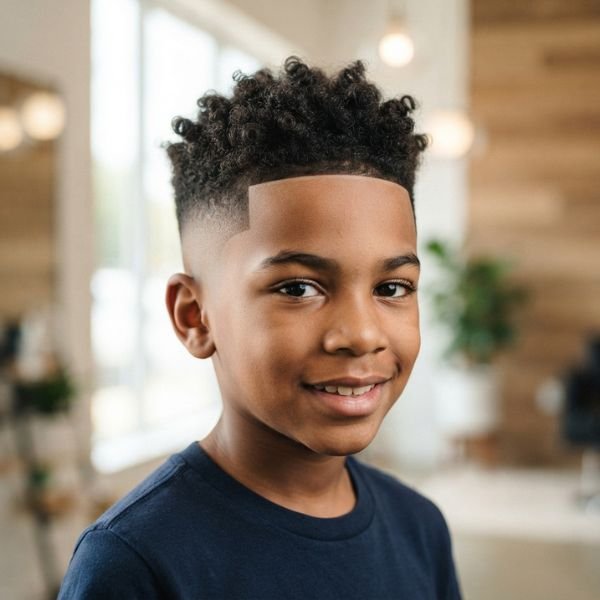
A high fade starts much higher on the head, closer to the top of the ears or even above them. This creates a stronger contrast between the short sides and the longer hair on top.
High fades tend to suit boys who want a bolder, more grown-up look. They also help control thick or bulky hair, since more of the head is kept short. This style holds its shape a little longer between visits to the barber.
Skin/Bald Fade
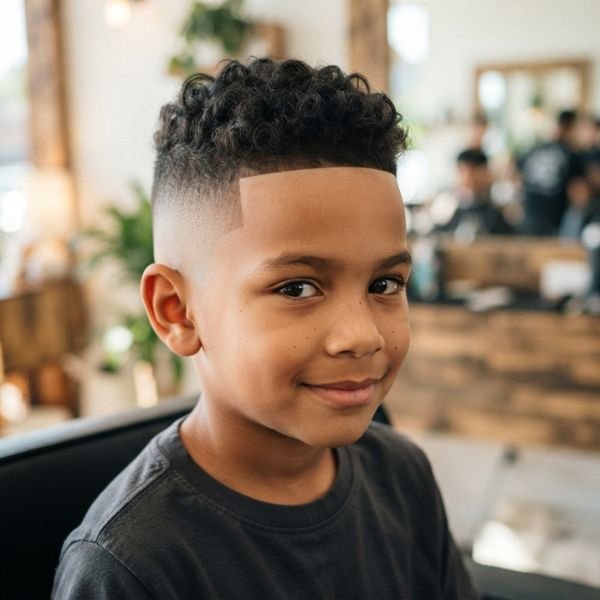
A skin fade, sometimes called a bald fade, takes the hair all the way down to skin level at the base of the fade. It is the sharpest and most defined version of a fade haircut.
This style works with any top style, from curly hair to a short crop, and it always looks clean. Because it fades to bare skin, it does need more frequent touch ups to stay looking crisp, usually every two to three weeks.
Taper Fade
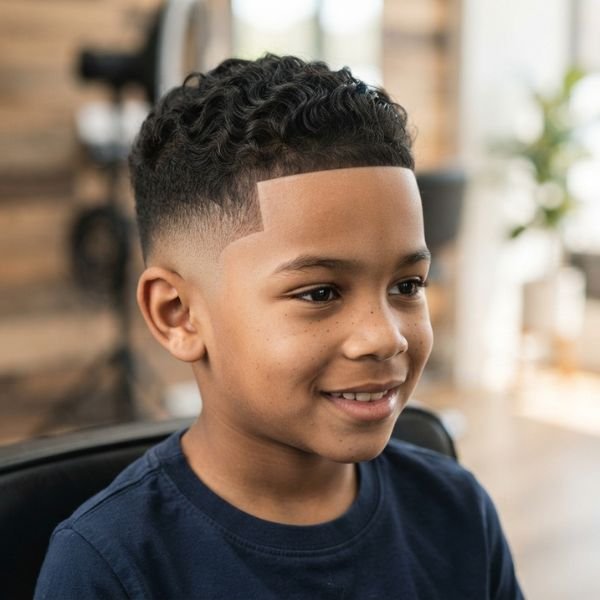
A taper fade is the mildest fade of them all. Only the sideburns and the neckline are faded, while the rest of the sides stay fuller and closer to the natural hair length. There is no dramatic short zone anywhere on the head.
This is often the very first fade a barber suggests for a younger child, since it is forgiving and does not commit to a bold new look. It is a classic, low maintenance choice that never really goes out of style.
Drop Fade
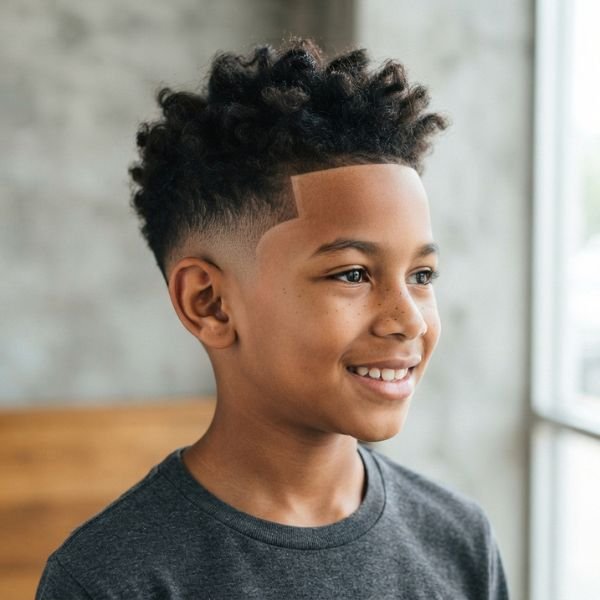
A drop fade follows a curve that dips down behind the ear instead of running in a straight line across the head. That curved path adds shape and a bit of personality to an otherwise standard fade.
It works especially well for boys with curly or longer top hair, since the curve gives the whole haircut a more detailed, intentional look. Curly fade haircut specialists often recommend this style for textured hair.
Burst Fade
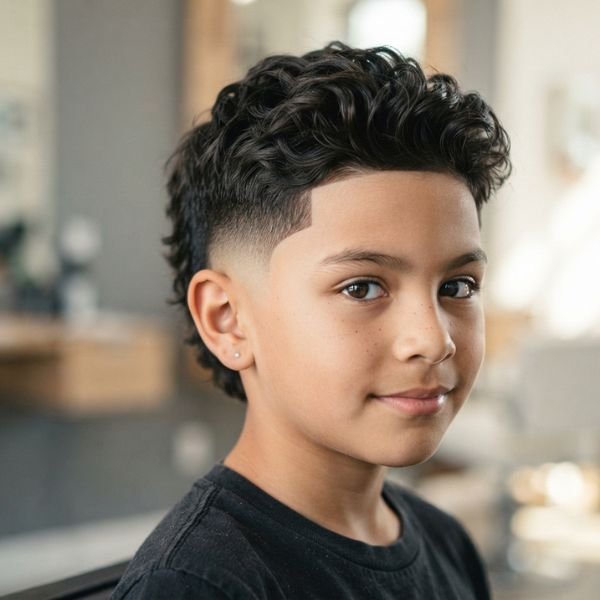
A burst fade wraps around the ear in a rounded shape instead of cutting straight across. It bursts outward from the ear, which is where the name comes from.
This fade is a favorite for boys rocking a faux hawk, a mohawk, or a modern mullet on top. It is not the most requested style for very young kids, but teens who like to stand out tend to gravitate toward it.
Kids Fade Haircuts (Ages 4–10)
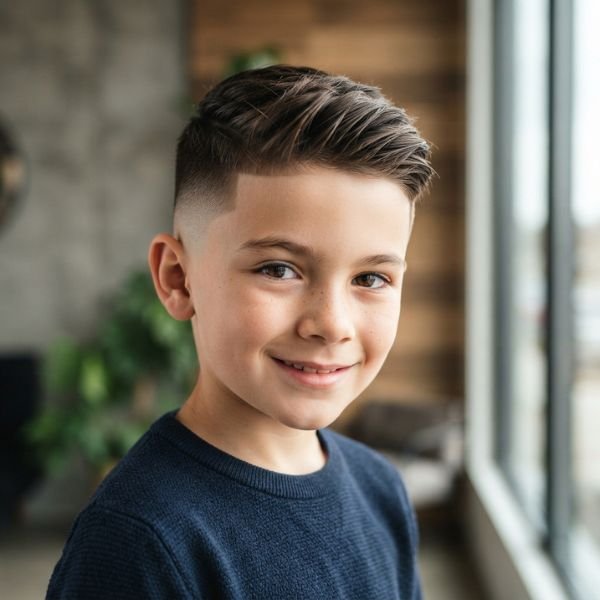
Most barbers agree that age four or five is a reasonable starting point for a first fade, mainly because kids need to sit still long enough for the detailed clipper work involved. Before that age, the buzzing sensation can feel overwhelming, so gradual introduction usually works best.
For younger kids, low fades and taper fades are the safest starting points. They require less precision to maintain, they are forgiving if a child squirms during the cut, and they do not draw too much attention at school.
Some popular choices in this age group include:
- Low fade with a short, simple top: Easy to manage, requires almost no styling, and works for straight or wavy hair
- Taper fade with a natural top: A gentle, classic look that barbers often recommend for first-timers
- Low fade with curls left on top: A great way to show off natural texture while keeping the sides tidy for school
- Buzz cut fade: The simplest, lowest maintenance option, ideal for very active kids or first haircuts
Parents often pick fades for young kids because they need less daily styling. Active children who do not want to fix their hair every morning benefit the most, and fades also keep hair out of the eyes during play, sports, and school activities. As an added bonus, fades grow out more evenly than many other cuts, meaning fewer emergency trips to the barbershop.
For this age group, comfort matters just as much as style. A barber experienced with kids will use reassurance, a slower pace, and sometimes a phone or toy as a distraction to keep the experience positive. A good first fade experience often decides whether a child is comfortable getting haircuts for years to come.
Teens Fade Haircuts (Ages 11–17)
Once boys hit their tween and teen years, they usually want more say in their haircut. This is where fades get more creative, more textured, and a lot more expressive. Teens often want a stylish and trendy top paired with a sharp fade, and they are far more willing to experiment than younger kids.
Here are eight of the most requested teen fade styles right now.
1. High Fade with Textured Top
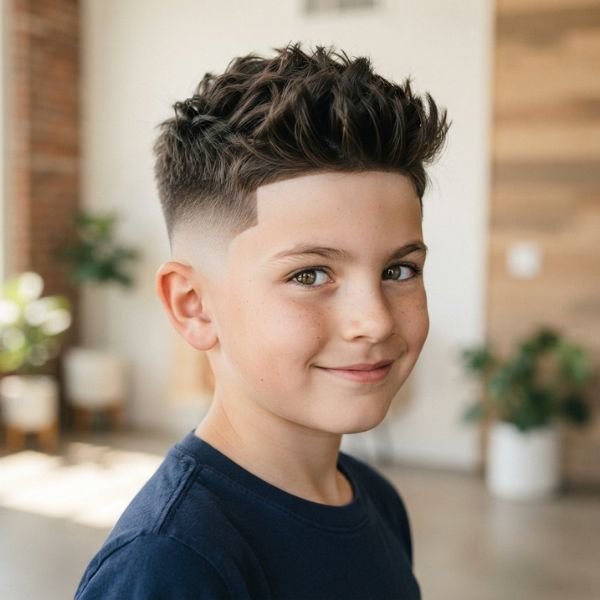
Teenagers usually want a stylish and trendy top paired with a sharp, high contrast fade. This combination pairs closely cropped sides with a textured, slightly messy top that takes seconds to style with a small amount of product. It works well for straight and wavy hair and gives an instantly grown-up look.
2. Curly High Top Fade
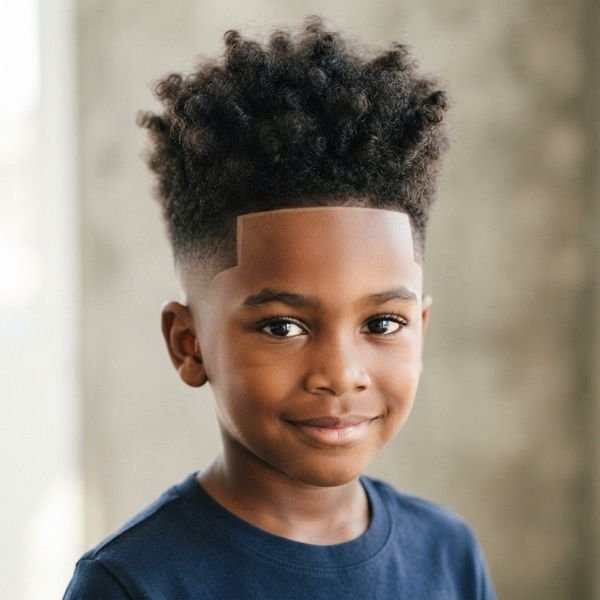
This style keeps the natural curl pattern intact on top while the sides are cut into a high fade. It prevents curly hair from looking bulky or unruly, since the short sides balance out the volume on top. It is one of the most popular requests among curly haired teens because it shows off natural texture instead of hiding it.
3. Burst Fade Faux Hawk
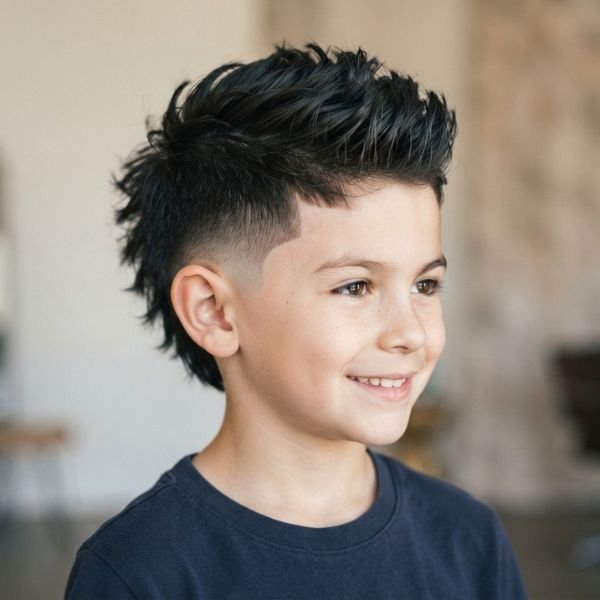
A burst fade paired with a faux hawk gives a bold, edgy look without committing to a full mohawk. The rounded fade around the ear adds shape, while the raised strip of hair on top gives the style real personality. This is a favorite for teens who want to stand out at school or on social media.
4. Undercut Fade
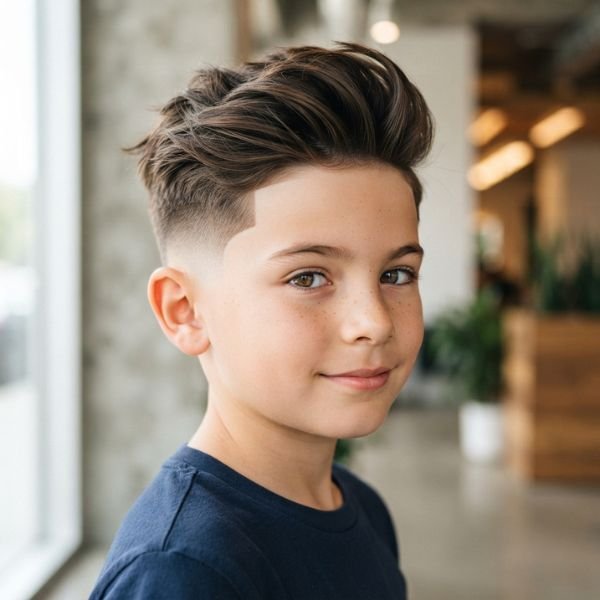
The undercut fade keeps a sharp, disconnected line between the short sides and the longer top, though it can also be blended for a softer transition. It pairs well with a side part, a slick back, or even a longer, swept top. This style has stayed popular for years because it looks polished without much daily effort.
5. Drop Fade with Flow
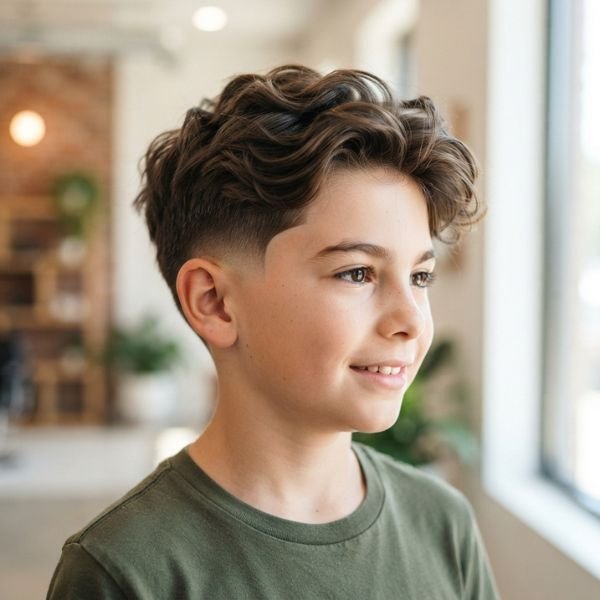
This combines the curved drop fade with longer, flowing hair on top, a style that has become extremely popular thanks to sports and social media trends. The natural movement on top pairs nicely with the curved fade line, creating a relaxed but stylish overall look.
6. Comb Over Fade
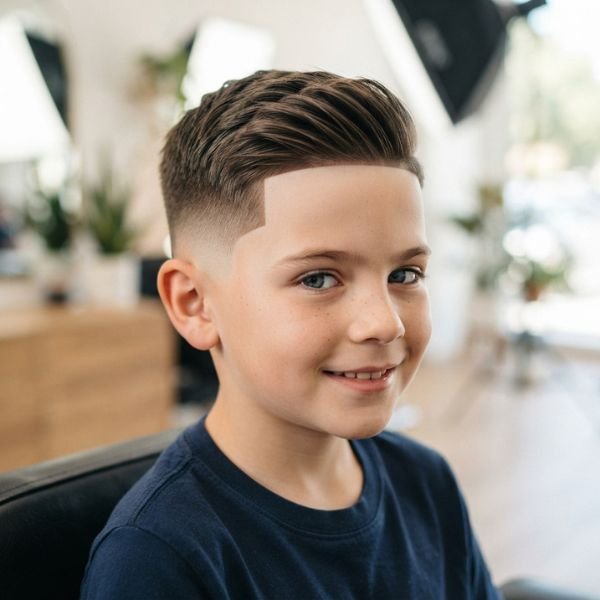
A classic side part paired with a fade on the sides, the comb over fade sits somewhere between formal and casual. It works for school, family events, and everyday wear, and it can be dressed up or down depending on how much product is used.
7. French Crop Fade
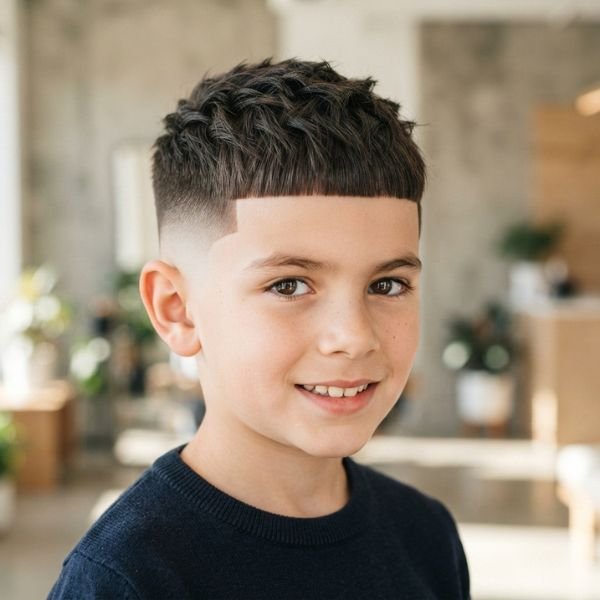
The French crop pairs a fringe cut straight across the forehead with faded sides. It is a low maintenance style that has surged in popularity because it looks intentional without needing much daily styling, just a quick comb through in the morning.
8. Messy Top Fade
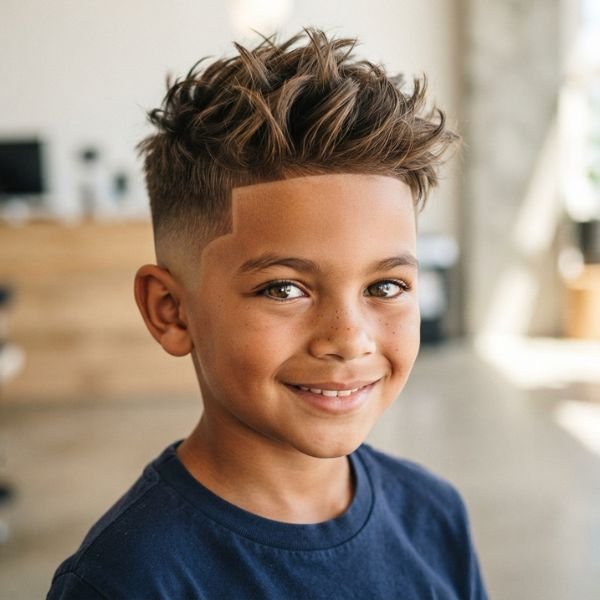
This style pairs any fade on the sides with a deliberately tousled, textured top. It gives a relaxed, effortless look that still reads as put together, and it is forgiving for teens who do not want to spend much time in front of the mirror each morning.
Choose the Best Fade for Face Shape:
Picking a fade that flatters your face shape makes a bigger difference than most people realize. Here is a simple breakdown:
- Round face: Choose a high fade or skin fade with extra volume or texture on top. Height on top helps elongate the face, while tight sides avoid adding extra width.
- Square face: A drop fade or mid fade works well, since it complements strong jaw and cheekbone structure. A slightly textured or messy top softens the angles without hiding them.
- Oval face: Almost any fade works here, since an oval face shape is naturally balanced. A mid fade, taper fade, or skin fade with texture on top are all safe, stylish choices.
- Diamond face: A high fade with a bit of fringe or volume on top balances a narrower jawline and highlights the cheekbones.
- Heart-shaped face: A textured crop or side-swept top paired with a low or mid fade helps balance a wider forehead against a narrower chin.
If you are unsure which face shape your child or you have, a barber can usually tell within seconds and recommend a fade that suits it.
Styling Tips (Quick and Easy):
- Use a lightweight styling cream or matte clay for textured or messy tops, since heavy gels can look greasy on kids and teens
- Style hair while it is slightly damp for easier control, then let it air dry or use a blow dryer on a low, cool setting
- For curly tops, use a curl-defining cream instead of a comb to avoid frizz
- Keep product use minimal for younger kids; a small amount goes a long way
- A boar bristle brush works well for smoothing comb over and side part styles
Maintenance Tips:
- Skin fades and high fades need a touch up every two to three weeks to stay sharp
- Low fades and taper fades can usually stretch to three to four weeks between visits
- Ask the barber to keep clipper guard notes on file so every visit matches the last one
- Wash hair two to three times a week with a gentle shampoo to avoid drying out the scalp
- Trim the top regularly too, not just the fade, to keep the whole style balanced
Conclusion:
Fade haircuts have become the default choice for boys of nearly every age, and it is easy to see why. They are versatile, low maintenance, and adaptable to any hair type, whether your son is four years old and sitting still for his very first haircut or sixteen and asking for a burst fade faux hawk before picture day.
The key is matching the fade to the child’s age, hair type, comfort level, and face shape rather than just picking whatever looks trendiest online. Start gentle with low fades and taper fades for younger kids, and let older boys experiment with bolder styles like skin fades and burst fades as they grow more comfortable in the barber’s chair.
Whichever style you choose, a clear conversation with the barber, using the terms explained in this guide, will get you a much better result than pointing at a photo and hoping for the best.
Frequently Asked Questions
What age can a kid get a fade haircut?
Most barbers recommend starting around age four or five, once a child can sit still long enough for detailed clipper work.
How often does a fade haircut need a touch up?
Skin fades and high fades usually need a trim every two to three weeks, while low fades and taper fades can stretch to three or four weeks.
Is a fade haircut good for curly hair?
Yes, fades work well with curly hair. A drop fade or high top fade keeps the sides neat while letting natural curls stand out on top.
What is the easiest fade for a first haircut?
A low fade or taper fade is the easiest and most forgiving choice for a child’s first fade, since it is subtle and grows out evenly.
Can a fade haircut suit any face shape?
Yes, though certain fades flatter certain shapes more. Round faces suit high fades with volume on top, while oval faces can wear almost any fade style.
Do fade haircuts damage hair?
No, fades are simply a clipper cutting technique and do not damage hair. Regular trims actually help keep hair looking healthier overall.