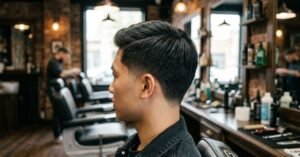
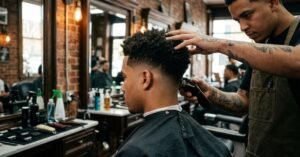
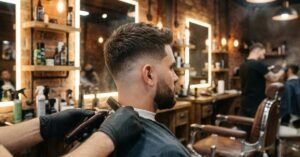
A middle part low taper fade pairs a center split on longer hair with sides that shorten gradually from just above the ear. It looks relaxed on top and clean at the edges. That balance is why it works in an office, at a gym, and on a night out.
This guide covers what the cut is, who it suits, and how long the top should be. You will also get a barber script, product picks, a home styling routine, and a real upkeep schedule.
What is a middle part low taper fade?
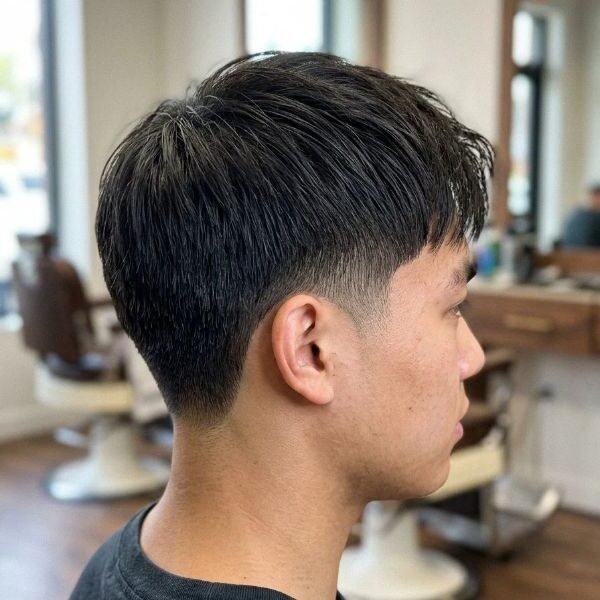
A middle part low taper fade is a men’s haircut with two clear parts. The top is long enough to split straight down the center. The sides and back taper low, starting around the ears and neckline.
Here is what each piece means:
- Middle part: The hair is divided down the center and falls to both sides. It needs enough length and weight at the crown to stay put.
- Low taper: The sides shorten gradually and keep a little hair at the shortest point. A taper is softer than a skin fade.
- Together: The tight sides frame the face, and the top gets all the attention.
Why it’s popular in 2026
Style guides this year keep naming low tapers and flowing, textured tops among the strongest men’s cuts. Three reasons explain the appeal.
- It grows out well. A low taper blends back in slowly, so you avoid an awkward ledge.
- It looks current but not extreme. The part nods to 90s hair without the dated bowl look.
- It is easy to wear. Most men finish styling in a few minutes.
It also suits more settings than a high fade. A soft taper looks fine in a conservative workplace.
There are trade offs. A middle part low taper fade shows your hairline clearly, so thinning at the temples is more visible. It also needs regular taper refreshes to look intentional. If either point worries you, a slightly softer part or a longer fringe solves most of it.
Best face shapes
The part changes how your face reads. A middle part low taper fade frames the center of the face, so the shape of your jaw and forehead matters more than with a side part. Use this as a starting point, then adjust with your barber.
- Oval: The best fit. Most lengths and volumes work.
- Round: Add height at the roots and keep the sides tight to create length.
- Square: Soft, slightly rounded volume near the part eases a strong jaw.
- Heart: Keep some width at the temples to balance a narrow chin.
- Long or oblong: Keep the top shorter and avoid too much height.
- Diamond: The part and side flow balance wide cheekbones.
How it looks on straight, wavy, and curly hair
Texture decides how much effort the cut needs. A center part exposes the hairline, so the right prep matters.
Straight hair
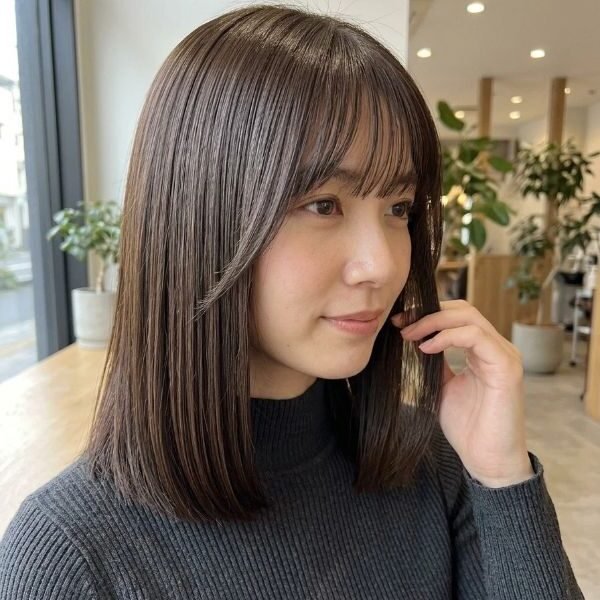
Straight hair holds the cleanest part line. It can fall flat, so ask for light layering. Use a light pomade or matte clay on damp hair and blow dry with a comb.
Wavy hair

Wavy hair is the easiest match. The natural bend gives the flow without much product. Use a light texture spray and let it air dry.
Curly hair

Curls add volume on both sides of the part. Keep at least four inches on top so the curls can form. Apply curl cream to wet hair and avoid brushing once it dries.
Thick hair
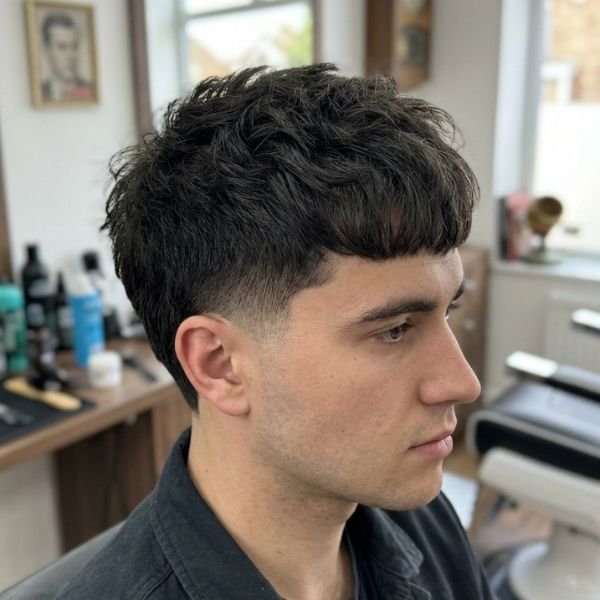
Thick hair holds shape, but it can look heavy. Ask for point cutting to remove bulk, and keep the sides tight.
Fine or thin hair

Fine hair needs a short to medium top, around three inches. Use a volumizing mousse or powder to lift the roots so the part shows.
Choosing the right top length
| Length | Result | Best for |
|---|---|---|
| 2 to 3 inches | Subtle part, low effort | Fine hair, busy mornings |
| 3 to 4 inches | The common choice, falls to the cheekbone | Most hair types |
| 4 inches and up | Full curtain flow | Wavy and curly hair |
How to ask your barber
Clear words prevent surprises. Try this script:
- “I want a low taper starting just above the ears.”
- “Blend it into the neckline. No hard line.”
- “Leave about three to four inches on top for a center part.”
- “Point cut the top for texture.”
Barbers often use a guard 1 or a shadow finish at the nape and blend up with a 2 or 3, though every barber works a little differently. You do not need the numbers. Say whether you want a natural taper or a skin finish.
Extra tips:
- Bring a photo that shows the part and the side.
- Tell your barber where your hair naturally splits. A cowlick near the front can pull the part off center.
- If you wear a beard, ask the barber to blend it into the taper so the sideburn has no gap.
- Ask how the cut will look in three weeks, not just on the day.
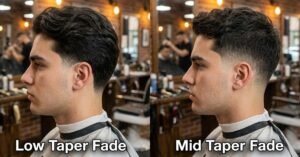
Low taper vs mid taper fade
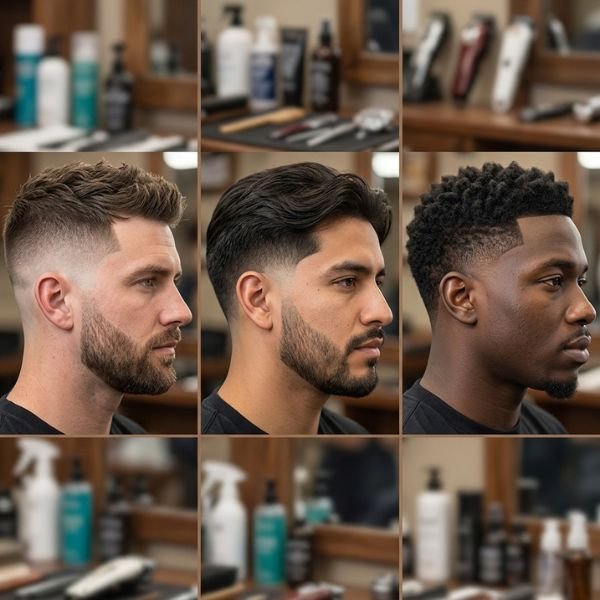
The difference is where the blend starts.
- Low taper: Starts near the ears and neckline. It is subtle and grows out gently.
- Mid taper: Starts around the temple. It adds contrast and makes the top look fuller.
Pick the low version if you want a softer, more classic look. Pick the mid version if you want sharper contrast. Both work with a center part.
Styling products that work
Pick one or two products to style a middle part low taper fade. More does not mean better. A pea sized amount is enough for most heads, and thick hair may need a little extra.
- Lightweight cream: Control with a natural finish.
- Matte clay: Hold without shine, good for thick or straight hair.
- Sea salt spray: Texture for wavy hair.
- Water based pomade: A defined part for sleek looks.
- Mousse: Volume for fine hair and curls.
Avoid heavy gels. They clump the hair and make the part look stiff.
How to style it at home
Styling takes about five minutes.
- Towel dry until the hair is damp, not wet.
- Find your part with a comb and draw a straight line down the center.
- Blow dry the hair outward from the part, using your fingers.
- Warm a small amount of product in your palms.
- Work it through from roots to ends.
- Finger comb to loosen it so it looks natural.
- Set with a light hold spray if needed.
If the part keeps falling to one side, blow dry that section in the opposite direction first. Comb the part into place while the hair is still damp, then let the dryer set it.
Common mistakes to avoid:
- Using too much product, which weighs the part down
- Forcing a part where the hair does not naturally split
- Brushing curls dry, which breaks up the pattern
- Skipping the dryer on thick hair, which leaves the part uneven
How often to maintain it
The taper loses its shape before the top does.
- Taper cleanup: Every 2 to 4 weeks.
- Top trim: Every 6 to 8 weeks.
- Neckline and sideburns: Tidy with a trimmer between visits.
- Shampoo: Two to three times a week, with conditioner on the ends.
Skip trims for too long and the taper turns into a rounded shape. Then the part loses its frame.
A few habits protect the cut between visits:
- Condition the ends, since the top is the oldest hair.
- Rinse out product fully before bed.
- Re-comb the part each morning while the hair is damp.
- Keep a trimmer handy for the neckline, but leave the taper line to your barber.
A middle part low taper fade ages well when the sides stay tidy. That is the one rule worth following.
Variations to try
Pick the top style first. The low taper stays the same.
Classic
A neat center part with smooth, combed sides. It is polished and works for work settings.
Textured
The barber point cuts the top so pieces separate. Use matte clay for a lived in finish.
Curly top
Let curls fall naturally on both sides of the part. Curl cream defines the shape.
Wavy curtain
Longer waves frame the face like curtains. Use sea salt spray and air dry.
Longer fringe
The front falls toward the eyebrows. It suits men who want a relaxed look and a softer hairline.
Subtle skin finish
The shortest part of the taper goes close to skin. It looks sharper, but it needs more frequent visits.
Frequently asked questions
What is a middle part low taper fade?
It is a center parted men’s cut with sides that taper gradually from just above the ears.
How long should the top be?
About 3 to 4 inches works for most men. Fine hair can go shorter, and curls need more.
Does it work on straight hair?
Yes. Straight hair holds a crisp part, but add layers and a light product to avoid a flat look.
Is it professional enough for work?
Yes. A soft taper and a neat part look polished in most offices.
How often should I get it trimmed?
Refresh the taper every 2 to 4 weeks and trim the top every 6 to 8 weeks.
What is the difference between a low taper and a mid taper?
A low taper starts near the ears and is subtle. A mid taper starts at the temple and is bolder.
Can I get this cut with a receding hairline?
Often yes. A longer fringe or a slightly softer part can balance the temples.
Conclusion
A middle part low taper fade keeps things simple. The sides stay neat, and the top has room to move. It works on straight, wavy, and curly hair because the barber can adjust the length and texture.
Choose your top length first for your middle part low taper fade, bring a photo, and tell your barber where the taper should start. Style it with a little product, and book your touch ups every few weeks. Do that and the cut will look sharp every day.