
The short answer: a low fade blends the sides gradually and starts just above the ear, so it looks soft and polished.
An undercut fade keeps the sides very short and creates a sharper, more dramatic contrast with the top. Choose the low fade for a subtle, versatile cut.
Choose the undercut fade for a bold, high-contrast statement.
Both cuts are barbershop staples, and they get mixed up all the time. Barbers use “fade” and “undercut” as if they were interchangeable, but they describe different techniques.
This guide explains how each cut works, how they differ, and which one suits your face shape and hair type. You will also get a script to take to your barber.
What Is a Low Fade?

A low fade is a haircut where the hair on the sides and back gets gradually shorter as it moves down toward the ears and neckline.
The fade starts low, usually about an inch above the ear, and follows the natural hairline around the ear to the nape.
Barbers create it with clippers and guard attachments, moving from longer to shorter settings.
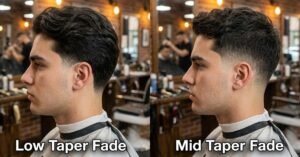
The blend is smooth, with no visible line. Some versions end in bare skin (a low skin fade or low bald fade). Others stop at a very short stubble length (a low taper fade).
Key traits of a low fade:
- Starts just above the ear and stays close to the hairline
- Keeps most of the side hair intact
- Creates a soft gradient rather than a hard edge
- Works with short, medium, and long hair on top
How it looks:
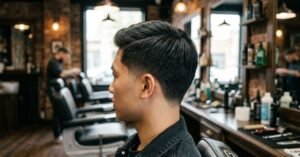
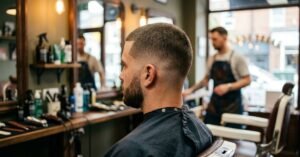
From the front, a low fade looks clean and understated. The sides look neat, but the cut does not draw attention to itself. From the side, you see a light shadow around the ear and a tidy neckline.
Because the fade stays low, most of the head keeps its hair. The result is a natural, balanced shape. Pair it with a textured crop, side part, quiff, or slick back, and it looks equally at home in an office or on a night out.
Why people choose it?
People pick the low fade because it is safe without being boring. Here is why it stays popular:
- It looks professional. The subtle contrast suits conservative workplaces.
- It is versatile. It works with almost any top style, from a crew cut to a longer pompadour.
- It grows out gracefully. A low fade looks acceptable for longer than a high-contrast cut.
- It is beginner friendly. If you have never had a fade, this is the easiest place to start.
- It suits most people. The soft blend flatters a wide range of head shapes.
What Is an Undercut Fade?

An undercut fade combines two techniques. The undercut is a disconnected cut, where the sides and back are clipped very short and the top stays much longer, with no gradual transition between them.
The fade adds a gradient on the sides so the shortest part blends into the skin.
In practice, the sides go from skin or a very short length up to a clear line where the longer top hair begins. That line is what makes the style feel bold.
The top usually stays noticeably longer, often two to four inches or more, so you can style it up, back, or to the side.
Key traits of an undercut fade:
- Sides are cut much shorter than the top
- A visible contrast or “shelf” between the two lengths
- Can start at a low, mid, or high point on the head
- Best when the top has enough length and volume
How it looks:
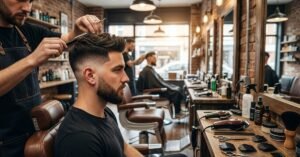
An undercut fade looks sharp and modern. The short sides make the top hair stand out, which creates a strong, structured silhouette. Slicked back, it looks polished. Textured and messy, it looks edgy.
Because the contrast is stronger, the cut draws more attention to your hairstyle and to your jawline. It photographs well, which is one reason it dominates social media.
Key Differences (Simple Table)
| Feature | Low Fade | Undercut Fade |
| Fade start point | Just above the ear | Low, mid, or high |
| Contrast | Soft and subtle | Sharp and dramatic |
| Transition | Gradual blend | Blend plus a clear line |
| Top length | Short to long | Medium to long, usually longer |
| Style feel | Classic, professional | Bold, trendy |
| Barber visits | Every 3 to 4 weeks | Every 2 to 3 weeks |
| Best for | Work, everyday wear | Statement looks, styling lovers |
| Difficulty to pull off | Easy | Moderate |
Face Shape Guide:
Your face shape affects which cut looks best. Use this as a starting point, then adjust with your barber’s advice.
Round Face:
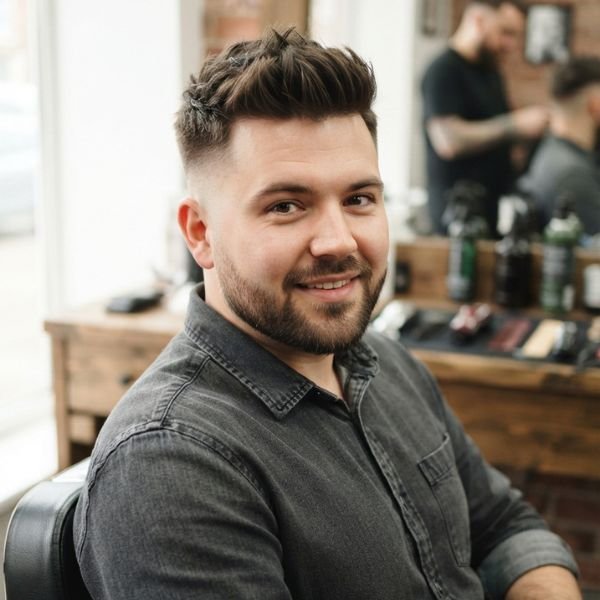
Round faces are about as wide as they are long, with soft angles. The goal is to add height and definition.
Best pick: undercut fade. The short sides slim the face, and a longer top adds vertical height. Try a quiff or textured pompadour. Keep the sides tight and the top lifted.
A low fade also works if you prefer subtlety, but style the top upward rather than flat.
Square Face:
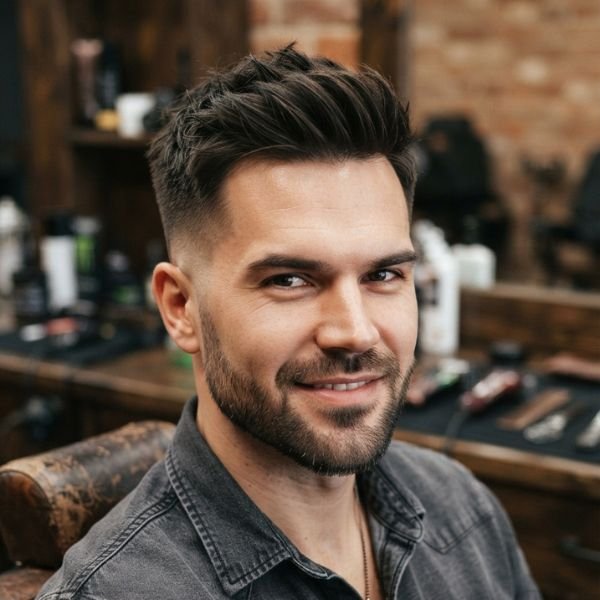
Square faces have a strong jaw and a broad forehead. The cut should complement those angles rather than fight them.
Best pick: low fade. It keeps the look balanced and does not overpower a strong jawline. A short textured top or side part suits it well.
An undercut fade can work too, especially with a slicked back top. Just avoid a very boxy shape on top.
Read more: Fade Haircuts
Oval Face:

Oval faces are balanced and proportional, so almost anything works.
Best pick: either. The low fade gives a refined look, while the undercut fade adds edge. Choose based on your personality and how much styling time you want.
Heart or Diamond Face:

Heart and diamond faces have a wider forehead or cheekbones with a narrower chin. The aim is to soften the upper face and keep the sides from looking too severe.
Best pick: low fade. It keeps some fullness at the sides and avoids exaggerating the width up top. Pair it with a side-swept fringe or a textured crop to soften the forehead.
If you want an undercut fade, keep the top length moderate and avoid tall, heavy volume.
Long/Rectangular Face:

Long faces need width, not extra height. Too much vertical volume makes the face look longer.
Best pick: low fade. Keep the top short to medium and avoid a tall quiff. A side part or a forward-styled fringe adds width and shortens the face visually.
An undercut fade is harder to wear here, because tight sides can make the face look narrower.
Read more: Low Taper Fade with Beard for Black Men: Best Styles and Grooming Tips
Hair Type Guide
Hair texture changes how each cut behaves. Here is what to expect.
Straight hair

- Low fade: Clean and easy. Straight hair shows the gradient clearly.
- Undercut fade: Works well, but fine straight hair can look flat on top. Ask for texture.
Wavy hair

- Low fade: An excellent match. The waves add natural movement on top.
- Undercut fade: Looks great when you leave enough length for the waves to show.
Curly hair

- Low fade: Very popular, and a strong base for a curly top or twists.
- Undercut fade: Works well. The contrast makes curls look defined and intentional.
Thick hair

- Low fade: Reduces bulk at the sides without removing too much.
- Undercut fade: A smart choice for thick hair. Removing weight at the sides makes the top easier to style.
Thin or fine hair

- Low fade: The safer option. It keeps the sides looking fuller.
- Undercut fade: Use with care. High contrast can make thin hair look sparse on top.
Coily or Afro-textured hair
- Both cuts work very well. A low fade with a sharp line-up is a classic. An undercut fade highlights the volume on top.
Final Recommendation:
Here is a quick way to decide:
- Pick a low fade if you want a polished, low-effort cut that works everywhere, or if this is your first fade.
- Pick an undercut fade if you enjoy styling your hair and want strong contrast.
- Pick a combination if you want a bit of both (see the FAQ below).
Before you sit in the chair, bring a photo and use clear language. For example: “I would like a low fade with a skin finish, and I want to keep the top about three inches with texture.”
Specific instructions prevent most haircut disappointments.
One tip on upkeep: fades look their best in the first two weeks. Book a touch-up every three to four weeks for a low fade and every two to three weeks for an undercut fade.
Use a light matte paste or clay on top, and moisturize your scalp if the skin shows through.
Read more: Low Taper Fade for Curly Hair: A Simple Style Guide for Men
Frequently Asked Questions
Which is better: a low fade or an undercut fade?
Neither is better overall. A low fade suits a subtle, professional look, while an undercut fade suits a bold, high-contrast style.
Is a low fade easier to maintain than an undercut fade?
Yes. A low fade grows out more softly and usually needs a trim every three to four weeks, while an undercut fade shows regrowth faster.
Which haircut is best for a round face?
An undercut fade is usually best for a round face. The short sides slim the face and the longer top adds height.
Can I get an undercut fade with curly or thick hair?
Yes. Curly and thick hair both work well with an undercut fade, because removing side bulk makes the top easier to style.
Can I combine a low fade with an undercut?
Yes. Ask for a low fade on the sides with a longer, disconnected top. This gives you the low fade’s subtle blend and the undercut’s clear contrast.
Conclusion
The undercut fade vs low fade choice comes down to contrast and effort.
A low fade is the classic, flexible option that fits most faces, hair types, and workplaces. An undercut fade is the bolder choice for anyone who wants their hairstyle to stand out.
Consider your face shape, your hair texture, and how much time you will spend styling.
Then tell your barber exactly what you want, and you will walk out with a cut that fits.

1 thought on “Undercut Fade vs Low Fade Comparison”