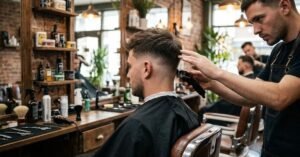
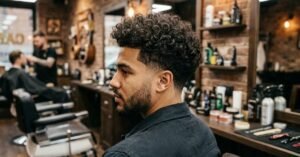
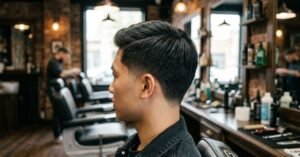
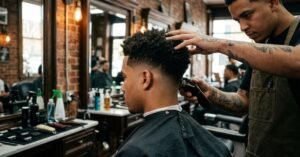
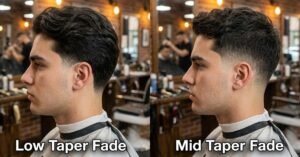
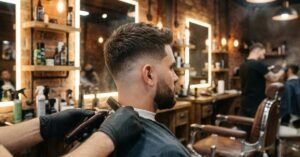
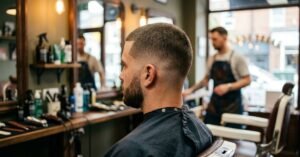
A mid taper fade is a short back and sides haircut where the hair starts shortening around the middle of the sides, near the top of the ear, and blends down to a short neckline.
It sits between a low taper, which stays close to the ears, and a high taper, which climbs toward the temples. It reads as clean without looking severe. The shortest length can be a skin finish or a few millimeters of stubble.
The top stays as long as you like, from a crew cut to a quiff. Below you will find placement guides, barber scripts, styling routines, and fixes for razor bumps, cowlicks, and thinning areas.
A good mid taper fade depends on three decisions: where the taper starts, how short it gets, and how much bulk stays. Every section below returns to those three.
What is a mid taper fade?

A mid taper fade is a haircut where the sides and back gradually shorten from roughly ear level down to the neckline, while the top stays longer. The blend is smooth, with no hard line between lengths.
Where does the taper begin, and what hair is removed?
The taper begins about halfway up the sides of the head, usually near the top edge of the ear. Hair above that point keeps its length or blends in softly. Hair below it gets shorter in steps until it is shortest at the neckline.
The barber works on these zones:
- Top: left long, shaped separately.
- Transition zone: where the length steps down. This is the “mid” part.
- Sides above the ear: shortened gradually.
- Around the ears: cleaned and tight.
- Nape and neckline: the shortest point, finished blocked, rounded, or tapered.
Heads differ, so “mid” is not a fixed spot. Mancave Barbershop points out that head shape and growth patterns change where low, mid, and high sit. Point to the exact spot with your finger instead of relying on the word alone.
Why can “mid taper fade” mean different things?

The phrase mixes two barbering terms. Some barbers treat a taper as a cut that keeps visible length at the edges, and a fade as a cut that drops to skin. The Art of Manliness argues that a taper is longer and a fade goes to the skin, so “taper fade” is a blend of the two. Many shops use “taper fade” anyway.
Three other things shift the result:
- Shortest length: skin, a shadow of stubble, or a clipper guard like a #1.
- Neckline: blocked, rounded, or tapered.
- Contrast: how big the jump is between the sides and the top.
| What you say | What a barber may picture |
| Mid taper | Gradual blend, some length kept at the bottom |
| Mid fade | Faster blend, often down to skin |
| Mid taper fade | Either; ask them to confirm the shortest length |
| Mid skin taper | High contrast, bald at the bottom |
Mid taper fade vs similar haircuts
Mid taper fade vs mid fade
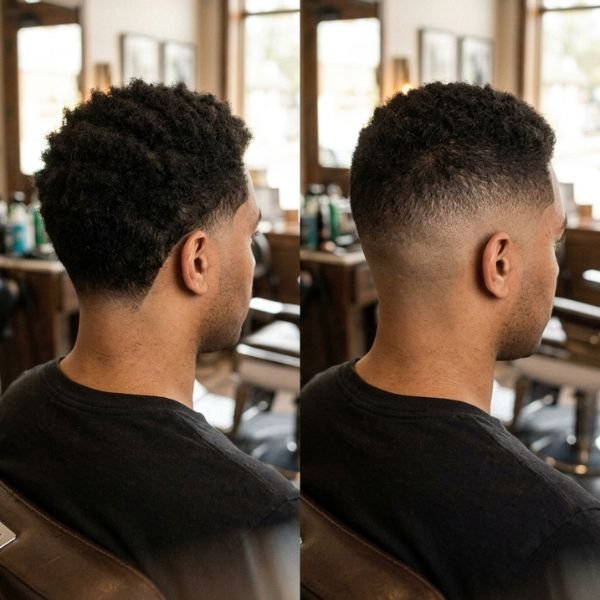
A mid fade usually goes down to the skin and blends faster, so the contrast is stronger. A mid taper fade leaves more hair at the edges and looks softer.
The Art of Manliness says fades start low, mid, or high, and mid fades begin just above the ear.
Choose the taper if you want a cleaner but less dramatic look. Choose the fade if you want sharp contrast and don’t mind more frequent visits.
Mid taper vs low taper vs high taper

| Type | Starts at | Look | Best for |
| Low taper | Just above the ear and neckline | Subtle, classic | Conservative offices, first-timers |
| Mid taper | Around the middle of the sides | Balanced, modern | Most people |
| High taper | Near the temples | Sharp, bold | Strong contrast, short sides |
Mid taper fade vs temple fade and classic taper
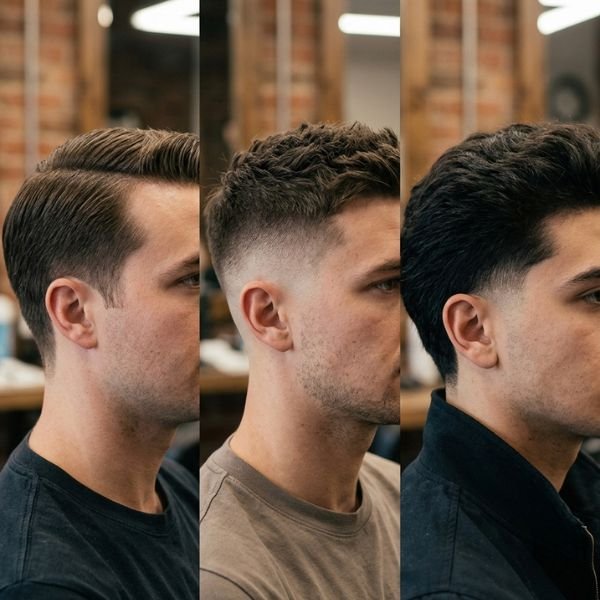
A temple fade, also called a temp fade, cleans up only the sideburn and temple area. It leaves the rest of the sides longer.
A classic taper is usually cut with scissors over comb, a technique where the barber lifts hair with a comb and trims above it. It keeps visible length all the way down.
A mid taper fade covers more of the head than a temple fade and uses clippers more heavily than a classic taper.
Pick the temple fade for a minimal edit, the classic taper for a traditional, workplace-safe look, and the mid taper fade for a visible but balanced shape.
Is a mid taper fade right for you?
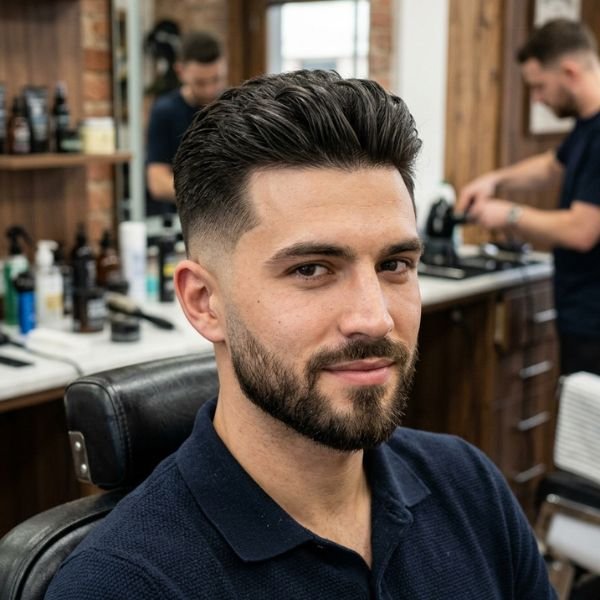
Hair type, density, and growth pattern
The mid taper fade suits most hair types, but each behaves differently:
- Straight hair: shows the blend clearly. Fine straight hair can show scalp, so keep contrast moderate.
- Wavy hair: the taper removes bulk and makes the top easier to manage.
- Thick hair: benefits most, because the taper cuts weight at the sides.
- Curly and coily hair: the blend looks crisp against defined curls.
- Fine or thinning hair: a softer taper often looks fuller than a skin finish.
Check your growth pattern too. A strong cowlick at the crown or a whorl at the nape can make the blend look uneven. Tell your barber about them before the first cut.
Face and head shape and the desired silhouette
The goal is balance. A taper changes the outline of your head by removing width at the sides.
- Round face: a mid taper with height on top adds length.
- Long or narrow face: avoid a very tall top and a very tight, high taper. A mid taper with a bit less height keeps proportions even.
- Square face: a mid taper softens the jaw line and works with most tops.
- Oval face: most variations work.
These are starting points, not rules. Your barber can see your head from angles you can’t.
Lifestyle, dress code, and upkeep tolerance
Ask yourself three questions:
- Dress code: a soft taper with a side part fits formal workplaces. A skin finish with a textured top fits creative or casual ones.
- Time budget: skin finishes grow out fast. Tapers that keep some length look fine for longer.
- Styling effort: a short, textured top takes about a minute. A pompadour takes longer.
If you can only visit the barber every five or six weeks, choose a taper that keeps length at the bottom.
Read more: High taper fade haircut: what it is, who it suits, and what to ask for
Best mid taper fade styles by top shape and texture
Short and textured tops
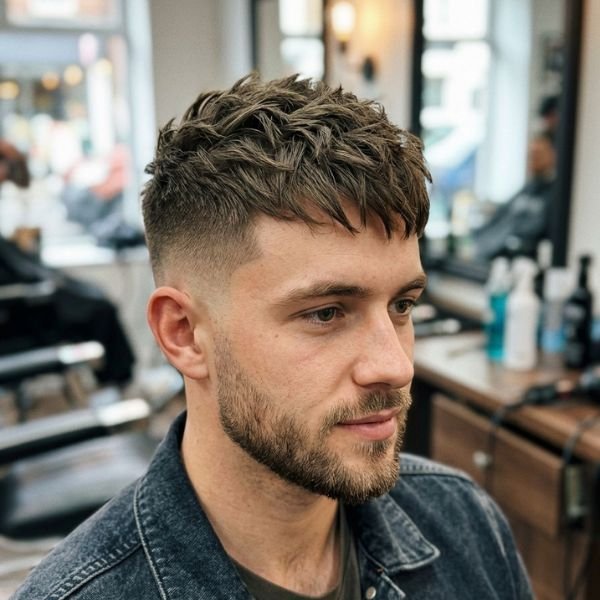
Short tops pair well with a mid taper fade because the whole head reads as one clean shape. Common options:
- Crew cut: short and uniform on top, simple to keep.
- Textured crop: choppy, matte, and low effort.
- French crop: short, forward-brushed fringe with a blunt edge.
- Caesar cut: an even, short fringe across the forehead.
Medium and longer tops

Longer tops make the contrast with the sides more obvious. Good fits:
- Quiff: lifted at the front, swept up and back.
- Pompadour: more volume and height than a quiff.
- Side part: neat and professional.
- Slick back: combed straight back with a bit of shine.
- Comb over: a deep side part with a hard or soft line.
- Messy fringe: longer front hair styled loosely forward.
Curly, coily, and protective-style combinations

A mid taper fade keeps the sides tidy while the top shows off the texture. Options include:
- Defined curls or a curly fringe with a soft blend.
- Sponge twists or coils on top with a clean taper.
- A high-top or afro shape with a mid taper beneath it.
- Locs, twists, or braids on top with tapered sides.
For protective styles, tell your barber the style you plan to wear so they can leave enough length on top and avoid cutting too close around the hairline. Tight braids and a very short hairline can add tension on the edges.
Finish options that change the look
| Finish | What it is |
| Skin finish | Blends to bare skin at the bottom; highest contrast |
| Shadow finish | Blends to a very short stubble, softer than skin |
| Drop taper | The taper line curves down behind the ear |
| Burst taper | A curved fade around the ear, often paired with longer neck hair |
| Line up | A sharp edge along the front hairline and temples |
| Beard blend | The beard fades into the side hair |
How do you ask a barber for a mid taper fade?
Use this order: placement, shortest length, bulk, top length, and texture. Then confirm with photos and the mirror.
Set the placement, shortest length, and amount of bulk
Start with the three main decisions:
- Placement: say “start the taper around the middle of the ear” and point to the spot.
- Shortest length: choose skin, shadow, or a guard size. Standard clipper guards run about 3 mm for a #1, 6 mm for a #2, and 10 mm for a #3.
- Bulk: say whether you want the sides kept tight or with some weight left.
Specify the top length, texture, and transition
Describe the top in a way a barber can measure. Say how many inches you want left, or show how much with two fingers. Then add:
- Texture: ask for a point cut, razor cut, or thinning shears if you want a lighter, choppier top.
- Transition: say “soft blend” if you want no visible line, or “disconnected” if you want an obvious step.
- Neckline: say blocked, rounded, or tapered.
Bring useful reference photos and confirm all three angles
Bring two or three photos. Choose people with hair similar to yours. Look for photos from the front, side, and back, because a mid taper fade can look very different from behind.
Before the barber finishes, check the mirror from all three angles. Confirm the start point, the neckline, and the blend. It is easier to adjust before the final detailing than after.
Use a concise barber-request script
Here is a script you can adapt:
“I’d like a mid taper fade. Start the taper around the middle of my ear, and take the shortest part to a #1 at the neckline. Keep the sides fairly tight, but not skin. Leave about two inches on top, textured, with a soft blend and a tapered neckline. Here are photos from the front and the back.”
Swap in your own measurements. If you want a skin finish, say so.
Read more: Hispanic Low Taper Fade Styles (Clean & Modern Guide)
How do you style and maintain a mid taper fade?

Daily styling by hair type and finish
| Hair type | Product | Method |
| Short straight | Matte clay or paste | Rub a small amount through dry hair and push forward or up |
| Medium straight | Pomade or cream | Comb back or to the side on damp hair |
| Wavy | Sea salt spray or light cream | Scrunch and air dry or diffuse |
| Curly | Curl cream or leave-in conditioner | Apply to damp hair, define with fingers |
| Coily | Moisturizing cream or butter | Twist, coil, or pick out for shape |
When to book a touch-up
Book based on your finish:
- Skin finish: every two to three weeks.
- Shadow finish: every three weeks.
- Taper with visible length: every three to five weeks.
Book sooner if the neckline looks fuzzy, the sides lose their shape, or the blend line starts to look heavy.
Safe at-home cleanup between appointments
You can tidy small areas at home. Do not try to recreate the fade yourself. Here is a safe routine:
- Use a trimmer with a guard that matches your shortest length.
- Trim only stray neck hairs below the neckline.
- Move the trimmer in short, light strokes.
- Clean around the ears carefully, keeping the trimmer flat.
- Rinse and moisturize the area.
Do not cut upward into the blend. That is where the most noticeable mistakes happen.
What problems or edge cases should you consider?
Razor bumps, neck irritation, and scalp sensitivity
Razor bumps, medically called pseudofolliculitis barbae, happen when a cut hair curls back into the skin. Healthline notes that they are most common in people with curly hair. The nape is a common spot for them after a close cut.
To lower the risk:
- Ask for clippers instead of a straight razor on the neckline.
- Leave a tiny bit of length instead of a bald finish.
- Make sure the barber cleans their tools between clients.
- Moisturize the area after the cut.
The American Academy of Dermatology suggests changing your shaving habits, replacing disposable razors after five to seven uses, and using a soothing aftershave.
See a dermatologist if bumps keep coming back or become painful, spread, or show pus. For a sensitive scalp, use fragrance-free products.
Read more: Low Blowout Taper with Fringe: A Simple Style Guide for Men
Receding hairlines, thinning areas, cowlicks, and uneven growth
- Receding hairline: keep the temple area softer and let the fringe cover the corners. A very tight skin finish can make the hairline look further back.
- Thinning crown: avoid a very high-contrast cut. A softer taper blends the thinner area better.
- Cowlicks: leave the hair longer at the crown. Style with the direction of growth rather than against it.
- Uneven growth: a whorl at the nape may need a natural neckline instead of a sharp one. Ask your barber to follow your growth.
Which alternatives should you choose instead?
If a mid taper fade isn’t the right fit, these options are worth considering:
- Low taper: subtle and conservative. Good for strict dress codes.
- High taper or high fade: sharper contrast for short sides and bold tops.
- Classic scissor-cut taper: traditional and easy to grow out.
- Temple fade: a minimal edit that cleans the temples only.
- Burst taper: works well with curls and a longer neck.
- Natural scissor-cut sides: no fade at all, for a fuller, more relaxed shape.
| Choose this | If you want |
| Low taper | The most conservative look |
| Mid taper fade | A balanced, modern shape |
| High taper | The boldest contrast |
| Temple fade | Minimal changes |
| Scissor-cut taper | The longest time between cuts |
Frequently asked questions about the mid taper fade
What is a mid taper fade?
It is a haircut where the sides and back gradually shorten from about ear level to the neckline, while the top stays longer.
How short does a mid taper fade go?
It can go to skin, a shadow of stubble, or a guard length like a #1 or #2. You choose the shortest point.
Is a mid taper fade the same as a mid fade?
Not exactly. A mid fade usually goes to skin and has more contrast, while a mid taper fade often keeps a bit more length.
How often should I get a mid taper fade touched up?
Every two to three weeks for skin finishes and every three to five weeks for tapers that keep some length.
Does a mid taper fade work for curly hair?
Yes. It keeps the sides tidy and lets curls, coils, twists, or locs on top stand out.
Is a mid taper fade professional enough for work?
Yes, especially with a soft blend, a natural neckline, and a side part or short textured top.
What should I tell my barber?
Give the start point, shortest length, top length, texture, and neckline. Bring front, side, and back photos.
Should I choose a low or mid taper if I’m unsure?
Start with a low taper if you want the safest result. Choose a mid taper if you want slightly more shape.
A mid taper fade works because it is flexible. You can keep it soft for the office or sharpen it with a skin finish, and you can pair it with almost any top.
Decide the start point, the shortest length, and the bulk. Say them clearly, check the mirror from three angles, and book touch-ups on a schedule that fits your finish.