
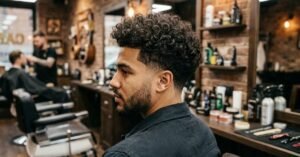
Finding the right low taper fade with beard can change how your whole face looks. Many Black men want a cut that feels clean, sharp, and easy to manage without losing natural texture.
This style does that by keeping the hair short and neat around the sides and neckline while letting the beard stay full and defined. It works for the office, the weekend, and every event in between, so it has become a barbershop staple.
Below, you will learn what the cut is, why it suits coily and wavy hair, seven beard pairings, how face shape changes the plan, what to tell your barber, how to maintain it, and the mistakes that ruin the blend.
What Is a Low Taper Fade with Beard?

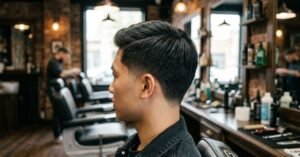
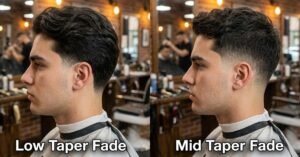
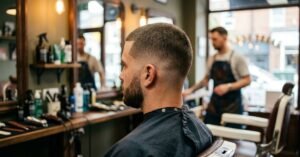
A low taper fade is a haircut where the hair gets gradually shorter as it moves down toward the sideburns and the nape of the neck.
The word “low” means the shortening starts close to the ears and the natural hairline instead of high on the sides of the head. It is a soft, subtle change in length, not a dramatic skin shave.
A taper and a fade are close cousins, but they are not the same thing. A taper leaves some length at the edges and keeps a natural finish.
A fade blends the hair down to very short stubble or bare skin. A low taper fade sits between the two, giving you gentle contrast without looking harsh.
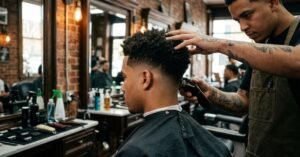
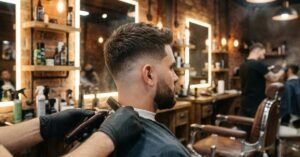
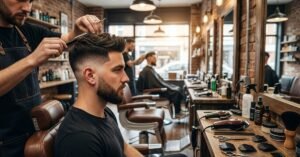
When you add a beard, the barber connects the fade on your head to the hair on your face. The blend usually happens at the sideburns, where the short hair meets the beard line. Done well, the two look like one continuous shape.
Here are the parts that make up this look:
- Top: Hair left longer for texture, such as curls, waves, twists, or a short afro
- Sides and back: Hair tapered from a short length down to almost nothing at the edges
- Line-up: Also called an edge-up or shape-up, this is a crisp outline along the forehead, temples, and neckline made with a trimmer
- Beard: Any length, from light stubble to a full beard, blended into the sideburns
Why It Works So Well
This cut is popular because it solves several problems at once. It looks polished, it respects natural hair texture, and it grows out gracefully.
Here is why so many men choose it:
- It highlights texture. Tight coils, soft curls, and deep waves stand out against the closer sides.
- It frames the jawline. A tapered side makes the beard look shaped and intentional.
- It is forgiving. Because the change in length is gentle, a few extra weeks of growth do not look messy.
- It fits many settings. The low placement keeps the look conservative enough for work.
- It suits many beard types. You can wear it with a light beard or a thick one.
There is also a practical reason. Curly and coily hair tends to be drier because natural scalp oils have a harder time traveling down a curved hair strand. A low taper keeps more length around the crown and sides than a high fade, so it is easier to keep moisturized and healthy.
Best Styles to Consider
Every man’s hair density, beard growth, and lifestyle are different. These seven pairings cover the most common choices, and each one can be adjusted to fit you.
Low Taper Fade with Full Beard

This is the classic version. The beard is grown out fully, with a rounded or slightly squared shape, and the fade melts into the sideburns. It looks mature and strong.
To keep it sharp, trim the cheek line (the upper edge of the beard on your cheeks) and the neckline (the lower edge under the jaw). A common rule is to place the neckline about one finger width above the Adam’s apple.
Read more: Fade Haircuts
Low Taper Fade with Short Beard

A short beard, often trimmed with a clipper guard around one to three, is the easiest style to maintain. It gives you a neat outline without much daily work.
This version suits men with patchy areas, since short length hides uneven growth. It also works well for professional jobs where a tidy appearance matters.
Low Taper Fade with Boxed Beard
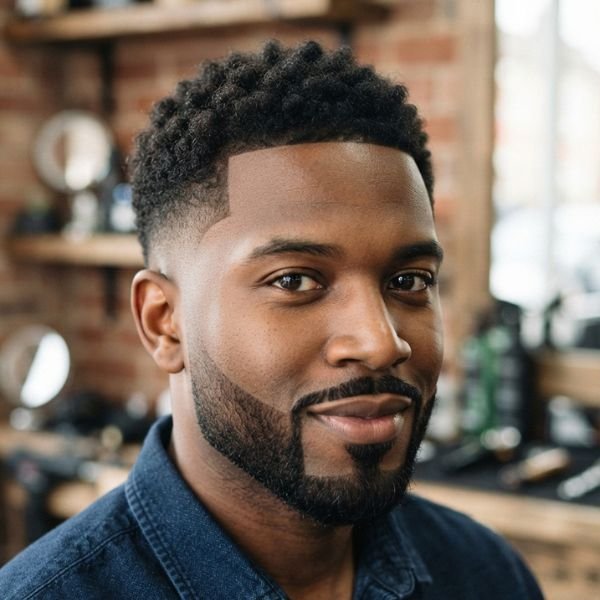
A boxed beard has clean, straight edges and a squared shape. The barber uses a trimmer to define the cheek line and neckline with precision.
It looks structured and modern. It is a smart pick if you like symmetry and want your face to look balanced. Regular shaping is needed to keep the box crisp.
Low Taper Fade with Goatee

A goatee focuses hair around the mouth and chin, sometimes with a mustache attached. Paired with a low taper, it draws attention to the center of the face.
This option is a good fit for men whose beards grow thicker on the chin than on the cheeks. It also gives a lighter, cleaner feel than a full beard.
Low Taper Fade with Thick Beard
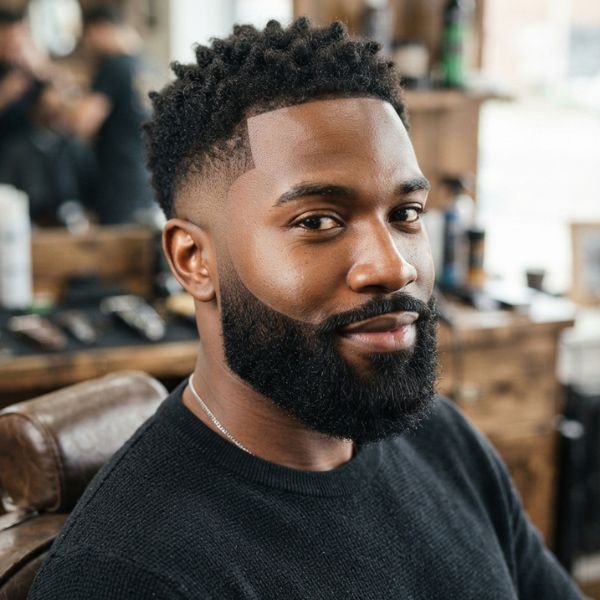
If your beard grows dense, you can keep it thick and lightly shaped. The fade on the head should stay tidy so the beard remains the main feature.
Thick beards need extra care. Wash and condition them, and use a wide tooth comb or a boar bristle brush (a brush made from natural boar hair that spreads oil evenly) to keep the hair soft and controlled.
Low Taper Fade with Curly Hair and Beard
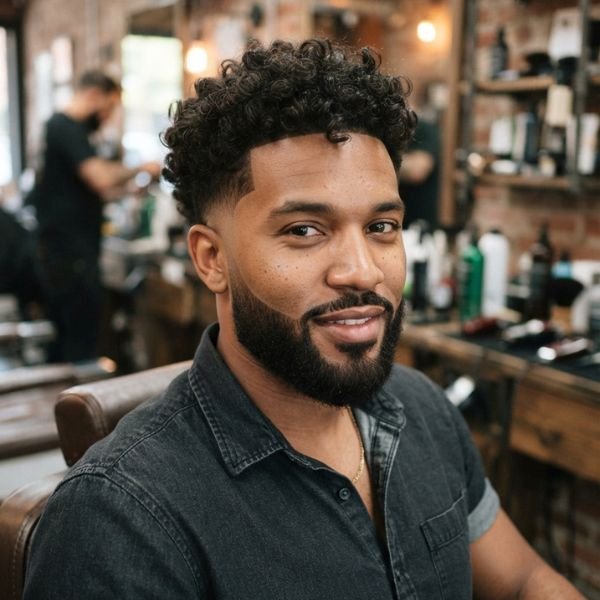
Curls on top give this style a lively, textured look. The tapered sides keep the shape neat, while the beard adds weight to the lower face.
Use a curl cream and a soft brush to define the curls. Keep the beard slightly shorter if the curls are voluminous, so the whole head does not feel too heavy.
Low Taper Fade with Waves and Beard

Waves come from brushing short, coily hair in a consistent pattern until it lays in rolling ripples. The most well known version is 360 waves, where the waves circle the entire head.
A low taper keeps the wave pattern visible on top and clean at the edges. A short or boxed beard usually pairs best, since it avoids competing with the wave pattern.
Face Shape Considerations
| Face Shape | Best Beard Approach | Why It Helps |
| Oval | Almost any style, from short to full | Balanced proportions handle many looks |
| Round | Fuller at the chin, shorter at the cheeks | Adds length and a slimmer look |
| Square | Short to medium beard with softly rounded edges | Softens a strong jaw |
| Long | Fuller on the sides, shorter at the chin | Prevents the face from looking longer |
| Heart | Fuller chin area, such as a goatee or full beard | Balances a wider forehead and narrow chin |
What to Tell Your Barber
Clear communication is the fastest way to get a good result. Barbers work with clipper guards, which are plastic attachments that set the cutting length, and with terms like “blend” and “line-up.” Using the right words saves time and avoids surprises.
Follow these steps at your next visit:
- Name the cut. Say “low taper fade with a beard blend” so the barber knows the fade must connect to your facial hair.
- Show a photo. Bring a picture of a style on a similar hair texture and face shape.
- State the length on top. Say whether you want it short for waves or longer for curls and twists.
- Set the beard length. Mention the clipper guard number if you know it, or describe it as short, medium, or full.
- Ask for a clean line-up. Specify whether you want a soft natural hairline or a sharp edge.
- Confirm the neckline and cheek line. Point to where you want them.
If you have sensitive skin, tell the barber before they start. Also mention if you get razor bumps, since the barber may choose a lighter touch with the trimmer.
Read more: Low vs Mid vs High Taper Fade: Which One Should You Choose?
Keeping It Looking Good
A great cut fades fast without upkeep. The good news is that the routine is simple.
Follow this schedule for best results:
- Every 2 to 3 weeks: Get a touch-up for the fade and line-up
- Every 4 to 6 weeks: Book a full cut, including beard shaping
- Daily: Moisturize the beard and scalp, and brush the beard and hair
- Weekly: Wash with a gentle shampoo and follow with conditioner
These products make the biggest difference:
- Beard oil: Softens hair and reduces itching
- Beard balm: Adds light hold and shape
- Leave in conditioner or curl cream: Keeps curls hydrated
- Soft bristle brush: Trains waves and smooths the beard
- Durag or wave cap: Protects waves and helps maintain the pattern overnight
Razor bumps, known medically as pseudofolliculitis barbae, are a common concern for many Black men. They happen when curved hairs grow back into the skin. To reduce them, avoid shaving too close, use a warm towel before trimming, and exfoliate gently a few times a week.
Read more: Low Taper Fade Styles for Wavy Hair
Mistakes That Are Easy to Make
Even a good barber cannot save a style if small errors pile up. Watch out for these common ones:
- Starting the fade too high. A high start makes the look harsh and removes the “low” effect.
- Skipping the beard blend. If the fade and beard do not connect, the cut looks unfinished.
- Over trimming the beard. Taking off too much at once is hard to fix. Cut gradually.
- Ignoring the neckline. A messy neckline ruins an otherwise sharp beard.
- Using heavy products. Thick gels and greasy pomades can clog pores and cause buildup.
- Skipping moisture. Dry hair and beard look dull and can break.
- Waiting too long between visits. Once the edges grow out, the taper loses its shape.
Final Thoughts
A low taper fade with a beard is one of the most flexible and flattering options for Black men in 2026.
It shows off natural texture, works with almost any beard length, and stays professional. The key is a smooth blend between the fade and the beard, plus a steady routine of moisture and regular touch-ups.
Choose the beard style that fits your face shape and lifestyle, speak clearly with your barber, and treat your hair and skin with care. Do that, and this look will stay sharp week after week.
Frequently Asked Questions
Is a low taper fade with a beard good for Black men?
Yes. It highlights natural hair texture, frames the jawline, and grows out cleanly, which makes it a strong choice for coily, curly, and wavy hair.
How often should I get a touch-up?
Most men need a touch-up every 2 to 3 weeks to keep the edges and beard line crisp. A full cut every 4 to 6 weeks keeps the shape balanced.
Which beard style works best?
It depends on your face shape and beard growth. A short or boxed beard is the easiest to maintain, while a full beard suits men who want a bold, mature look.
Can I wear this to work?
Yes. The low placement of the fade keeps the style conservative, and a neatly trimmed beard looks professional in almost any workplace.
Does it work with 360 waves?
Yes. A low taper keeps the wave pattern visible on top and clean at the edges, and a short or boxed beard pairs best with it.
How do I get the beard blend right?
Ask your barber to use the same clipper guard progression from the sideburns into the beard so there is no gap or harsh line. Also ask them to soften the sideburn area by hand.

4 thoughts on “Low Taper Fade with Beard for Black Men: Best Styles and Grooming Tips”