
Picking between a low taper and a burst fade sounds simple until you sit in the barber chair. Both are short, clean and modern.
Both blend the sides into the hairline. But they look different, grow out differently, and suit different people.
A low taper is subtle, neat and easy to maintain, so it suits offices and classic styles. A burst fade is bolder and curves around the ear, so it suits textured, curly or longer tops and people who want a statement cut.
This guide breaks down how each cut works, who it suits, how much upkeep it needs, and exactly what to tell your barber.
What Is a Low Taper Fade?

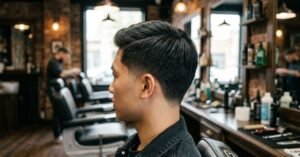
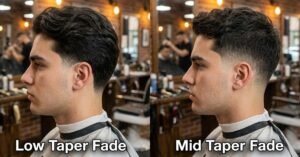
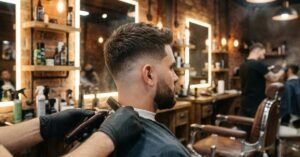
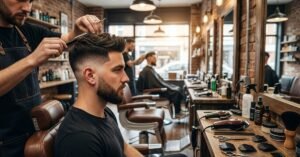
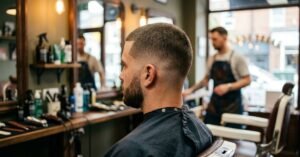
A low taper fade is a gradual shortening of hair around the sideburns and the back of the neck. The sides and back stay longer than they would in a standard fade. Only the edges get tight.
The blend starts low, usually near the ear and nape, and rarely climbs above the temple. Most low tapers do not go down to bare skin.
They stop at a short guard length, which keeps the look soft.
Key traits of a low taper:
- Short, gentle transition at the sideburns and neckline
- Hair stays visible on the sides
- Works with short, medium or long hair on top
- Grows out gracefully
Many barbers call it the safest fade because it looks clean without drawing attention.
What Is a Burst Fade?
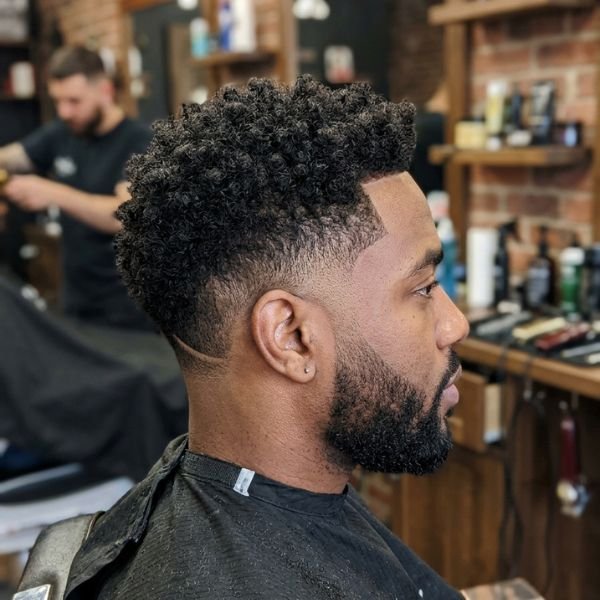
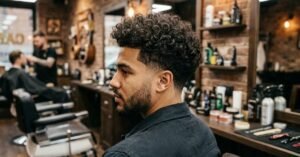
A burst fade is a semicircular fade that wraps around the ear and “bursts” outward. The hair around the ear is cut very short. The hair behind it, at the nape, stays longer.
It is often paired with a mohawk, a faux hawk, curls, twists or a textured top. The contrast between tight sides and a fuller top is what makes it stand out.
Key traits of a burst fade:
- Arc shaped fade curving around the ear
- Longer hair left at the back of the head
- Strong contrast with the top
- Popular on curly, coily and wavy hair
A burst taper is a softer version. It keeps the curve but leaves more length around the ear.
Low Taper vs Burst Fade: Main Differences
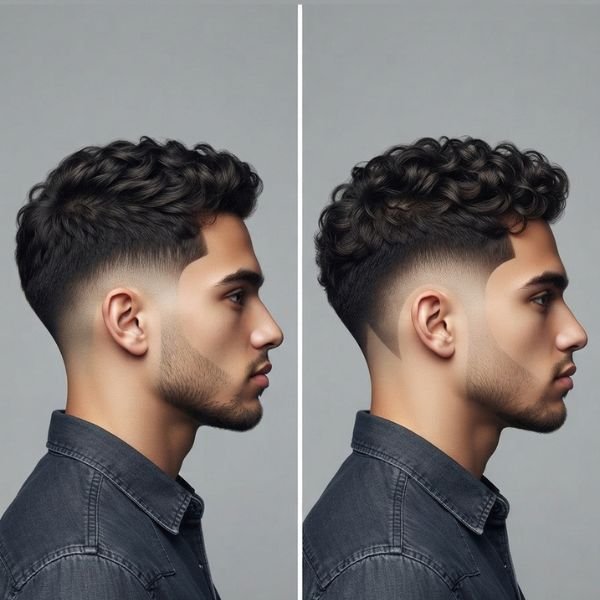
| Feature | Low Taper Fade | Burst Fade |
| Shape | Follows the hairline | Semicircle around the ear |
| Style statement | Subtle | Bold |
| Back of head | Tapered neckline | Longer hair at the nape |
| Best top styles | Classic, quiff, side part, crop | Mohawk, curls, twists, textured top |
| Upkeep | Every 3 to 5 weeks | Every 2 to 3 weeks |
| Skill needed | Moderate | High |
| Workplace friendly | Very | Depends on the workplace |
Which Haircut Looks More Professional?

The low taper wins here. Its soft blend and natural neckline look polished in a suit, a classroom or a client meeting. Nobody notices it, which is exactly the point.
A burst fade can still look professional if you keep the top neat and the lines crisp. A sharp, well blended burst fade with a tidy top works in many creative workplaces.
Strict dress code environments often favor the low taper.
Simple rule: if you want your haircut to go unnoticed, choose the low taper. If you want it to be part of your look, choose the burst fade.
Which One Is Easier to Maintain?
The low taper is easier. Because the sides stay longer and the blend is gradual, regrowth is less obvious. Most people look fine for three to five weeks.
A burst fade shows regrowth faster. The short area around the ear fills in quickly, and the curve loses definition. Most people book a touch up every two to three weeks to keep the shape sharp.
Maintenance checklist:
- Book a trim before the blend looks fuzzy, not after
- Brush or moisturize the top daily
- Ask your barber to clean the neckline between full cuts
- Use a light product for texture, not a heavy gel that flakes
- Wash your hair regularly so the skin under the fade stays clean
Hair grows roughly half an inch a month on average, so tight fades lose their shape sooner than longer cuts.
Best Hair Types for Low Taper vs Burst Fade
Hair texture changes how a fade looks. The same cut can look very different on straight hair and coily hair.
Straight Hair

A low taper works well. It keeps the sides tidy and lets a side part or crop sit neatly on top. A burst fade is possible but needs a longer top to create contrast, since straight hair can look flat next to a curved fade.
Curly Hair

The burst fade is a strong match. Curls on top contrast beautifully with the tight curve around the ear. A low taper also looks great and keeps curly hair controlled and easy to style.
Thick Hair

Thick hair holds shape well. A low taper keeps bulk off the sides without looking too short. A burst fade removes weight around the ear and gives thick hair a defined silhouette.
Thin Hair

A low taper is usually the better choice. It adds a clean frame without exposing too much scalp. A burst fade can work if the top is styled with texture, but very tight sides can make thin hair look sparse.
Wavy Hair
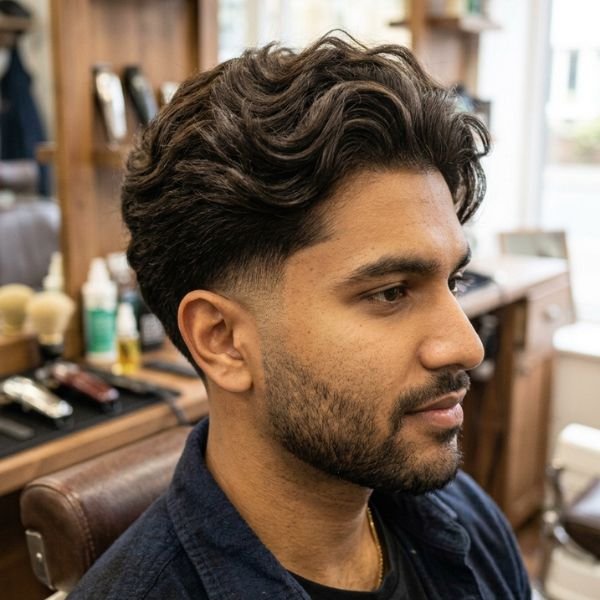
Both work. A low taper keeps waves neat and natural. A burst fade shows off wave patterns, especially when the top is left longer and styled with a light cream or sea salt spray.
Best Face Shapes for Each Haircut
Face shape affects how a fade frames you. Pay attention to the width of your forehead, cheeks and jawline.
Low Taper Works Best For:
- Oval faces: nearly anything works, and a low taper keeps it balanced
- Square faces: the soft blend softens a strong jaw
- Round faces: pair it with height on top to add length
- Heart shaped faces: keeps the sides clean without narrowing the look
- Long faces: keep the top shorter so the face does not look longer
Burst Fade Works Best For:
- Oval faces: carries the bold shape easily
- Round faces: works with a tall top because the curve adds definition
- Square faces: the curve contrasts with angular features
- Diamond faces: balances wide cheekbones with a fuller top
- Oblong faces: use a shorter top, because height plus tight sides can elongate the face
These are general guidelines, not strict rules. Your barber can adjust the height and curve to suit your head shape.
Low Taper vs Burst Fade With Beard

Both cuts pair well with facial hair, but the beard connection is different.
With a low taper, the beard blends in smoothly. The taper at the sideburns flows straight into the beard line, which creates a clean, connected look. This is the easiest combination to get right.
With a burst fade, the beard needs more planning. The curve around the ear should flow into the beard line. A full beard with a burst fade looks sharp and intentional. A patchy beard can make the contrast look uneven.
Beard tips:
- Keep the beard line crisp along the cheeks and neck
- Match the beard length to the fade height
- Ask the barber to blend the sideburn into the beard, not stop short
- Trim the beard regularly so the fade does not look disconnected
Common Mistakes to Avoid
Choosing a Fade That Does Not Match Your Lifestyle
A burst fade needs frequent touch ups. If you only visit the barber once a month, the low taper is more realistic. Be honest about your schedule before you commit.
Read more: Low Taper Fade with Beard for Black Men: Best Styles and Grooming Tips
Ignoring Hair Texture
A cut that looks great on a photo may not behave the same on your hair. Coily hair holds a burst fade sharply. Fine straight hair may need a different approach. Always consider your texture first.
Not Showing Reference Photos
Words like “short on the sides” mean different things to different barbers. A photo removes the guesswork. Pick two or three images from different angles.
Waiting Too Long Between Haircuts
Fades lose their shape quickly. Waiting six weeks can turn a sharp cut into a shapeless one. Book your next appointment before you leave the shop.
How to Ask Your Barber for the Right Cut
Clear communication saves you from a bad haircut. Use the right terms and give specifics.
For a low taper:
- “I would like a low taper fade.”
- “Keep the length on the sides and only taper the sideburns and neckline.”
- Mention guard sizes if you know them, such as a number 2 at the bottom and a number 3 or 4 above
- Say whether you want a natural or squared neckline
For a burst fade:
- “I would like a burst fade curving around the ear.”
- “Leave the back longer and fade it out behind the ear.”
- Say whether you want it to go down to skin or stay a short length
- Mention the top style, such as a mohawk, curls or twists
Always take:
- Two or three reference photos
- A clear idea of how often you can return for touch ups
- Notes about your beard, if you have one
If your barber suggests changes based on your head shape, listen. They see the curve of your skull every day.
Which One Should You Pick?
Choose a low taper if you:
- Work in a formal environment
- Want a low effort, classic haircut
- Prefer a clean look that grows out well
- Visit the barber every four to six weeks
Choose a burst fade if you:
- Have curly, coily or textured hair on top
- Want a bold, modern look
- Like having a standout shape
- Can visit your barber every two to three weeks
Still undecided? Start with a low taper. It is easier to move into a burst fade later than to recover from a cut you did not like.
Read more: Low Taper Fade for Curly Hair: A Simple Style Guide for Men
Conclusion
The low taper vs burst fade debate comes down to personality and practicality. A low taper offers a clean, subtle and professional look that is easy to maintain. A burst fade delivers style, contrast and a strong shape, but asks more of your time and your barber’s skill.
Think about your hair type, face shape, workplace and schedule. Bring photos, speak clearly, and book regular touch ups. Do that, and either cut will look sharp on you.
Frequently Asked Questions
Is burst fade better than low taper?
Neither is better overall. A burst fade is bolder and suits textured or curly hair, while a low taper is subtler and more versatile.
Does a low taper last longer?
Yes. Because the sides stay longer and the blend is gradual, a low taper usually looks neat for three to five weeks.
Which fade is best for curly hair?
A burst fade is an excellent choice for curly hair because it contrasts with the curls on top. A low taper also works if you want a cleaner, softer look.
Is burst fade good for school or work?
It can be, if the top is neat and the lines are crisp. For strict dress codes, a low taper is the safer option.
Can both styles work with beards?
Yes. A low taper blends easily into a beard, while a burst fade works best when the curve flows into a well groomed beard line.
Read more: Undercut Fade vs Low Fade Comparison
Low Taper vs Drop Fade: Which One Looks Better on You?
A drop fade is another popular option, so it is worth comparing. A drop fade curves down behind the ear instead of running straight across. This gives the cut a rounded, dropping shape.
Low taper vs drop fade at a glance:
- Low taper: subtle, follows the hairline, longer sides, easiest upkeep
- Drop fade: curved line behind the ear, sharper contrast, needs more frequent touch ups
- Best for professionals: low taper
- Best for a styled look: drop fade, especially with textured tops, curls or a beard
If you like the polish of a low taper but want a bit more shape, a drop fade is a good middle ground between the low taper and the burst fade.
Show your barber photos and ask how each would sit on your head shape.

4 thoughts on “Low Taper vs Burst Fade: Which Haircut Looks Better on You?”