
Picking a fresh haircut style shouldn’t feel like a guessing game, yet most guys freeze the moment their barber asks, “low, mid, or high?” Each taper fade option changes your entire look, from how much scalp shows to how often you’ll need a touch up.
This guide breaks down the low taper fade, mid taper fade, and high taper fade in plain terms, so you walk into your next appointment knowing exactly what to ask for.
What Is a Taper Fade?
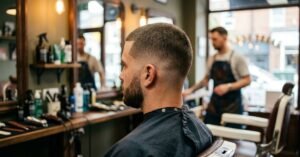
A taper fade is a haircut where the hair gradually shortens from the top of the head down toward the neckline and around the ears, blending smoothly into the skin or into very short stubble.
Unlike a blunt cut, there’s no visible line where lengths change. Clippers with different guard sizes move down the head in stages, creating a seamless transition.
The word “taper” describes the gentle shortening effect, while “fade” refers to how close that shortening gets to bare skin. A taper fade combines both, giving you soft blending on top with a clean, faded finish on the sides.
It works with nearly every hair type, including straight, wavy, curly, and coily textures, which is part of why it remains one of the most requested men’s haircuts at barbershops today.
Taper vs Fade
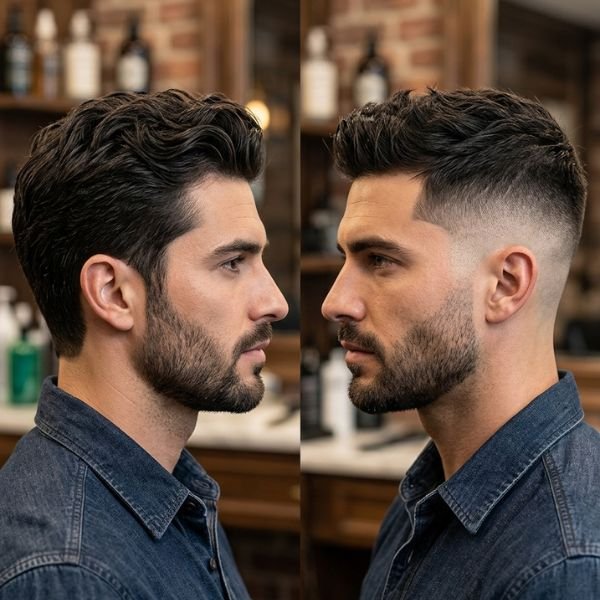
People often use “taper” and “fade” as if they mean the same thing, but there’s a real difference worth knowing before your next barber visit.
A taper keeps a bit more length at the nape and around the ears, using clippers and guards to blend hair from long to short without ever exposing bare skin. It reads as classic, tidy, and a little more conservative.
A fade pushes that blending much shorter, often all the way down to skin level, using finer clippers or a shaver for a crisp finish. Fades create sharper contrast and a bolder, more modern edge.
Put simply, a taper fade borrows from both. It keeps the smooth gradual blend of a taper while adopting the close, skin level finish of a fade. Where that fade starts on your head is what separates a low, mid, and high taper fade, and that’s the real decision you’re making.
Low Taper Fade

How it looks
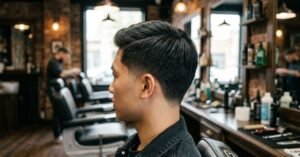
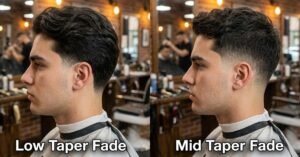
The low taper fade starts its blend just above the ears and along the natural hairline at the neckline. Most of the length stays intact on the sides of the head, so the fade itself sits in a narrow band near the bottom.
From a distance, it can be easy to miss entirely, which is exactly the appeal for a lot of men.
Best for
This style suits guys who want a haircut that fits into any setting without drawing extra attention. It flatters longer or oval face shapes especially well, and it’s a strong pick for anyone with fine or thinning hair who wants to preserve density on the sides.
Pros
- Grows out slowly, so trims can stretch to three or four weeks
- Low maintenance and beginner friendly for a first time fade
- Reads as clean and professional in office or formal settings
- Pairs naturally with classic styles like a side part or slick back
Cons
- Offers less visual contrast, which can look plain if you want a bold statement
- Doesn’t show off curl patterns or textured tops as dramatically as higher fades
- Can feel underwhelming for guys who want their haircut to stand out
Mid Taper Fade
How it looks
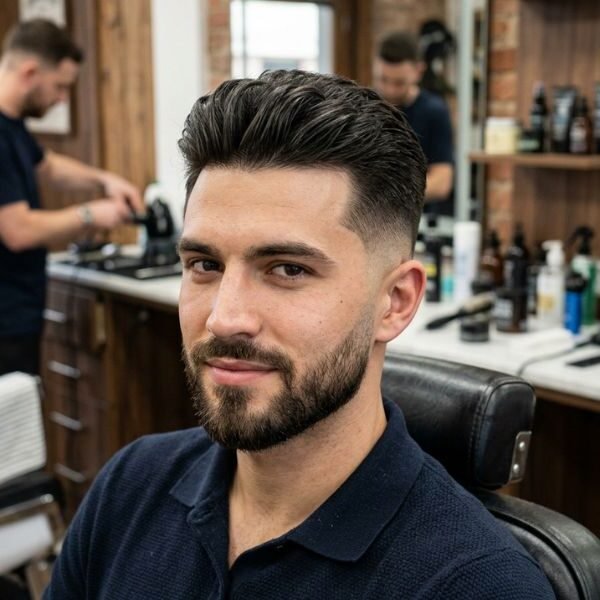
A mid taper fade moves the blend up to around temple level, roughly the midpoint between the ears and the crown. More skin shows through the sides compared to a low taper, giving noticeably sharper contrast while still keeping things balanced rather than extreme.
Best for
The mid taper fade is often called the safest, most versatile choice because it flatters nearly every face shape. It works particularly well with thick or wavy hair and pairs nicely with medium length top styles like a textured crop, quiff, or brushed forward fringe.
Pros
- Balanced look that feels modern without being flashy
- Flatters most face shapes, including round and square
- Versatile enough to dress up for work or down for weekends
- Shows off texture on top better than a low taper
Cons
- Needs trims more often than a low taper, typically every two to three weeks
- Slightly less forgiving on certain face shapes than a low taper
- May feel too plain for anyone chasing maximum contrast
High Taper Fade (Bold & Sharp)
How it looks
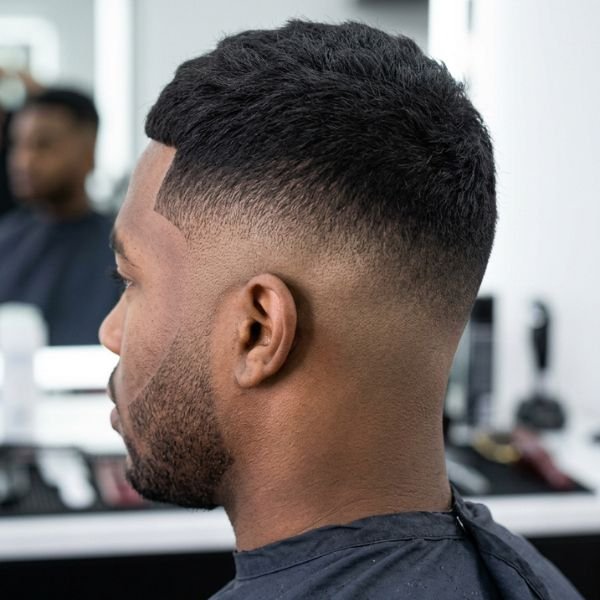
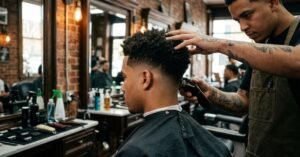
The high taper fade begins above the temples, closer to the crown of the head. This creates the most dramatic difference between the short sides and longer top, with a hard, sharp edge that’s impossible to miss.
Read more: Low Taper Fade: Complete Beginner Guide
Best for
Choose this one if you want your haircut to be a statement piece. It suits guys with longer or narrower faces who want added structure, and it looks especially sharp paired with high volume top styles such as an afro, pompadour, or spiky texture.
Pros
- Delivers maximum contrast and a bold, trend forward appearance
- Adds height and definition to rounder or fuller face shapes
- Makes textured or voluminous top styles pop
- Signals a deliberate, fashion conscious style choice
Cons
- Requires touch ups roughly every two weeks to keep edges crisp
- Exposes more scalp, which isn’t ideal if you have a receding hairline or thinning crown
- Can read as too bold for conservative workplaces or formal environments
- Least forgiving option for first timers unsure about going short
Low vs Mid vs High Taper Fade

| Feature | Low Taper Fade | Mid Taper Fade | High Taper Fade |
| Fade starts | Near the ears | Around the temples | Above the temples |
| Contrast level | Subtle | Moderate | Dramatic |
| Maintenance | Every 3 to 4 weeks | Every 2 to 3 weeks | Every 2 weeks |
| Best face shapes | Long or oval | Most shapes | Round or square |
| Office friendly | Yes | Usually | Rarely |
| Beginner friendly | Yes | Yes | Less so |
| Best for | Professionals, first timers | All round versatility | Trendy, bold styles |
Which Taper Fade Should You Choose?

There’s no universal “best” taper fade. The right pick depends on how much contrast you want, how often you’re willing to see your barber, and where you spend most of your time. Ask yourself three quick questions:
Read more: Low Taper Fade Styles for Wavy Hair
- How bold do I want my haircut to look?
- How much upkeep am I realistically willing to commit to?
- Does my workplace or lifestyle call for a conservative or expressive style?
Choose a Low Taper Fade if:
- You want a clean, safe look that works anywhere
- You’re in a corporate job, school, or formal setting
- This is your first time trying a fade and want something forgiving
- You have fine or thinning hair and want to protect side density
Choose a Mid Taper Fade if:
- You want noticeable style without going extreme
- You like flexibility to dress the haircut up or down
- You want a cut that suits almost any face shape or setting
Choose a High Taper Fade if:
- You want your haircut to make a statement
- You don’t mind visiting the barber every two weeks
- You have thick, curly, or voluminous hair you want to showcase
- You work in a creative field or simply love a sharp, bold edge
What to Tell Your Barber
Barbershop terminology can get confusing fast, so use clear, simple language when you sit down in the chair.
- Low taper fade: “I want a low taper fade with a soft blend near my ears and a clean neckline.”
- Mid taper fade: “Give me a mid taper fade starting around my temples, noticeable but not extreme.”
- High taper fade: “I want a high taper fade starting above my temples, with strong contrast on the sides.”
Bringing a reference photo always helps, especially one showing the side and back of the head, since fade height can be interpreted differently from barber to barber.
Maintenance & Styling Tips
Keeping any taper fade looking sharp comes down to consistency. A few habits make a real difference between cuts.
- Book trims based on fade height. Low tapers can stretch to a month, mid tapers do best every two to three weeks, and high tapers need attention every two weeks to avoid a grown out, uneven look.
- Use a light pomade or matte clay on top to define texture without weighing hair down.
- Moisturize the scalp regularly if you’re rocking a high taper, since more skin exposure means more dryness.
- Skip daily heavy product buildup on faded sides, since it can clog pores and look greasy fast.
- If you have curly or coily hair, ask your barber about cutting dry rather than wet, since curls can shrink significantly once they dry.
Read more: Best Haircuts for Diamond Face Shape (Male)
Final Thoughts:
Every taper fade style has its place. A low taper fade is the clean, dependable option for work, school, or anyone easing into their first fade. A mid taper fade strikes a balance that suits nearly any face shape, hair type, or occasion. A high taper fade delivers the boldest contrast for guys who want their haircut noticed.
There’s genuinely no wrong choice here, only the one that matches your lifestyle, hair texture, and how much time you want to spend in the barber’s chair. When in doubt, starting lower is always the safer move since a barber can take more off next time, but they can’t add length back today.
Frequently Asked Questions
What is a mid taper fade?
A mid taper fade is a haircut where the blend starts around temple level, offering a balanced look with more contrast than a low taper but less than a high taper.
Low Taper Fade vs Low Fade: Key Differences
A low taper keeps some length near the hairline using clippers and guards, while a low fade blends all the way down to bare skin for a sharper, more defined finish.
Is a taper fade good for curly hair?
Yes, taper fades work well on curly hair, though barbers often recommend cutting curls while dry since they shrink and reveal true length once dry.
Which taper fade lasts longer?
Low taper fades last the longest between trims, often three to four weeks, since the blend sits farther from the crown and grows out less noticeably.
Is a taper fade professional?
A low or mid taper fade generally reads as professional and workplace appropriate, while a high taper fade can feel too bold for conservative or formal office environments.



3 thoughts on “Low vs Mid vs High Taper Fade: Which One Should You Choose?”