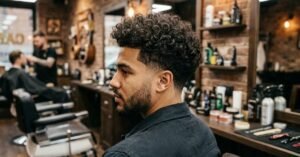
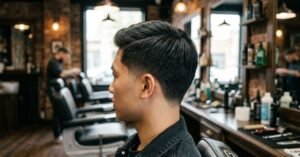
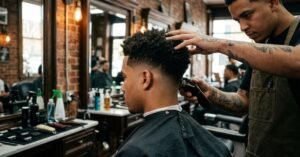
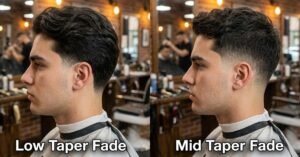
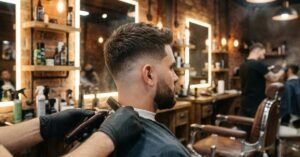
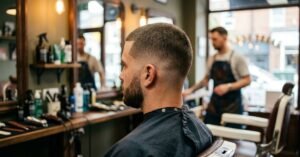
The difference between a low taper fade and a mid taper fade is where the shortening starts. A low taper begins near the ear and stays subtle. A mid taper begins around the temple and shows more contrast.
This guide compares the two on looks, face shape, hair type, upkeep, and styling. You will also get a barber script and a quick way to decide.
The short version
Use this as your fast answer:
- Choose a low taper fade if you want a soft, conservative cut that grows out gently.
- Choose a mid taper fade if you want a cleaner, sharper outline with more contrast.
- Not sure? Start with a low taper. You can always go higher at your next visit, but you cannot add hair back.
| Low taper fade | Mid taper fade | |
|---|---|---|
| Starts | Near the ear and sideburn | Around the temple |
| Contrast | Subtle | Moderate |
| Feel | Soft, natural | Clean, defined |
| Typical refresh | Every 4 to 6 weeks | Every 3 to 4 weeks |
What is a low taper fade?

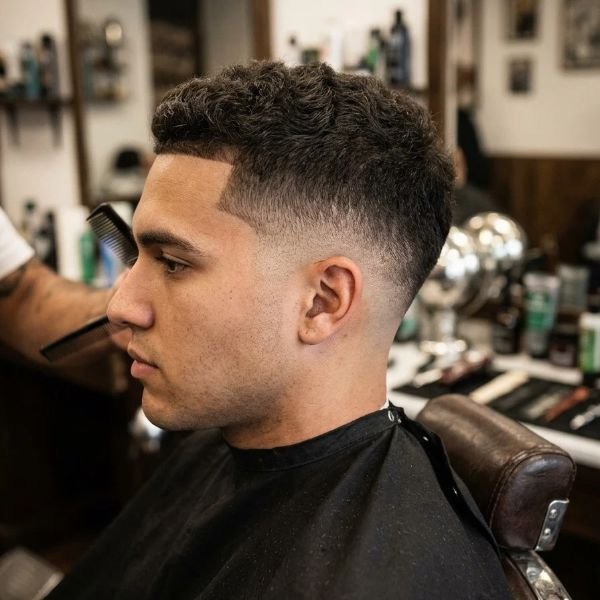
A low taper fade shortens the hair gradually along the sideburns, around the ear, and across the nape. The sides keep most of their length, so the cut looks neat but not dramatic.
Most low tapers finish at a #1 or #2 guard (about 3 to 6 mm). Some go to skin at the very bottom. A taper keeps a little more length than a skin fade, which makes it forgiving.
Why people choose it:
- It looks natural and conservative.
- It grows out softly.
- It pairs well with longer tops.
What is a mid taper fade?

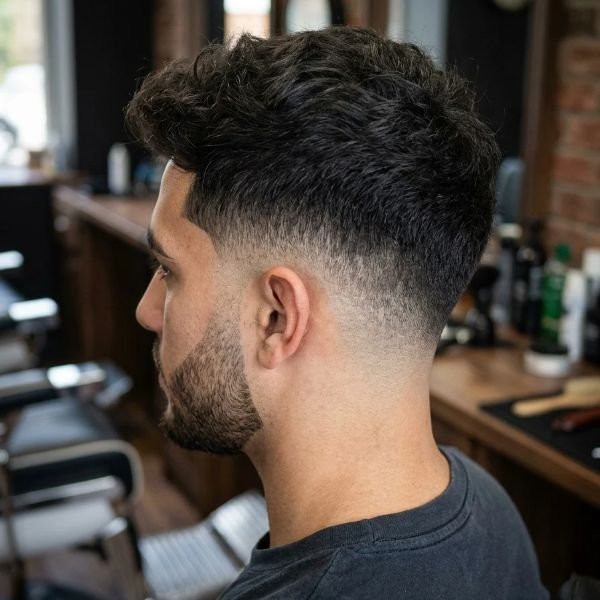
A mid taper fade starts higher, around the temple, roughly level with the outer corner of the eyebrow. The sides shorten in steps toward the ear and neck.
It creates a clear contrast between the sides and the top, while still looking softer than a high skin fade. Many barbers treat it as the balanced option between low and high.
Why people choose it:
- It gives a sharper, more modern outline.
- It slims the sides on thick hair.
- It works with almost every top style.
How the two look side by side
From the front, a low taper hardly changes the shape of your head. You see slightly shorter hair around the ears.
From the side, a mid taper shows a visible gradient. The eye follows the fade up toward the temple, which draws attention to the top.
Quick visual check:
- Front view: low taper looks natural, mid taper looks defined.
- Side view: low taper has a short band near the ear, mid taper has a wider gradient.
- Back view: both keep a clean neckline, but the mid taper looks tighter.
Bring photos of both to your barber so you can compare.
Which one looks more professional?
Both are office friendly. A low taper is the safest choice for conservative workplaces, interviews, and formal settings. A mid taper also works, especially with a side part, a short textured top, or a neat crop.
If your dress code is strict, pick the low taper and keep the top tidy. If your setting is creative or relaxed, the mid taper adds more style without looking extreme.
Which fade suits your face shape?
- Oval: both work. Pick based on taste.
- Round: a mid taper slims the sides and adds the look of length. Add height on top.
- Square: a low taper softens a strong jaw. A mid taper with a textured top also works.
- Heart: a low taper keeps the sides fuller and balances a narrow chin.
- Diamond: a low taper keeps the cheekbones from looking too wide.
- Oblong or long: a low taper keeps the sides fuller so the face does not look longer. Keep the top shorter.
Which one works better for your hair type?
- Straight hair: both work. A mid taper shows clean lines, while a low taper keeps a softer shape. Add texture on top to avoid a flat look.
- Wavy hair: both work. The waves add movement, so a low taper looks effortless.
- Curly hair: a mid taper controls volume at the sides and keeps curls neat. A low taper keeps more of the curl shape.
- Thick hair: a mid taper removes bulk from the sides.
- Fine hair: a low taper looks fuller. Too much contrast can make fine hair look thin.
- Coily or textured hair: either works. Ask for a crisp line-up and keep the top moisturized.
Pairing each fade with popular top styles
| Top style | Better with low taper | Better with mid taper |
|---|---|---|
| Textured fringe | Yes, soft look | Yes, more contrast |
| Quiff | Good for a relaxed quiff | Great for a bold quiff |
| Slick back | Classic, conservative | Sharper and more polished |
| Curly top | Natural, fuller sides | Defined, controlled sides |
| Crop | Soft and tidy | Clean and modern |
| Long top or flow | Best match | Works with a high contrast look |
| Buzz cut | Subtle | Cleaner outline |
Maintenance: which one lasts longer?
A low taper lasts longer. Because the sides keep more length, grow-out looks softer. A mid taper shows growth around the temples and neckline sooner, since the contrast is higher.
Typical refresh times:
- Low taper: every 4 to 6 weeks.
- Mid taper: every 3 to 4 weeks.
- Taper that goes to skin at the bottom: closer to every 3 weeks.
These are typical, not strict. Faster growth means earlier visits. In between, a quick neckline tidy can stretch a cut by a week or so.
Everyday styling and products
Both cuts need only a few minutes.
- Start with damp hair. Towel dry gently.
- Apply a base product. Use sea salt spray for texture or a leave-in for curls.
- Dry the top. Lift the roots with your fingers or a dryer on medium heat.
- Add a finishing product. Use a pea-sized amount.
- Shape and go. Pinch pieces for texture or comb for a clean look.
Product guide:
- Matte clay: strong hold for thick hair and textured tops.
- Matte paste: medium hold with flexible movement.
- Pomade: light shine for slick backs and side parts.
- Sea salt spray: body for straight and fine hair.
- Curl cream: defines waves and curls.
- Texture powder: lift for fine hair.
Skip heavy gels. They flatten texture and make the taper look dated.
Pros and cons at a glance
Low taper fade

Pros
- Subtle and conservative.
- Grows out gently.
- Longer time between visits.
Cons
- Less contrast.
- Less effective at removing bulk from thick sides.
Mid taper fade
Pros
- Clear, modern outline.
- Slims thick sides.
- Good with most top styles.
Cons
- Needs more frequent trims.
- Contrast can be too strong for very conservative settings.
How to ask your barber
Give your barber five details:
- Type: “I want a low taper” or “I want a mid taper.”
- Starting point: “Starting at the temple” for mid, “starting near the ear” for low.
- Bottom length: “Down to a #1” or “to skin.”
- Top length: “About three inches, point cut for texture.”
- Neckline: “Natural” or “blocked.”
Bring photos from the front, side, and back. Add a note about your cowlick, hair direction, and how long you want to spend styling.
Common mistakes to avoid
- Asking only for “a fade.” Say taper, the height, and the bottom length.
- Choosing a high contrast cut for a strict dress code. A low taper is safer.
- Ignoring your hair texture. Straight hair needs texture. Curly hair needs moisture.
- Skipping trims. The sides lose shape first.
- Using too much product. It weighs down the top.
- Showing only a front photo. It hides the taper.
If the result is not what you wanted, ask for a small adjustment before you leave. Most barbers will do it.
Final verdict: low taper fade or mid taper fade?
Pick the low taper fade if you want a soft, natural cut with fewer barber visits. Pick the mid taper fade if you want a sharper outline and do not mind regular trims.
If you are still unsure, start low. It is the easiest cut to adjust, and it gives you a clear idea of how a taper looks on your head.
FAQs about low taper fade vs mid taper fade
What is the main difference between a low taper and a mid taper?
A low taper starts near the ear and looks subtle, while a mid taper starts around the temple and looks more defined.
Which is better for beginners?
A low taper. It is softer and easier to grow out.
Which taper is more professional?
Both work, but a low taper is the safest for conservative workplaces.
Which lasts longer between haircuts?
A low taper, usually 4 to 6 weeks compared with 3 to 4 weeks for a mid taper.
Is a mid taper better for thick hair?
Yes, because it removes more bulk from the sides.
Can I switch from a low taper to a mid taper later?
Yes. Ask your barber to start the taper higher at your next visit.
Is a taper the same as a fade?
No. A taper keeps some length at the bottom, while a fade usually goes down to skin.