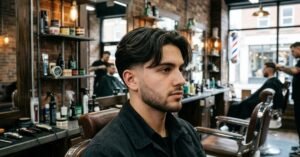
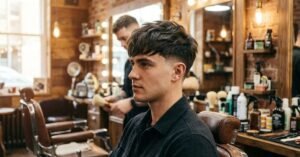
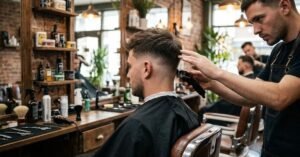
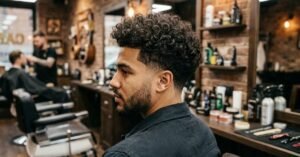
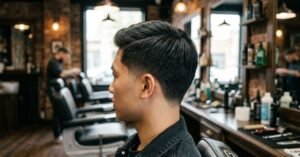
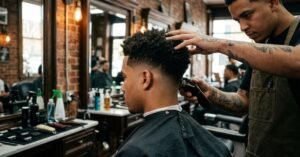
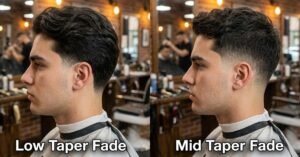
A textured fringe with low taper fade is one of the easiest modern haircuts to wear. The top falls forward in loose, broken pieces. The sides shorten gradually near the ears and neck. The result looks relaxed, but still clean.
This guide explains what the cut is, who it suits, and how to ask for it. You will also learn how to style it, which products to use, and how often to trim.
What a textured fringe with low taper fade actually is
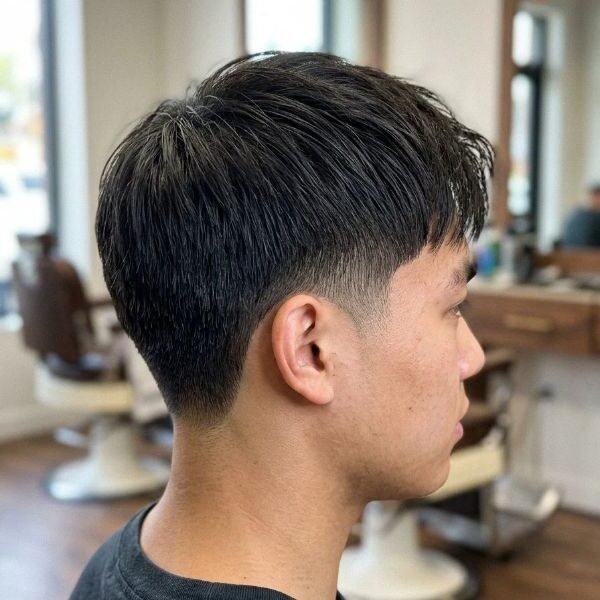
It is a two part haircut. The top is cut so the hair sweeps across the forehead, usually landing between mid forehead and the brows. Barbers add the texture with point cutting, texturizing shears, or a razor, so the ends look uneven on purpose.
The sides use a low taper fade. That means the hair starts shortening just above the ear and around the nape. Less bulk is removed than with a mid or high fade, so the blend looks soft and natural.
Quick breakdown:
- Fringe: forward hair with choppy, piecey texture.
- Low taper: gradual shortening near the ears and nape.
- Fade effect: a smooth blend that can go close to skin at the very bottom.
- Finish: a tidy neckline and sideburns.
Because the sides are the part a front photo hides, name the taper or fade yourself when you ask for it.
Why the cut is everywhere in 2026
Three things explain why the textured fringe with low taper fade is so popular.
- It is easy: most days need a few minutes and one product.
- It is flexible: it suits school, work, and nights out.
- It grows out well: the low taper stays neat longer than higher fades.
It also works on many hair types, and a fringe brought forward can help soften a receding hairline.
Who it suits
Most men can wear this cut. It works best if you:
- Want a modern look without much daily effort.
- Are comfortable with hair on your forehead.
- Can visit a barber every few weeks.
If you prefer a fully off the face style, such as a slick back, this may feel too soft.
Best face shapes
Face shape affects how long and how heavy the fringe should be.
- Oval: almost any version works.
- Round: a piecey fringe with some height helps lengthen the face.
- Square: a softer, wispier fringe balances a strong jaw.
- Heart: a fringe over the forehead balances a wider top half.
- Long or oblong: a forward fringe shortens the face visually.
If your features are very angular or your hairline has receded a lot, keep the fringe a little shorter.
Best hair types
Straight hair
Straight hair needs the texture cut in, because it will not create it alone. Ask for point cutting and use a texture spray or clay to keep pieces separate.
Wavy hair

Wavy hair is the easiest to wear. Natural bends give the fringe movement, so the styling can be minimal.
Thick hair

Thick hair benefits from thinning and layering. The barber removes weight so the fringe does not look heavy or boxy.
Fine or thin hair

Fine hair can look fuller with this cut, but it loses shape faster. Use a light touch with product and book trims more often.
Curly hair

Curly hair should be cut dry, so the barber can see how it springs up. Let curls fall forward, and use a curl cream to define them.
The main variations
The fringe stays the same, and small changes to the sides or length create a different look.
- Classic low taper textured fringe: the standard version, balanced and neat.
- Short textured fringe: sits above the brows and suits receding hairlines.
- Long textured fringe: reaches the brows for a moodier, grown out feel.
- Curly textured fringe: curls rest forward, with tapered sides.
- Low taper blowout: the top is dried up and out for extra volume.
- Low skin fade fringe: the bottom of the fade goes to skin for sharper contrast.
- Fringe with a beard: sideburns blend into the beard for a smooth finish.
- Bleached or colored fringe: lightened tips highlight the texture.
If you want more contrast, move to a mid taper. If you want it softer, keep the low taper and leave the sides longer.
How to ask your barber
A clear request avoids surprises. Cover these points:
- Fringe length: say where it should fall, such as the brow or just above it.
- Top length: give an amount in inches.
- Texture: ask for point cutting or texturizing.
- Sides: a low taper fade, where it starts, and how short it ends.
- Neckline: natural, rounded, or squared.
Bring two photos, one from the front and one from the side. If you have curly hair, ask for the fringe to be cut dry.
Example request: “I would like a low taper fade on the sides, going close at the bottom. Keep about three inches on top, point cut it for texture, and let the fringe sit just above my brows.”
How to style it at home
Use these steps on damp or nearly dry hair:
- Wash with shampoo, and condition if your hair is dry.
- Towel dry gently until it is damp.
- Apply sea salt spray or a light mousse for grip.
- Blow dry the top forward, using your fingers to shape it.
- Warm a small amount of clay or paste between your palms.
- Work it through the fringe and pinch pieces apart.
- Finish with a flexible spray if you need hold.
For curly hair, skip the blow dry. Apply curl cream to damp hair, then air dry or diffuse.
Best products
Matte products work best because they keep the hair looking natural.
- Matte clay: dry finish and strong, flexible hold.
- Texture wax: soft hold with more control over pieces.
- Sea salt spray: adds grip on damp hair, especially if it is fine.
- Molding paste: flexible hold for reshaping during the day.
- Texture powder: adds lift at the roots without weight.
- Curl cream: defines curls and fights frizz.
Avoid shiny gels and heavy pomades on the fringe, because they clump the hair and flatten the texture. Always start with a small amount and add only if needed.
Maintenance and trim schedule
A textured fringe with low taper fade usually looks tidy for a long time, but the fringe grows into your eyes first.
- Full haircut: every four to six weeks.
- Fringe trim: about every three weeks to keep it just above the brows.
- Faded bottom or skin fade: every two to four weeks for a sharper look.
- Fine hair: book sooner, since it loses shape quickly.
Between visits, wash regularly, use a light conditioner, and keep your neckline tidy. Wash less often if your hair looks better on the second day.
Common mistakes to avoid
- Showing only a front photo: the barber cannot see the sides.
- Using too much product: the fringe looks stiff and greasy.
- Waiting too long between trims: the shape grows out and the fringe falls into your eyes.
- Picking the wrong fringe length: too long can hide the face, and too short can look harsh.
- Ignoring hair texture: straight hair needs texture, and curly hair needs moisture.
- Choosing shiny products: they reduce the piecey look.
FAQs about the textured fringe with low taper fade
What is a textured fringe with low taper fade?
It is a haircut with a choppy fringe on top and sides that gradually shorten low near the ears and nape. It looks relaxed and neat.
Does this cut work on straight hair?
Yes. Straight hair needs texture cut in and a light styling product to create separated pieces.
Is it suitable for curly hair?
Yes. Ask for the fringe to be cut dry, and use curl cream to define the curls.
How often should I trim it?
Every four to six weeks for the full cut, and about every three weeks for the fringe. Faded edges may need visits sooner.
What face shapes suit it best?
Oval faces suit most versions. Round, square, heart, and long faces also work with the right fringe length.
Can it hide a receding hairline?
A fringe brought forward can soften it. A shorter fringe usually works best for deeper recession.
What product should I use?
Matte clay or paste is the best all round choice. Add sea salt spray for grip on fine hair.
Is it professional enough for work?
Yes. Keep the fringe above the brows and the sides tidy for a polished look.
Conclusion
The textured fringe with low taper fade gives you a modern, easygoing cut that suits many faces and hair types. Choose a fringe length, decide how close the taper should go, and show your barber photos from more than one angle.