
If you’ve got natural waves and you’re tired of haircuts that either flatten them out or turn into a frizzy mess by noon, the low taper fade is probably the cut your barber has already been steering you toward.
It’s become one of the most requested men’s haircuts of the past few years, and for wavy hair specifically, it might be the single best match on the books.
This guide breaks down what a low taper fade actually is, why it pairs so naturally with wavy hair, and twelve specific styles you can bring to your next barber appointment.
You’ll also get real answers on maintenance, common mistakes, and how to talk to your barber so you don’t leave the chair disappointed.
What Is a Low Taper Fade?
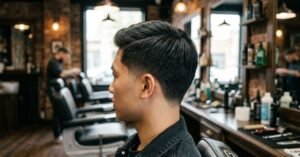
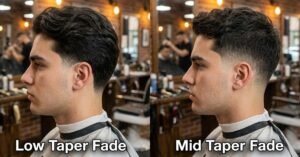
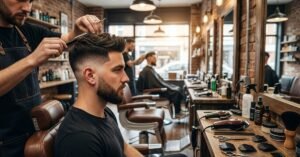
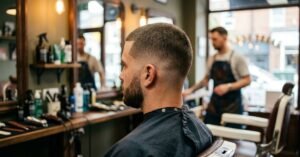
A low taper fade is a haircut where the sides and back gradually shorten from the top of the head down toward the ears and neckline, with the fade itself starting low, just above the ear line rather than up near the temples.
Unlike a high or mid fade, there’s no dramatic jump in length. The transition is subtle, which is exactly why it works so well with hair that already has its own texture and movement.
The top can be left at almost any length, from a short textured crop to several inches of flowing waves, while the sides stay neat and close to the skin without going full skin fade.
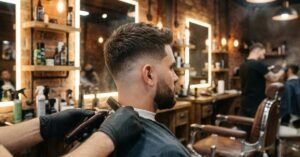
Barbers usually work with clipper guards ranging from a #1 or #2 near the bottom of the fade up through longer guards higher on the head, blending everything with no visible lines.
Because the fade starts low, it also grows out more gracefully than a high fade. Most men can stretch appointments to every three to five weeks before the cut starts to look uneven, which makes it one of the lower maintenance fade options on the market.
Why Wavy Hair and This Cut Go Together
Wavy hair has natural movement, but that movement only shows up properly when there’s enough length and weight left on top to let it fall into shape. A high fade removes too much volume from the sides, which can make waves on top look disconnected or puffy by comparison. A low taper fade keeps that balance intact.
Here’s what makes the combination work so well:
- The subtle blend flatters natural texture. Because the fade transitions gradually, it doesn’t compete with the waves on top the way a sharp, high contrast fade can.
- It controls bulk without cutting off movement. Wavy hair tends to get heavy at the sides. Tapering it down (without shaving it) keeps things tidy while letting the crown do its thing.
- It reduces frizz along the hairline. Shorter length near the ears and neck means less friction and fewer flyaways in the areas most prone to frizzing up.
- It works across wave patterns. Whether you have loose 2A waves or thicker, more defined 2C waves, the low taper adjusts easily since the top length and sides can be customized independently.
- It photographs and styles well both ways. You can brush it back for a polished look or scrunch it with a texture product for a more relaxed, lived-in finish.
The result is a haircut that feels tailored to wavy hair specifically, rather than a generic fade that just happens to be applied to it.
12 Best Low Taper Fade Styles for Wavy Hair
Classic Wavy Low Taper Fade

This is the baseline version most guys start with. The top sits around two to three inches, left long enough for the waves to show but short enough to stay manageable, while the sides fade cleanly from the ears down. It suits nearly every face shape and hair density, which is why it’s the most commonly requested version at barbershops.
Textured Wavy Low Taper Fade

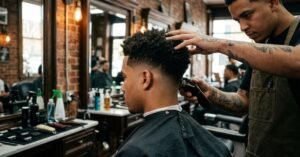
Here, the barber uses point cutting or texturizing shears on the top section to remove bulk and encourage the waves to separate naturally rather than sitting flat as one solid mass. It’s a great pick if your hair tends to look heavy or block-like after a regular trim, since the texture work adds visible movement without adding length.
Read more: Low Taper Fade Without Beard: Styles, Tips and Everything You Need to Know
Messy Wavy Low Taper Fade
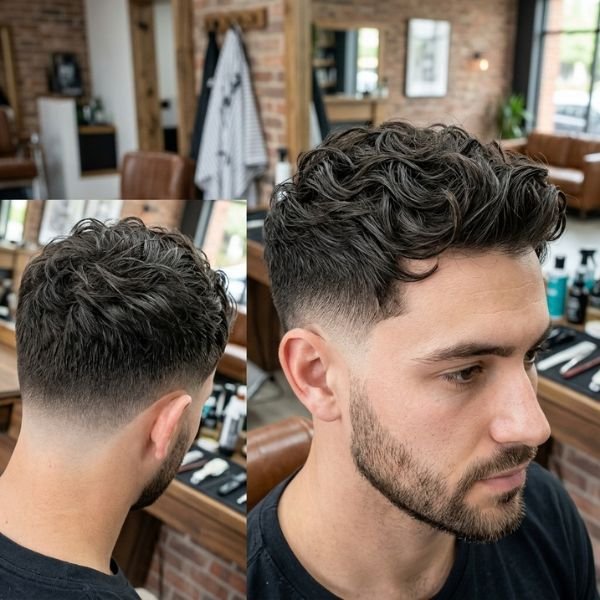
Built for guys who want a cut that looks effortless. The top is left a little longer and styled with fingers rather than a comb, often finished with a matte paste or sea salt spray for a slightly undone, tousled finish. It requires almost no daily styling time, which makes it a favorite for students and anyone with a busy morning routine.
Short Wavy Low Taper Fade

If you prefer low maintenance hair overall, keeping the top around one to one and a half inches gives you just enough length for the waves to be visible without needing much product or styling at all. This version also grows out cleanly, so it holds its shape longer between cuts.
Long Wavy Low Taper Fade
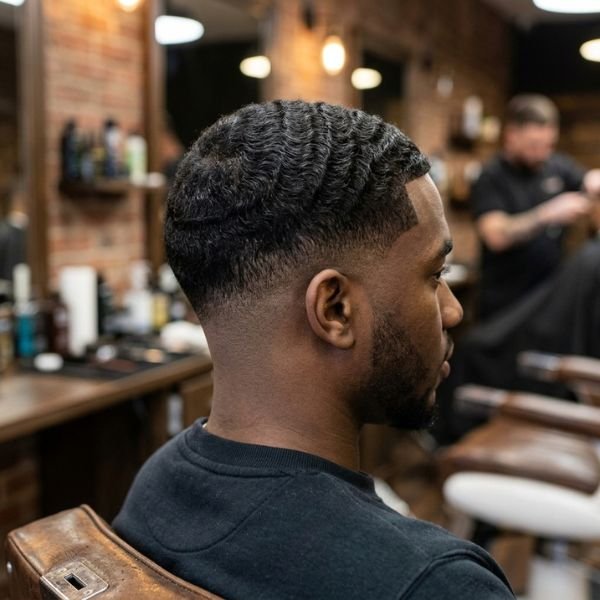
For those who want maximum wave definition, growing the top out to three or four inches lets the waves fall and roll more dramatically. The fade underneath keeps the whole look from feeling unkempt, providing contrast that makes the length on top read as intentional rather than overgrown.
Wavy Fringe Low Taper Fade
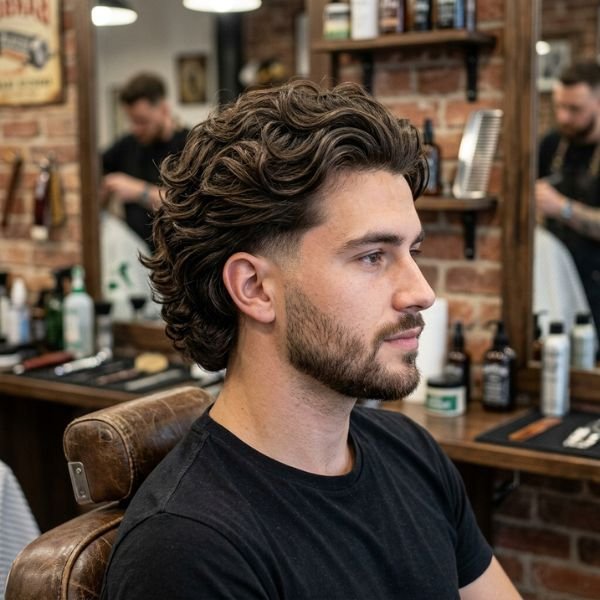
The front section is left longer and pushed forward or slightly to the side, creating a soft fringe that frames the forehead. This works particularly well for rounder or square face shapes, since the fringe can be angled to add visual length to the face.
Middle Part Wavy Low Taper Fade
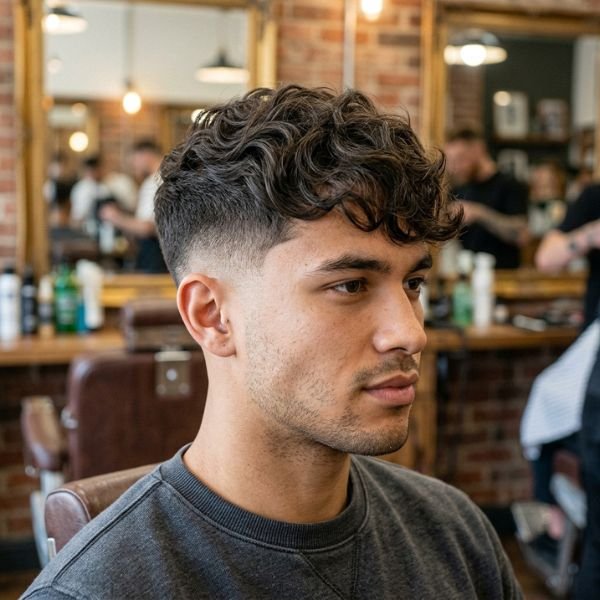
A defined part, either cut in with a razor line or simply combed in, adds a more polished, put together edge to the waves. This is one of the more formal-leaning variations on this list and tends to read as neat even without heavy styling.
Middle Part Wavy Low Taper Fade

Splitting the top down the center lets the waves fall symmetrically on both sides, giving a relaxed, modern look that doesn’t require much daily effort. Medium length hair usually works best here, since it needs enough weight for the waves to settle without looking too heavy or mop-like.
Fluffy Wavy Low Taper Fade

This version leans into volume, often achieved by diffusing the hair while drying or applying a lightweight mousse to lift the roots. It creates the appearance of more density, which makes it a strong choice for guys with fine or thinner wavy hair who want a fuller-looking finish.
Professional Wavy Low Taper Fade

A slightly shorter, more controlled take designed for office environments and formal settings. The waves are kept neat with a light hold cream or pomade, and the fade is blended tightly for a clean, put together silhouette that still shows off natural texture.
Thick Wavy Low Taper Fade
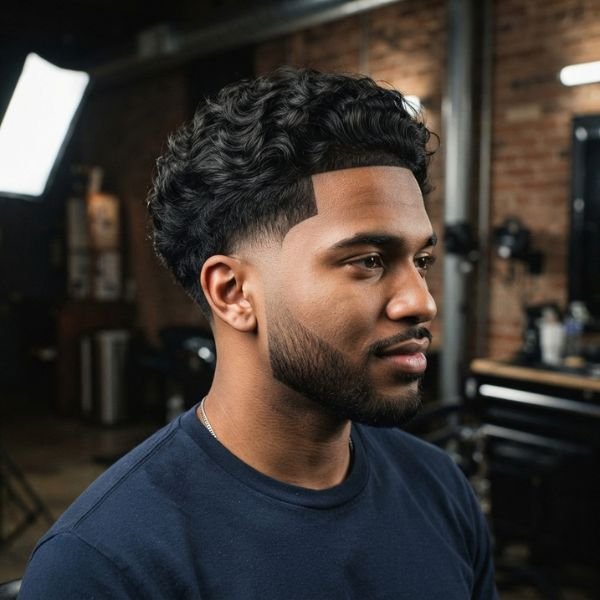
For dense, heavy wavy hair, this style relies on layering and texturizing to manage volume so the cut doesn’t puff up or look triangular. It gives thick hair the shape and structure it needs without weighing it down or requiring constant flattening.
Natural Wavy Flow with Low Taper Fade

Sometimes the best approach is the simplest one. This style skips heavy styling altogether and lets the waves air dry into their natural shape, with the low taper providing just enough structure at the sides to keep things looking intentional rather than unkempt.
Read more: Low Taper Fade: Complete Beginner Guide
Which One Is Right for You?
The right style usually comes down to hair thickness, face shape, and how much time you’re willing to spend in front of a mirror each morning.
- Thick wavy hair: the Textured or Thick Wavy variation manages volume without flattening it.
- Thin or fine wavy hair: the Fluffy or Short versions build the appearance of density without overloading the hair.
- Low effort mornings: the Messy or Natural Flow styles need almost no daily maintenance.
- Work or formal settings: the Side Part or Professional variation strikes the right balance between neat and natural.
- Round or square face shapes: a Fringe or Long variation adds visual length and softens strong angles.
- Oval or heart-shaped faces: almost every style on this list works well, so personal preference can lead.
If you’re still unsure, the Classic Wavy Low Taper Fade is the safest starting point. It’s easy to adjust into any of the other eleven styles once you know how your hair behaves after the first cut.
Talking to Your Barber
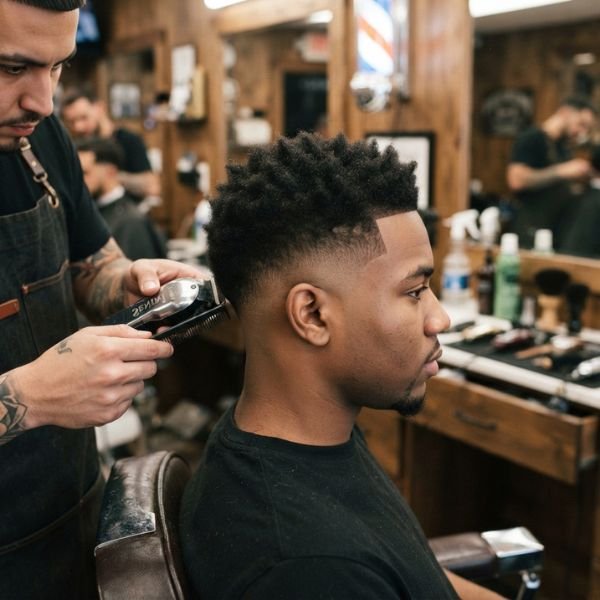
Clear communication makes the difference between a great haircut and one you’re unhappy with for the next month. When you sit down, cover these points:
- Say “low taper” specifically, and clarify that you don’t want a skin fade. Mention that the fade should start just above the ears and neckline rather than higher up the head.
- Give a top length in inches or use your fingers to show the approximate amount you want kept. Vague requests like “not too short” often lead to miscommunication.
- Bring a reference photo. Even a rough match helps your barber understand the balance between the top length and the fade you’re picturing.
- Mention point cutting or texturizing if you have thick or heavy hair, since this technique removes bulk without creating blunt, boxy lines.
- Explain your wave pattern, whether it’s loose and fine or tight and coarse, so your barber can adjust the guard sizes and cutting technique accordingly.
- Ask about the neckline and hairline finish, since some men prefer a natural edge while others want a crisp line-up.
A good barber will ask follow-up questions on their own, but walking in prepared saves time and avoids surprises.
Keeping It Looking Good
Wavy hair tends to be drier than straight hair, so the maintenance routine matters just as much as the cut itself.
- Book touch-ups every three to five weeks. Because the fade starts low, it grows out more gracefully than a high fade, so you have more flexibility on timing.
- Use a lightweight, hydrating shampoo. Sulfate-heavy formulas can strip natural oils and encourage frizz, particularly on wavy or curly textures.
- Apply product to damp hair. Sea salt spray, curl cream, or a light mousse works best when hair is still slightly wet, helping waves clump together rather than separating into frizz.
- Scrunch instead of brush when you want defined waves. Brushing dry wavy hair tends to break up the wave pattern and increase frizz.
- Protect your hair overnight. A satin pillowcase or a loose silk scarf reduces friction while you sleep, which helps waves hold their shape into the next day.
- Trim regularly even if you’re growing the top out. Occasional trims prevent split ends from disrupting the wave pattern as the hair gets longer.
Mistakes Worth Avoiding
A few common errors tend to derail this haircut before it even has a chance to settle in.
- Over-tightening the fade. Asking for too much contrast turns a low taper into something closer to a high fade, which can make wavy hair on top look disconnected.
- Skipping texturizing on thick hair. Without it, dense wavy hair can look boxy or triangular instead of naturally shaped.
- Using too much product. Heavy pomades or gels can weigh waves down and create a greasy look rather than defined texture.
- Not communicating hair type to the barber. Wave patterns behave differently, and a cut that works for loose 2A waves may not suit tighter 2C waves without adjustment.
- Waiting too long between trims. Letting the fade grow out fully before your next appointment means the barber has to redo more work, which can shorten the top more than you wanted.
- Ignoring hydration. Dry wavy hair frizzes more easily and loses definition, undermining even a well-executed haircut.
Conclusion
The low taper fade earns its popularity with wavy hair because it does the one thing a haircut should do: work with your natural texture instead of against it. Whether you lean toward the low maintenance Messy or Short versions, or you prefer the more polished Side Part or Professional look, the underlying structure stays the same.
Keep enough length on top for the waves to move, keep the fade low and gradual, and be specific when you talk to your barber. Get those three things right, and this cut will carry you comfortably from casual weekends to the office without missing a beat.
Read more: Best Fades for Curly Hair – Easy & Complete Guide
Frequently Asked Questions
Is a low taper fade good for wavy hair?
Yes. It preserves enough length on top for waves to show their natural movement while keeping the sides neat, making it one of the best fade options for wavy textures.
How long should the top be?
Most men keep the top between one and four inches, depending on how much wave definition they want and how thick their hair is.
Does it work with thick wavy hair?
Yes, though thick wavy hair usually benefits from texturizing or point cutting to manage bulk and prevent a boxy or triangular shape.
Is this haircut professional?
Yes. The Side Part and Professional variations in particular strike a clean, polished balance suitable for office and formal settings.
How often should I get a trim?
Every three to five weeks is typical, since the low placement of the fade allows it to grow out more gracefully than higher fades.
Can I get this with long wavy hair?
Yes. The Long Wavy Low Taper Fade keeps several inches on top for dramatic wave movement while the low fade underneath keeps the overall look controlled.

1 thought on “Low Taper Fade Styles for Wavy Hair”