
A high taper fade cuts the sides and back short, starts the blend high near the temples, and leaves the neckline and sideburns clean and neat.
It keeps more length on top, so you can style it as a curly top, textured crop, quiff, or buzz cut. This guide explains what the cut is, how it differs from a high fade, low taper, and mid taper, and who it suits based on hair texture, head shape, and upkeep habits.
You also get a barber script, a photo checklist, maintenance timing, and honest notes on razor bumps and tool hygiene, so your next appointment ends with the cut you pictured.
What is a high taper fade?
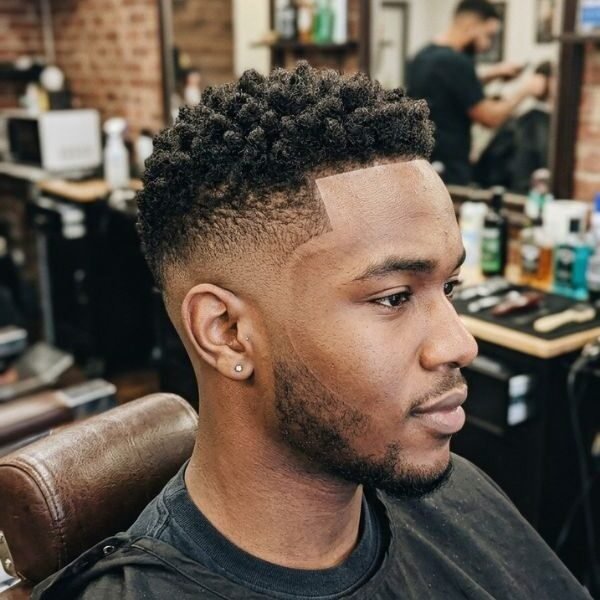
A high taper fade is a short back and sides haircut where the hair gets gradually shorter as it moves down the head.
The blend begins high, around the temple and above the ear, and finishes at the sideburns and nape. The result is a sharp contrast between the longer top and the cleaner sides.
Cut anatomy: fade zone, blend, and retained length
Think of the cut in three parts. Each one affects how the haircut looks and how fast it grows out.
- Fade zone: The area where hair length changes. On a high taper fade it starts near the temple line.
- Blend: The smooth transition made with clippers, clipper guards, and scissor or comb work. A good blend has no visible lines or steps.
- Retained length: The hair left on top and at the upper sides. This length is what you style.
A taper usually leaves a little more hair at the bottom than a skin fade. That is why it looks softer and more classic.
Terminology: why the name varies between barbers
Barbers do not all use the same words. One barber may say “high taper” and mean a short, conservative edge.
Another may say “high taper fade” and mean a bald or skin finish at the bottom. Others use “temp fade” or “temple fade” for the same idea.
This is why guessing the name is risky. Say where the fade starts, how short it ends, and whether you want skin showing. A photo removes most of the confusion.
High taper fade vs high fade, low taper, and mid taper
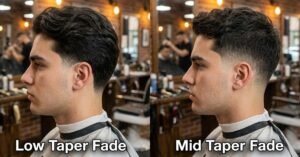
| Haircut | Where the blend starts | Contrast level | Typical look |
| High taper fade | Near the temples | High | Sharp, modern, clean |
| High fade | Upper head, often above the temples | Very high | Bold, dramatic |
| Mid taper | Around the ear level | Medium | Balanced, office friendly |
| Low taper | Just above the ear and nape | Low | Soft, subtle |
What are the main benefits of a high taper fade?

This cut remains popular in 2026 because it works across many hair types and styles. Here are the main advantages.
- Strong shape: The high blend makes the top look fuller and more defined.
- Versatile top: You can pair it with curls, waves, a crop, or a pompadour.
- Cooler in warm weather: Less hair on the sides means less heat.
- Clean on the neck and ears: It stays neat in professional settings.
- Easy to personalize: Bottom length, parting, and line work can all change.
The cut also helps people with thick hair, because removing bulk from the sides reduces the “helmet” effect.
Who does a high taper fade suit?
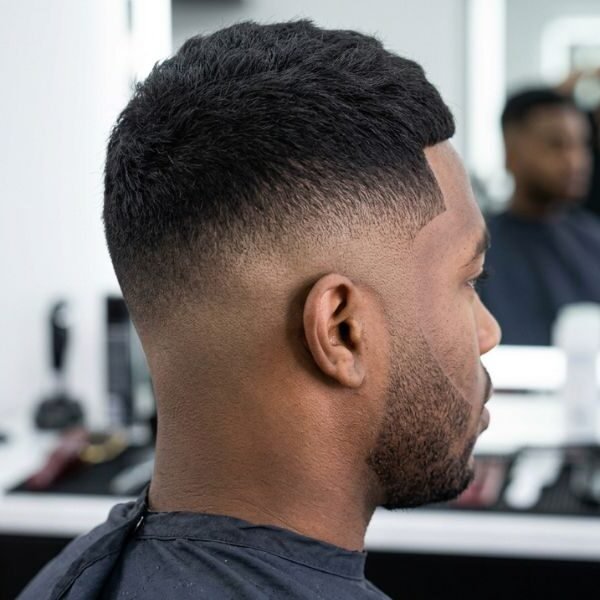
The cut suits most people, but a few details change how well it works. Consider these factors before you book.
Hair texture, density, and growth pattern
Straight, wavy, curly, and coily hair can all work with this cut. Thick hair benefits from the reduced bulk on the sides.
Fine or thin hair can look flatter on top, so a textured crop or a slightly longer top helps add the look of density.
Growth patterns matter too. A strong cowlick or a swirl at the crown can push hair in odd directions. Tell your barber about these spots so they can leave extra length where needed.
Face, head shape, hairline, and scalp visibility
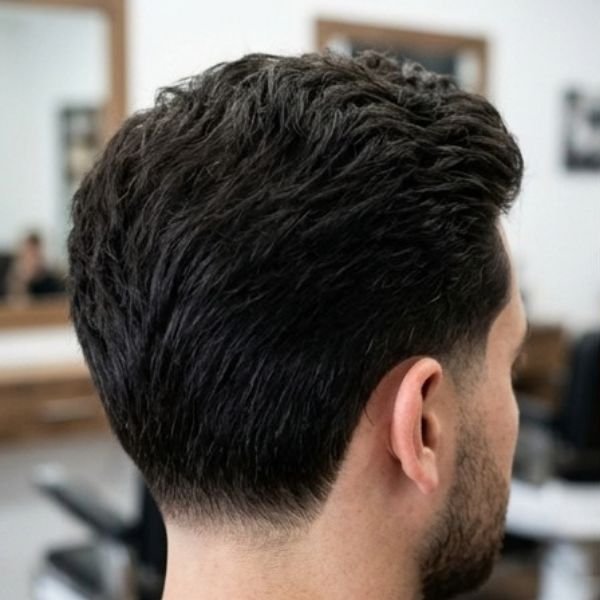
A high taper fade adds height and structure, which flatters round and oval faces. Square and long faces can also wear it, but a very high skin finish may exaggerate length. In that case, ask for a slightly lower start point.
Head shape and scalp marks matter because shorter sides show more skin. Scars, birthmarks, or uneven bone structure become more visible.
A receding hairline also changes the frame, so a softer temple line often looks better than a sharp one.
Lifestyle and upkeep tolerance
Be honest about how often you will visit a barber. This cut looks best when the lines stay fresh.
If you can only get a trim every two months, ask for a more gradual taper with some length left at the bottom. It grows out more gracefully than a skin finish.
Which high taper fade style fits your hair?
The fade controls the sides, and the top controls the personality. These pairings are grouped by hair type so you can find your match.
High taper fade styles for curly and coily hair
Curl pattern defines the best top. Moisture and shape matter more than length here.
Rounded afro or defined curly top
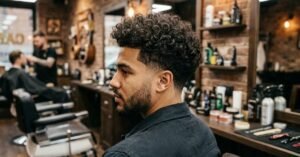
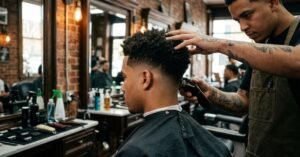
Leave two to four inches of curl on top and shape it into a soft circle. The fade makes the curls look intentional and tidy. Use a curl cream so the pattern stays defined instead of puffy.
Twists, locs, or braids with a high taper
A high taper fade frames twists, locs, and braids well because it keeps the sides clean. Ask for a slightly longer blend so the base does not look harsh against the style. Keep the parting lines in your hair neat to match the sharp edge.
High taper fade styles for straight and wavy hair
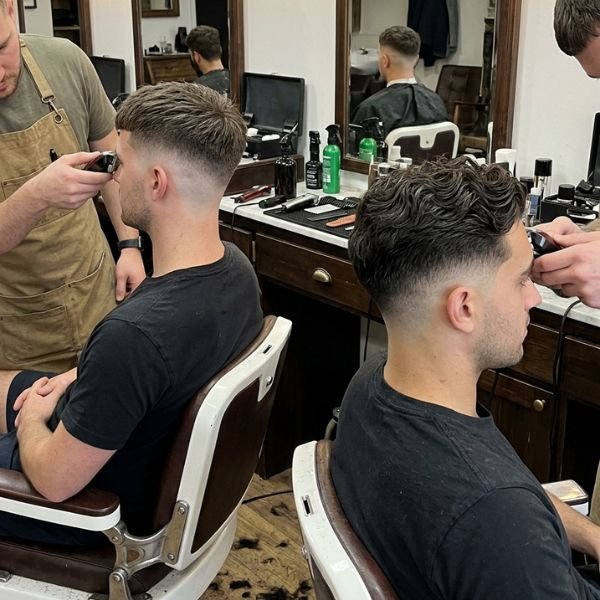
Straight and wavy hair usually needs a product that adds grip and shape.
Textured crop or forward fringe

A textured crop uses short, choppy layers on top, brushed forward. It is low effort and works well with fine hair. Matte clay or paste gives a natural finish.
Side part, quiff, or pompadour

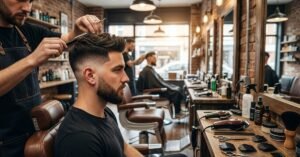
These styles need more length on top, usually three to five inches. A side part looks sharp and professional. A quiff or pompadour adds volume and needs a blow dryer and a firmer product.
Short high taper fade options with less daily styling

If you hate styling, keep the top short and let the fade do the work.
Buzz cut or crew cut

Both cuts use a uniform length on top with a high taper on the sides. They are fast to maintain and good for sports or busy mornings. A crew cut leaves slightly more length at the front.
Short textured top
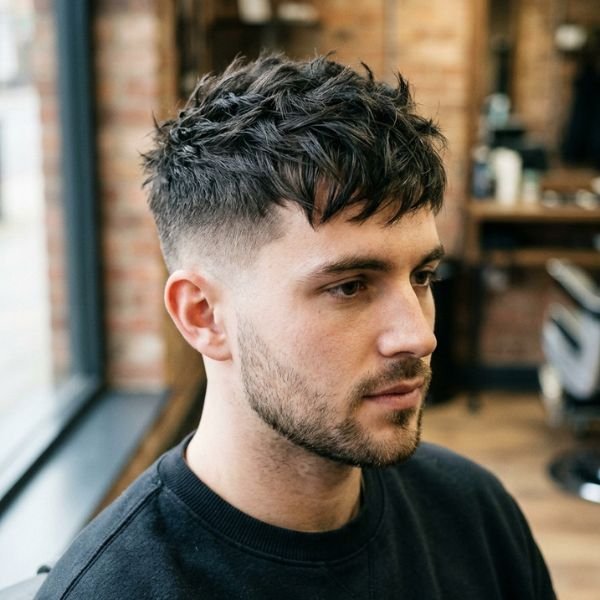
This option keeps about one to two inches on top with light texture. It needs only a pinch of product and holds its shape well.
Beard and neckline pairings
Beards change the way the fade reads, so plan both together.
Temple-to-beard blend
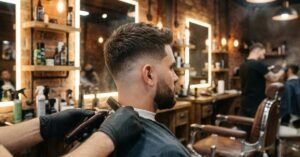
The fade runs from the temple down into the beard with no gap. This gives a unified shape. Ask your barber to blend the sideburn into the beard so the transition looks smooth, not abrupt.
Tapered nape versus defined neckline
A tapered nape fades into the neck and grows out softly. A defined neckline is cut in a clear line, either squared or rounded.
The tapered finish stays neat longer, while the defined edge looks sharper on day one and fades faster.
Read more: Best Fades for Curly Hair – Easy & Complete Guide
How do you ask a barber for a high taper fade?
Clear instructions prevent most bad haircuts. Use the sections below to prepare.
Seven haircut specifications to agree on
Agree on these details before the clippers start. The numbered list follows the order most barbers work in.
- Start point: Where the fade begins (at the temple, slightly above, or just above the ear).
- Bottom length: Skin, grade 0, or a short guard such as a 1 or 2.
- Blend style: Soft and gradual or tight and sharp.
- Top length: In inches or finger widths.
- Top texture: Layered, blunt, or textured.
- Neckline: Tapered, squared, or rounded.
- Line up: Whether you want the front and temple edges lined up.
Reference-photo checklist
Photos work best when they match your hair. Use this short checklist.
- Pick images of someone with a similar hair texture and density.
- Save a front, side, and back view if possible.
- Choose a photo with clear lighting so the fade is visible.
- Avoid heavy filters or edited images.
- Point out the specific part you like, such as the top or the blend.
Copyable barber script
You can read this out or paste it into a message:
“I would like a high taper fade. Start the blend at the temple and finish it at a grade 1 at the bottom, not skin.
Keep about three inches on top, with texture, and a natural neckline. Please leave the front edge soft instead of a hard line up. I will show you a photo as a guide.”
Adjust the numbers to your preference. If you are unsure, ask the barber to start longer. Hair can always be cut shorter.
Your pre-appointment checklist
Before you sit down, run through these points.
- Wash your hair or arrive with clean, dry hair if your barber prefers it.
- Bring two or three photos.
- Decide on your bottom length and top length.
- Mention scars, cowlicks, or skin sensitivity.
- Confirm the price and time, especially for beard work.
How do you maintain and style a high taper fade?
Maintenance is the part most guides skip, yet it determines how long the cut looks good.
Refresh schedule and grow-out
| Bottom finish | Suggested refresh | Grow-out look |
| Skin or grade 0 | 2 to 3 weeks | Fuzzy edges appear quickly |
| Grade 1 or 2 | 3 to 4 weeks | Softer, gradual change |
| Longer taper | 4 to 5 weeks | Neat for longer |
Daily styling by hair texture
Use a simple routine that matches your hair.
- Curly and coily: Apply a leave in conditioner and curl cream to damp hair. Shape the top with your hands.
- Straight: Use a small amount of matte paste on dry hair for texture.
- Wavy: Use sea salt spray or light cream, then scrunch and let it air dry.
- Short crop or buzz: Use only a moisturizer or light oil to avoid dryness.
Apply less product than you think you need, since the top is usually short enough to look greasy quickly.
Safe between-visit cleanup
You can tidy the edges at home, but be careful. Use these steps.
- Wash and dry your hair completely.
- Use a small trimmer, not a razor, on the neckline.
- Move with the grain, not against it.
- Stop at the existing line and avoid cutting into the fade.
- Clean your tools afterward and apply a gentle moisturizer.
Leave the fade itself to your barber. Blending is easy to damage and hard to fix.
What are the drawbacks and safety considerations?
This cut looks sharp, but it has trade offs worth knowing.
Read more: French Crop Low Taper
Practical drawbacks and edge cases
- Frequent visits: The contrast fades quickly, so regular upkeep is needed.
- Cost: Frequent trims add up over time.
- Visibility of scalp issues: Dryness, flaking, scars, and birthmarks show more.
- Not ideal for very thin hair: Less hair on the sides can make the top look sparse.
- Sun exposure: Exposed skin around the ears and temples needs sunscreen.
Irritation, razor bumps, and barber-tool hygiene
Close cutting can lead to irritation, especially around the neckline. Razor bumps, medically called pseudofolliculitis barbae, happen when short hairs curl back into the skin. They are more common in curly and coily hair.
To reduce the risk, ask your barber to cut with the grain, avoid shaving the skin too close, and use a clean, sharp blade.
Apply a soothing, alcohol free lotion afterward. If bumps become painful or infected, see a dermatologist.
Hygiene matters too. A professional barber should use clean capes and neck strips, sanitized combs and brushes, and disinfected clippers and blades between clients.
It is reasonable to ask how they clean their tools. A shop that follows local health rules will not mind.
What are the best alternatives to a high taper fade?
If this cut does not fit, other options give a similar tidy look.
- Low taper fade: A subtle option with less contrast.
- Mid taper fade: A balanced middle ground for most workplaces.
- Classic scissor cut: Works well for longer hair and low upkeep.
- Undercut: A bold, disconnected style with a stronger contrast.
- Short crop with natural edges: Easiest to maintain.
Pick the option that matches your upkeep tolerance, hair type, and style. A good barber can help you compare them in person.
Read more: Hispanic Low Taper Fade Styles (Clean & Modern Guide)
High taper fade FAQs
What is a high taper fade?
It is a haircut where the sides and back gradually shorten, starting high near the temples and finishing at the sideburns and nape.
Is a high taper fade the same as a high fade?
No. A high fade usually removes more hair and looks bolder, while a high taper fade keeps a cleaner, more conservative finish.
How often should I get a high taper fade refreshed?
Most people need a trim every two to four weeks, depending on how short the bottom is.
Does a high taper fade work on curly hair?
Yes. It frames curls, twists, and afros well, especially when the top is shaped and moisturized.
Can I get a high taper fade with a beard?
Yes. Ask for a temple to beard blend so the fade flows smoothly into the facial hair.
What should I tell my barber?
Share the fade start point, bottom length, top length, neckline style, and a reference photo.
Does a high taper fade cause razor bumps?
It can, especially on curly hair and when cut very close. Cutting with the grain and keeping tools clean lowers the risk.
Is a high taper fade professional?
Yes. With a longer bottom grade and a neat top, it suits most offices and formal settings.
A high taper fade gives you structure, flexibility, and a clean finish when you plan it well.
Match the style to your hair texture, be specific about the details, and keep a realistic refresh schedule. With a clear script and a good reference photo, your next cut should look exactly the way you intended.

1 thought on “High taper fade haircut: what it is, who it suits, and what to ask for”