
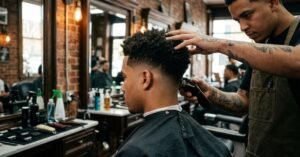
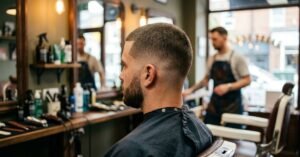
A low fade haircut blends the hair from short on top to skin-close at the very bottom of the sides and back.
The fade starts low, just above the ears and along the neckline. This leaves more hair on the sides than a mid or high fade does. For Black men, the cut works with coils, curls, waves, twists, and locs. It looks clean at work, in the gym, and on the weekend.
This guide covers what the cut is, which styles to try, how to ask your barber for it, and how to care for textured hair so the fade stays sharp between visits.
What Is a Low Fade Haircut?

A low fade is a haircut where the hair gradually shortens from the top down to the skin. The shortest part sits low on the head, around the sideburns, behind the ears, and at the nape.
Barbers build it with clippers and guards. A guard is a plastic attachment that sets the cutting length, such as a #1 (about 1/8 inch) or a #2 (about 1/4 inch). The barber then blends each length into the next so no hard line shows.
The key traits of a low fade are:
- The fade begins low, near the ear and neckline.
- Most of the side hair stays longer and fuller.
- The bottom can finish at bare skin or at very short stubble.
- The top can be any length or texture.
Low Fade vs Taper (Simple Difference)
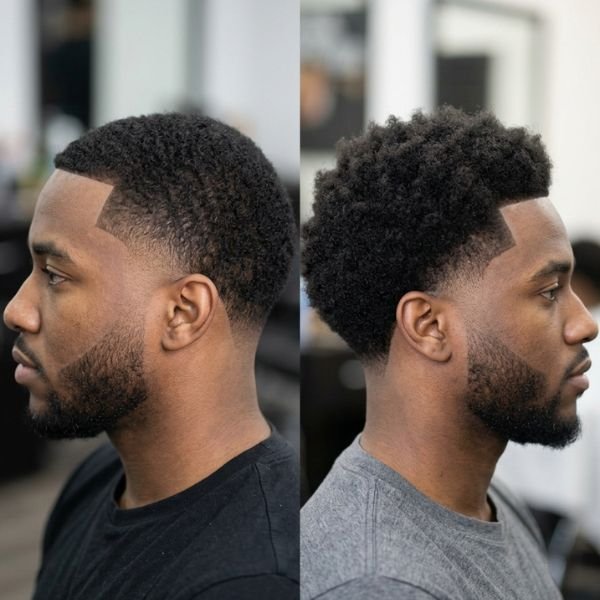
| Feature | Low Fade | Low Taper |
| Bottom length | Skin or very short stubble | Short but visible hair |
| Contrast | Noticeable | Soft and subtle |
| Best for | A sharp, modern look | A conservative, classic look |
| Regrowth | Shows in about 2 weeks | Grows out more gently |
Why Low Fade Haircuts Are Perfect for Black Men
Coiled and curly hair holds shape well. That makes clean transitions easy to see and easy to sculpt, so the fade looks crisp against the texture on top.
Here is why the style suits Black men:
- Versatility: It pairs with almost every top style, from a short crop to a high top.
- Contrast: The tight sides make natural texture on top stand out.
- Professional polish: The neat edges look sharp in an office or an interview.
- Moderate upkeep: It needs fewer visits than a high skin fade.
- Face framing: The low start keeps the sides fuller, which softens strong angles.
The style also has cultural roots. Barbershops have long been community spaces in Black neighborhoods. The fade grew out of that craft, and skilled barbers still treat it as a signature skill.
Popular Low Fade Haircuts for Black Men
These are the styles worth bringing to your barber, each paired with a different top length or texture.
Low Fade with Short Hair
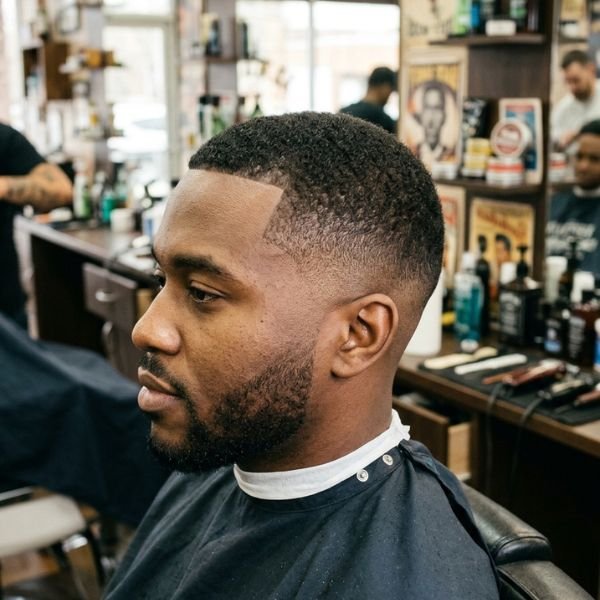
This is the cleanest and easiest option. The top is cut to a #2 to #4 guard and brushed forward. It works well if you want minimal styling and a neat look from day one.
Low Fade with Afro
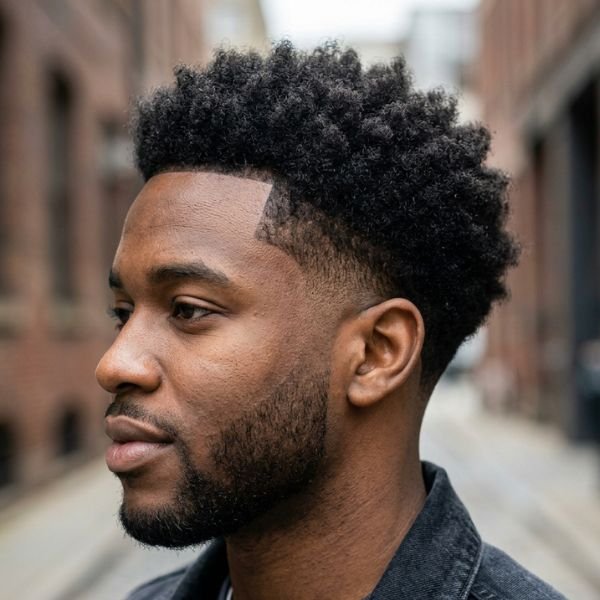
An afro on top with a low fade at the sides keeps the volume while the edges stay tidy. The barber shapes the afro into a round or slightly boxy outline.
A wide-tooth pick, a long-toothed comb that lifts coils without breaking them, adds height.
Low Fade with Curls
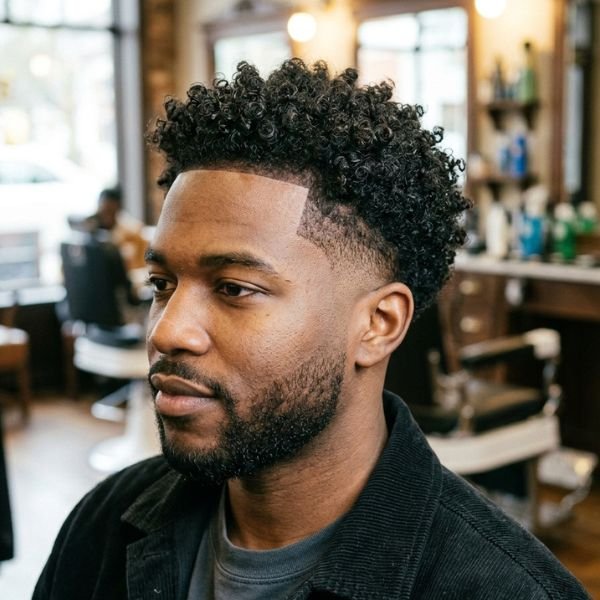
Natural curls on top with a low fade give a soft, textured look. Hair works best at about 2 to 4 inches, which lets the curl pattern show.
A leave-in conditioner and a curl cream keep the curls defined and frizz-free.
Low Fade with Waves
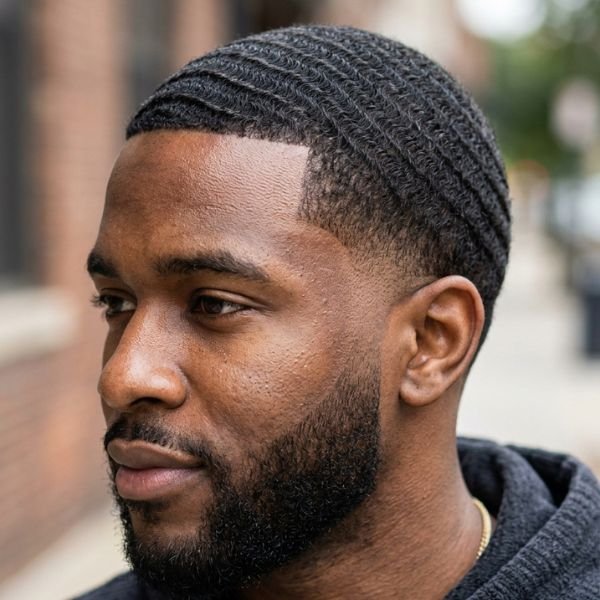
Waves are rows of ripples created by brushing, moisturizing, and wearing a durag, a soft fabric cap that presses the hair flat.
A low fade helps because the tight sides make the wave pattern stand out. Barbers often keep the top at a #1 or #2 guard for easier wave training. Brush daily and keep the hair moisturized.
Low Fade with Twists

Twists are small sections of hair coiled around each other. Short twists on top with a low fade look modern and need little daily work.
Twists are usually done on hair at least 3 inches long. Keep the scalp moisturized so it does not flake.
Low Fade with Dreads

Dreads, also called locs, are ropes of matted hair that form when natural coils lock together. A low fade keeps the sides sharp while the locs stay long or are tied up. Because the sides are short, locs look more deliberate and well kept.
Avoid very tight styles on the front hairline. Constant tension can contribute to traction alopecia, a form of hair loss from pulling.
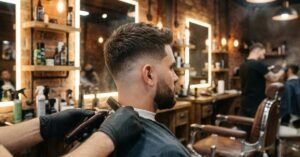
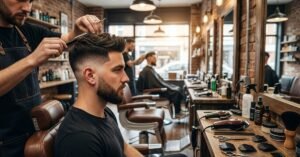
Low Fade with Beard

A low fade and a beard make a strong pair. The barber fades the sideburns straight into the beard so no hard break shows between hair and facial hair. The beard can stay full, or it can be a short stubble.
Beard care matters here because curly facial hair is prone to razor bumps. Medical News Today explains that razor bumps are ingrown hairs that form after shaving and are most common in naturally curly or coarse hair. Trimming with clippers instead of a razor helps reduce the risk.
Read more: Low Blowout Taper with Fringe: A Simple Style Guide for Men
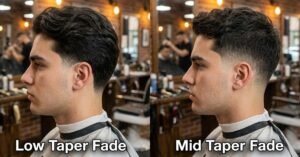
Low Fade vs Mid Fade vs High Fade (Quick Guide)

| Fade Type | Where It Starts | Look | Maintenance |
| Low Fade | Just above the ear and nape | Subtle, classic | Every 2 to 3 weeks |
| Mid Fade | Around the temples | Balanced, versatile | Every 2 weeks |
| High Fade | High on the head | Bold, high contrast | Every 1 to 2 weeks |
How to Explain a Low Fade to Your Barber
The most common reason for a bad fade is unclear communication. Bring a photo, and use specific terms.
Follow these steps at the chair:
- Say “low fade” and name the finish, such as “to skin” or “to a #1.”
- Say where you want it to start. “Just above the ear” works.
- State the top length, either in inches or by guard number.
- Describe the neckline: rounded, squared, or tapered.
- Ask for a line up, also called a shape up. This is a sharp outline along the hairline and temples.
A script you can use: “I’d like a low fade, skin at the bottom, blended up to a #2 on the sides. Keep about 3 inches on top and give me a clean line up.”
Common Mistakes to Avoid
Most fade problems come from poor communication or poor upkeep. A few simple habits prevent them.
How to Maintain a Low Fade (Black Hair Care)
Good care keeps the fade crisp and the skin healthy. Textured hair dries out faster, so moisture matters as much as the cut itself.
Read more: Hispanic Low Taper Fade Styles (Clean & Modern Guide)
Trim Frequency
| Style | Trim Every |
| Low skin fade | 2 weeks |
| Low fade with short hair | 2 to 3 weeks |
| Low fade with curls or afro | 3 to 4 weeks |
| Low fade with locs | 3 to 4 weeks for the sides |
Daily Care
A simple routine is enough.
- Wash with a sulfate free shampoo once or twice a week.
- Apply a leave-in conditioner or light oil while the hair is damp.
- Brush or pick the top gently to avoid breakage.
- Moisturize the scalp to prevent dryness and flaking.
Night Care
Sleep is when friction damages hair. Cotton pillowcases pull moisture from coils. A satin or silk durag, bonnet, or pillowcase reduces that friction. For waves, a durag also keeps the pattern pressed in overnight.
Edge Maintenance
Edges are the hairline around the forehead and temples. Keep them sharp with these steps:
- Visit your barber for a line up between full cuts.
- Avoid pulling the hairline tight with headbands or tight styles.
- Use a small T-blade trimmer, a clipper with an exposed, narrow blade, for light touch ups at home.
- Never use a dull blade. It tugs the hair and irritates the skin.
If bumps do appear, a dermatology review notes that changing shaving habits and using topical treatments together works best.
Darker skin tones are more prone to dark marks and scarring from this condition, so early care matters.
Read more: 7 Best Hispanic & Mexican Low Taper Fade Styles (2026 Guide)
Best Face Shapes for Low Fades
| Face Shape | What the Low Fade Does | Suggested Top |
| Oval | Suits almost every variation | Any length |
| Round | Adds length visually | Height on top |
| Square | Softens the jawline | Textured or curly top |
| Heart | Balances a wide forehead | Medium length with fringe |
| Long | Keeps the sides from looking too narrow | Short or flat top |
Common Low Fade Mistakes to Avoid
These errors show up often and are easy to fix:
- Starting too high: The fade turns into a mid fade. Say “low” clearly and point to the spot.
- Skipping moisture: Dry hair looks dull and the blend loses definition.
- Waiting too long between cuts: The fade grows out and looks uneven.
- Over shaving the hairline: A hairline pushed too far back looks unnatural and can irritate the skin.
- Picking a barber without experience in coarse hair: Textured hair cuts differently. Check their portfolio for fades on hair like yours.
- Sleeping without protection: Friction ruins waves and dries out curls.
Final Thoughts
A low fade haircut is one of the most flexible choices for Black men. It suits short crops, afros, curls, waves, twists, locs, and beards. It looks sharp without being extreme, and it fits most workplaces.
The cut only works as well as its upkeep, so keep a regular trim schedule, moisturize, protect your hair at night, and give your barber clear directions. Bring a photo and use the guard numbers from this guide. Done right, the fade looks fresh and keeps its shape.
Frequently Asked Questions
Is a low fade good for Black men?
Yes. It suits coily and curly textures, works with most top styles, and looks clean with or without a beard.
How long does a low fade last?
A low fade looks sharp for about 2 to 3 weeks. After that, regrowth softens the blend.
Low fade vs low taper – which is better?
A low fade is sharper and goes to the skin. A low taper is softer and keeps more length at the bottom.
Is a low fade professional?
Yes. A low fade with a neat top and clean neckline is accepted in most offices and interviews.

1 thought on “Low Fade Haircuts for Black Men: Styles, Tips and Ideas”