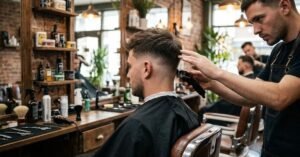
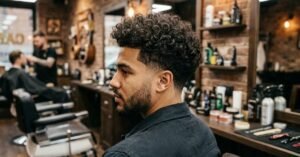
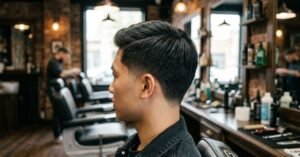
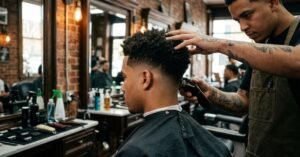
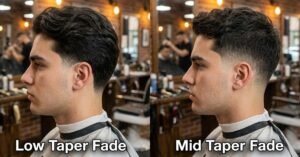
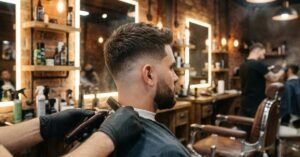
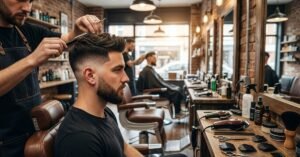
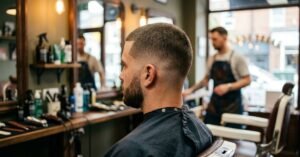
The low taper fade is one of the safest and sharpest haircuts you can ask for.
It keeps the sides and back neat, leaves enough length to look natural, and works with almost any style on top.
If you have never asked a barber for a fade, the terms can be confusing.
This guide explains what a low taper fade is, how it differs from similar cuts, how to order it, and how to keep it looking fresh.
What Is a Low Taper Fade?
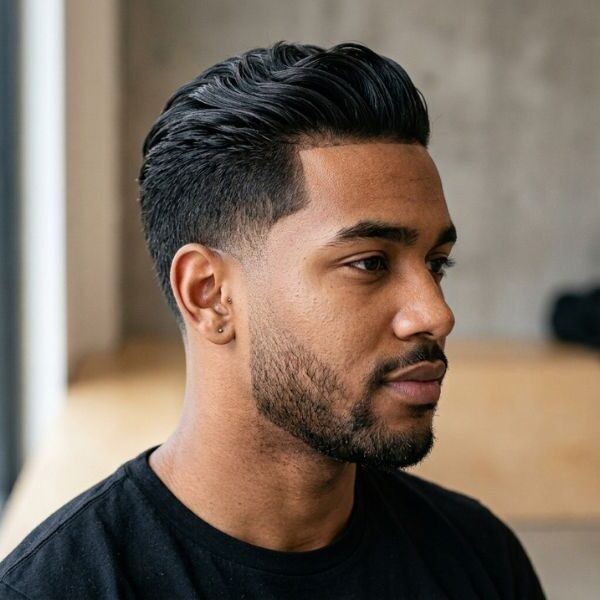
A Taper Fade Complete is a haircut where the hair gets gradually shorter around the sideburns, behind the ears, and along the neckline.
The change in length starts low on the head, just above the ear, and stays close to the hairline.
Here is the quick version:
- Where it starts: near the ear and the nape of the neck
- How it looks: subtle, soft, and clean
- Length on top: short, medium, or long
- Contrast: low, so it reads as neat rather than bold
Barbers use clippers, clipper guards, and sometimes scissors to blend the short areas into the longer hair above. The result looks like a smooth gradient, not a hard line.
What Does “Taper” Mean?
A taper means the hair gets shorter gradually. Think of a pencil tip. It narrows slowly from thick to thin.
In barbering, a taper shortens the hair at the sideburns and neckline. The hair does not usually go down to bare skin. It stays a little longer, which gives a classic, conservative finish.
A fade is different. A fade usually blends down to very short stubble or skin. The low taper fade combines both ideas: a gentle taper with a light fade at the very edge.
Difference Between Low Taper Fade, Low Fade, and Taper Fade
These three names get mixed up all the time. Here is how they compare.
Low Taper Fade

This cut is subtle. The shortening happens only around the ears and neckline. Most of the side hair stays longer, so the haircut looks natural and professional.
Low Fade

A low fade also starts low, but it usually goes shorter. It often reaches skin level at the bottom and shows a more visible gradient. It has more contrast than a low taper fade.
Taper Fade
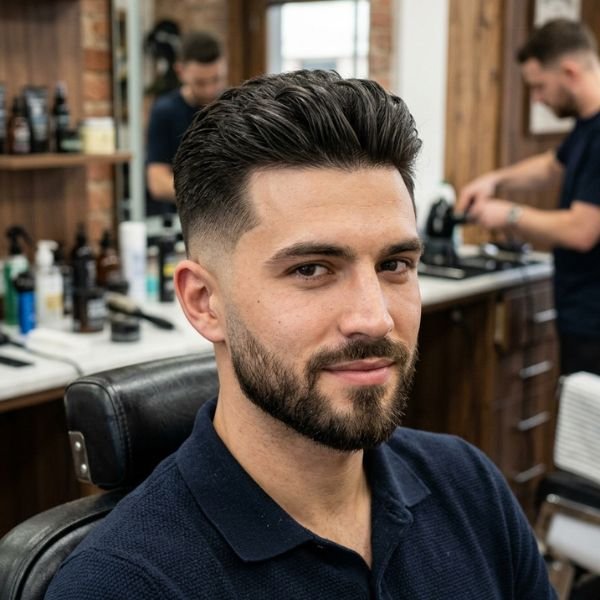
A taper fade is a broader term. It can start at a low, mid, or high point. The main idea is a gradual change in length, but the height and finish vary from barber to barber.
Read more: Low Taper Fade with Beard for Black Men: Best Styles and Grooming Tips
Quick comparison:
| Cut | Starting Point | Shortest Length | Contrast |
| Low taper fade | Just above ear | Short stubble or skin at the edge | Low |
| Low fade | Just above ear | Often skin | Medium |
| Taper fade | Low, mid, or high | Varies | Varies |
Why the Low Taper Fade Is a Smart Choice
Beginners like this cut because it is forgiving. It looks good on day one and still looks decent after a few weeks. Here are the main reasons.
Clean Appearance:

The tidy neckline and sideburns make your whole head look groomed. Even a plain top looks intentional when the edges are sharp.
Professional Look

The low starting point keeps the contrast soft. That makes it a common choice for offices, interviews, weddings, and school events.
Easy to Maintain

You do not need a complicated routine. A little product and a regular trim are enough for most people.
Grows Out Nicely

Because the taper is subtle, growth is less obvious. The haircut stays presentable longer than a high skin fade, which can look messy quickly.
Read more: Undercut Fade vs Low Fade Comparison
Who Should Get a Low Taper Fade?

Almost anyone can wear this cut, but it suits these people especially well:
- First-time fade clients who want a low-risk option
- Office workers who need a polished, conservative style
- Students and teens whose dress codes limit bold cuts
- Men with curly or wavy hair who want to control bulk on the sides
- Men with thick, coarse hair who want less weight around the ears
- Men growing out their hair who still want a tidy shape
It works with most face shapes. If you have a rounder face, ask for slightly more height on top to add length. If you have a longer face, keep the top shorter and the sides a bit fuller.
Best Low Taper Fade Styles for Beginners

Start with one of these easy pairings:
- Low taper with a classic side part: clean, formal, and simple to style
- Low taper with a textured crop: short top, messy finish, minimal effort
- Low taper with a comb over: sharp and professional
- Low taper with curls on top: keeps volume while controlling the sides
- Low taper with a slick back: best for medium to long hair
- Low taper with a natural afro: defined edges with full texture on top
Pick the style that fits your hair length and your daily routine. If you are unsure, the classic side part or textured crop is the easiest place to begin.
How to Ask Your Barber
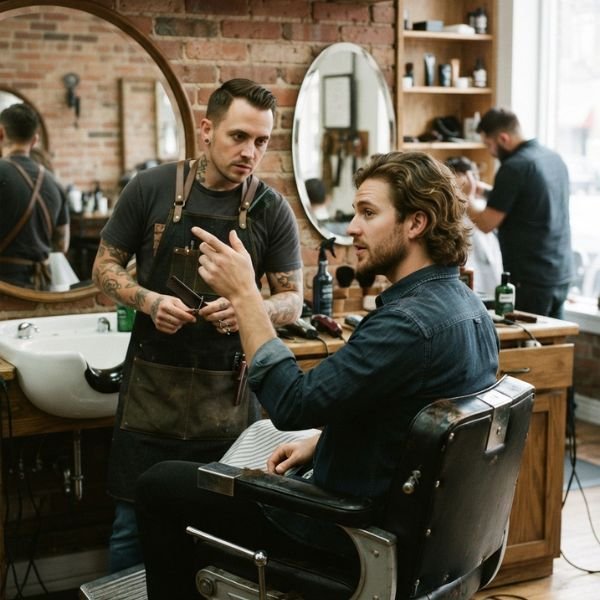
Barbers work faster and better when you give clear instructions. Bring a photo if you can. Then use this simple script:
- “I want a low taper fade.”
- “Start the taper just above the ear and keep it low around the neckline.”
- “Use a number 2 guard at the bottom, blended into a number 4 or with scissors.”
- “Keep the length on top around [state your length], and cut it in a [style].”
- “Please keep the sideburns natural, not too thin.”
Helpful details to mention:
- Whether you want skin showing at the edge or a slightly longer finish
- If you want the neckline rounded, squared, or natural
- Whether you want a hard part or a soft blend
- How often you plan to come back
A note on guard numbers: a number 1 leaves about 1/8 inch (3 mm) of hair, a number 2 about 1/4 inch (6 mm), and a number 4 about 1/2 inch (13 mm). Barbers may use different sizes or freehand the blend, so treat these as starting points.
How to Style a Low Taper Fade
Styling takes only a few minutes.
- Start with clean hair. Wash and towel dry so it is damp, not wet.
- Apply a small amount of product. A pea size works for short hair. Use a little more for longer hair.
- Rub it between your palms. This spreads it evenly.
- Work it through the top. Move from the front to the back.
- Shape it. Use your fingers for a textured look or a comb for a neat look.
- Set it. A blow dryer on low heat helps hold the shape.
Product Guide:
Choose the product based on the finish you want.
- Matte clay: natural, textured look with no shine. Good for short to medium hair.
- Pomade (water based): neat and shiny, easy to wash out. Good for side parts and slick backs.
- Wax: flexible hold with slight shine. Good for messy or textured styles.
- Sea salt spray: adds grip and volume to fine or straight hair.
- Curl cream or leave in conditioner: defines curls and reduces frizz.
- Light hair oil: adds moisture to dry or coarse hair.
If you have oily hair, use lighter products. If your hair is dry, choose cream based formulas. Avoid heavy gel that flakes.
Read more: Fade Haircuts
How to Maintain a Low Taper Fade Properly

A good routine keeps the edges crisp between visits.
- Visit your barber every 2 to 4 weeks. Shorter gaps keep the neckline sharp. Longer gaps still look fine on this cut.
- Wash regularly. Use shampoo suited to your scalp type. Oily scalps may need it more often.
- Moisturize. Dry hair and scalp can make the fade look rough.
- Protect the edges. Do not scratch or over trim around the neckline at home.
- Use a soft brush or comb. It keeps the top tidy and helps distribute natural oils.
- Clean up between cuts. A small trimmer can tidy stray hairs on the neck, but be careful. Small mistakes are easy to make and hard to fix.
Common Beginner Mistakes
Avoid these problems and you will get better results.
- Not bringing a reference photo. Words like “short on the sides” mean different things to different people.
- Asking for the wrong fade. Say “low taper fade,” not just “fade,” or you might get a much shorter cut.
- Skipping product. Even a great cut can look flat without a little styling.
- Cutting at home too soon. Fades take practice. Let a professional handle the blend.
- Waiting too long between cuts. The taper is subtle, but the neckline still grows out.
- Ignoring hair type. Curly, straight, and thick hair each need a slightly different approach.
- Choosing the wrong barber. Look for someone who shows fade work on social media or in the shop.
Cost of a Low Taper Fade

Prices depend on your city, the shop, and the barber’s experience. In the United States, a typical fade costs about $20 to $45.
Higher end shops or design work can cost more. Many barbers expect a tip of around 15 to 20 percent. Check local prices, since rates vary a lot between regions and countries.
Quick money tips:
- Ask if the price includes a wash, hot towel, or beard trim
- Book regular appointments to keep your barber familiar with your cut
- Compare two or three shops before you commit
Final Thoughts
The low taper fade is a smart first fade. It looks sharp without being extreme, and it fits work, school, and everyday life. It also grows out gracefully and needs little effort at home.
To get it right, remember three things:
- Ask clearly using the words “low taper fade” and bring a photo
- Pick a style on top that suits your hair type
- Book regular trims to keep the edges clean
Once you know the basics, you can adjust the length, the blend, and the top style until it fits you perfectly.
Frequently Asked Questions
Is low taper fade good for first haircut?
Yes, it is a safe and popular first fade because it is subtle and easy to grow out.
Does it work for curly hair?
Yes, it controls bulk on the sides while letting the curls on top stay full and defined.
Is it allowed in schools?
Most schools allow it since it looks neat, but check your dress code for limits on skin fades or designs.
How long does it stay fresh?
It usually looks sharp for 2 to 3 weeks and remains presentable up to 4 weeks.
Does it need daily styling?
No, a small amount of product is enough, and short tops can be styled in under two minutes.