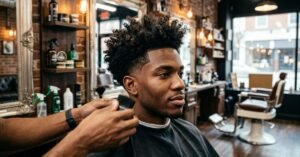
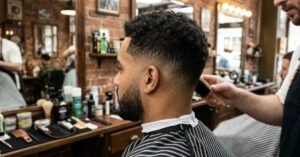
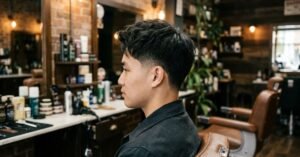
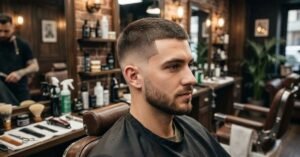
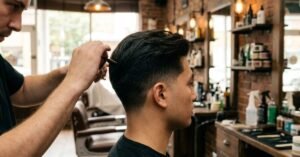
A mid taper fade buzz cut keeps the top short and even, then tapers the sides and back from mid height down to the neckline. It is one of the lowest effort cuts you can get, and it looks sharp without any styling.
The catch is that two choices decide how it turns out: the clipper guard on top and how short the taper ends. This guide covers both, compares the cut with similar ones, explains who it suits, and gives you scripts to read to your barber.
What is a mid taper fade buzz cut?

A mid taper fade buzz cut is a short, uniform length on top with the sides and back gradually shortening from about the middle of the sides to the sideburns and nape. It pairs a clipper cut on top with a blended edge, so the head looks clean and shaped.
Quick facts:
- Top: one short length, set by a clipper guard.
- Sides and back: blended from longer to shorter.
- Start of blend: around the middle of the sides.
- Styling needed: almost none.
Where does the “mid” taper sit?
“Mid” refers to where the blend begins. It starts partway up the sides, around ear level or the temples, depending on the barber. It sits between a low taper, which only cleans up the sideburns and neckline, and a high taper, which starts near the top of the sides.
Because shops use the word loosely, ask your barber to show you where the line will fall before they start.
What makes it a buzz cut?
The top is cut with clippers to one even length, with no layering or styling. Luxe Digital describes a buzz cut as the length on top, while a taper or fade describes the sides and back. So a tapered buzz is simply a buzz on top with a blended edge underneath.
Mid taper fade buzz cut vs similar cuts: what’s the difference?
Mid taper vs mid fade

A mid fade usually goes down to bare skin and wraps further around the head, giving stronger contrast. A mid taper often stops just above skin, so it looks softer and keeps a little hair at the edges. If you want a crisp, skin close look, ask for a mid fade. If you want a gentler blend, ask for a taper.
Low vs mid vs high taper buzz cut

| Cut | Where the blend starts | Contrast | Upkeep |
|---|---|---|---|
| Low taper | Sideburns and nape | Subtle | Lowest |
| Mid taper | Middle of the sides | Medium | Medium |
| High taper | Temples or higher | High | High |
Tapered buzz cut vs classic buzz cut or crew cut

A classic buzz cut is one even length all over. A tapered buzz adds a blend on the sides and back. A crew cut keeps a little extra length at the front that you can push up with product, and the sides are cut shorter than the top. In short:
- Classic buzz: same length everywhere, no styling.
- Tapered buzz: same top, but shaped sides.
- Crew cut: longer front, shorter sides, light styling.
Will a mid taper buzz cut suit you?

It suits many men, but a few factors change how it looks.
How hair texture and density change the look
Thick, dark hair shows the contrast clearly, so the blend looks sharp. Straight hair shows every line, so the blend must be smooth. Curly and coily hair gives a textured top, though tight curls may be cut a little longer to keep shape. Fine or light colored hair shows less contrast, so a softer taper often looks better.
How face and head proportions affect the result
Square, oval and diamond faces suit a buzz well. Round faces look fuller with a uniform buzz, so a tapered side helps slim them. Oblong faces suit a slightly longer buzz with a low taper. Head shape matters too, since a buzz shows every curve and bump. Ask your barber to feel for flat spots or ridges before choosing a guard.
What about a receding hairline, thinning hair, or cowlick?
A short buzz, around a number 1, reduces the contrast between thick and thin areas, so a receding hairline or thin crown is less noticeable. Ask for a natural line up, since a hard edge draws attention to the hairline. Cowlicks matter less on a buzz, but a very short cut can expose them. If hair loss is advanced, a full shave often looks cleaner. Try a number 1 on a weekend and see how it feels.
What clipper guard should you choose for a mid taper buzz cut?
| Guard | Approximate length |
|---|---|
| 1 | 1/8 inch (3 mm) |
| 2 | 1/4 inch (6 mm) |
| 3 | 3/8 inch (10 mm) |
| 4 | 1/2 inch (13 mm) |
#1 vs #2 vs #3 buzz cut on top
#1 for the sharpest contrast
Very short on top, so the taper shows clearly. It reduces the look of thinning, but it also exposes the scalp the most.
#2 for a classic short buzz
A balanced choice that looks clean and still shows a little hair color and texture. It is a good starting point.
#3 for a softer, longer buzz
Soft and slightly fuller, with less contrast between the top and the taper. It is forgiving on head shape.
Longer than a #4: the brush cut crossover
Past a #4, the cut moves toward a brush cut, where the top is longer and can stand up slightly. At that point it stops being a pure buzz and becomes a short styled cut.
Should the taper end at skin, zero, or a short shadow?
This is the finish at the bottom of the taper.
- Short shadow: a number 1 or similar. It is the softest finish and hides regrowth best.
- Zero: clippers with no guard. It is very close, but “no guard” varies between clippers.
- Skin: taken to bare skin with a foil shaver or razor. It is the sharpest and shows regrowth fastest.
If you are unsure, start with a shadow. You can go tighter next time.
Best mid taper fade buzz cut variations
Choose the variation by top length
- #1 on top with a skin taper: sharpest and boldest.
- #2 on top with a shadow taper: balanced and the easiest all rounder.
- #3 on top with a soft taper: gentle and low maintenance.
- 3-2-1 style: a 3 on top, a 2 on the sides and a 1 at the bottom. Each step is a full guard, so it stays neat without bare skin.
Choose the variation by edge finish
- Natural hairline: soft and relaxed, and it grows out well.
- Sharp line up: crisp edges, but it needs frequent touch ups.
- Beard blend: the taper runs into the beard for one smooth shape.
- Small design: a simple line shaved into the side adds detail.
How do you ask your barber for a mid taper fade buzz cut?
Describe the cut instead of using the name alone, and bring photos of the front, side and back.
Five things to specify before the clippers start
- Guard on top: #1, #2 or #3.
- Taper height: mid, starting around the middle of the sides.
- Bottom finish: shadow, zero or skin.
- Neckline: tapered, rounded or squared.
- Hairline: natural or sharp line up.
Ready-to-use barber scripts
Balanced #2 version
“I would like a mid taper fade buzz cut. Number 2 on top, blend starting around the middle of the sides, down to a number 1 at the neckline. Natural hairline, tapered neckline.”
Softer, non-skin version
“Mid taper fade buzz cut with a number 3 on top. Keep the bottom at a number 2, not skin, with a natural hairline and a soft blend.”
Sharper skin-close version
“Number 1 on top, mid taper fade to skin at the bottom. Sharp line up and a squared neckline, and please check the blend from the side and back.”
How do you maintain a mid taper fade buzz cut?
How often should you refresh the cut?
A tapered buzz shows regrowth quickly, because there is no length to hide it.
- Every 2 to 3 weeks: for the sharpest look, especially with a skin finish.
- Every 3 to 4 weeks: a good balance for most men.
- Fades to skin: can need a visit every 10 to 14 days.
Hair grows about half an inch a month, so the cut grows out within about six weeks.
What maintenance can you do between barber visits?
- Tidy only the neckline lightly with a trimmer.
- Do not try to fix the blend yourself, because it usually leaves patches.
- Wash with a gentle shampoo and use a light moisturizer on the scalp.
- Exfoliate gently once or twice a week.
What are the risks and limitations of a very short tapered buzz?
Close shaving, razor bumps, and AKN
Very short cuts at the back of the neck can leave bumps that look like razor bumps. Acne keloidalis nuchae (AKN) can look similar. It is a common, non contagious skin condition on the back of the neck and scalp, most often seen in Black men and usually starting between ages 14 and 25. Left untreated, it can lead to raised scars and permanent hair loss.
The American Academy of Dermatology advises seeing a board certified dermatologist as soon as you notice bumps there, since early care can prevent scarring. It also warns against home remedies such as acids or engine oil. As a simple precaution, you can ask your barber for a clipper finish at the nape instead of a razor, but this is not a proven prevention. This guide is general grooming advice, not medical advice.
Scalp exposure and sun protection
A buzz exposes skin that hair used to cover. Wear SPF on your scalp outdoors, wear a hat in strong sun, and use a light moisturizer. Fair skin burns especially easily.
What should you get instead if you’re not sure about a mid taper buzz?
Choose a low taper or one-length buzz for less contrast
A low taper or a one length buzz is the gentler option. Both grow out evenly and have less contrast, so they are easier to live with if you are nervous about a new cut.
Choose a mid fade, crew cut, or crop for more contrast or coverage
A mid fade gives stronger contrast, and a crew cut or textured crop keeps more hair on top for coverage and styling. Pick these if the buzz feels too bare or too plain.
FAQs about the mid taper fade buzz cut
What is a mid taper fade buzz cut?
It is a short, even buzz on top with the sides and back blending from mid height down to the neckline.
What guard should I use on top?
A number 2 is a balanced start, a number 1 is sharper and a number 3 is softer.
Is a mid taper fade the same as a mid fade?
No. A taper often stops above skin, while a fade usually goes down to skin with stronger contrast.
How often should I get a mid taper fade buzz cut refreshed?
Every 2 to 3 weeks keeps it sharpest, and every 3 to 4 weeks works for most men.
Does a mid taper buzz cut work for thinning hair?
Yes. A short buzz reduces the contrast between thick and thin areas, and a natural line up looks better than a hard edge.
Does it suit a round face?
A tapered side can help slim a round face, though you should ask your barber about your head shape.
Can a buzz cut cause razor bumps?
Very close cuts at the nape can lead to bumps, so ask for a clipper finish and see a dermatologist if they persist.
Do I need sunscreen with a buzz cut?
Yes. Your scalp has less cover, so wear SPF or a hat in strong sun.
Making the final call
A mid taper fade buzz cut is a clean, low effort cut that rewards a few clear choices. Pick a guard for the top, choose the taper finish that fits your skin and schedule, and bring photos of every angle. If you are unsure, start with a number 2 on top and a shadow taper, then adjust at your next visit. Keep up with regular trims, protect your scalp, and the cut will stay sharp.
Want more taper fade guides?
If you are still comparing options, read about the low taper fade, the high taper fade and the mid fade next. Each one changes the contrast and upkeep, so seeing them side by side makes the choice easier.