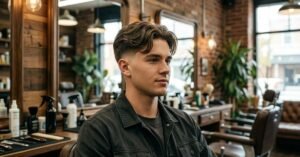
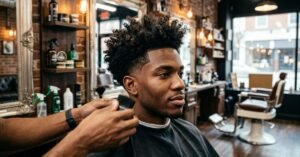
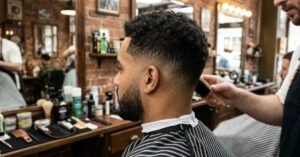
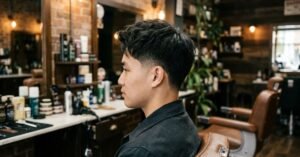
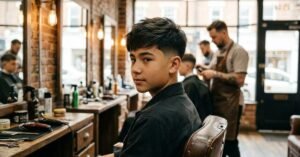
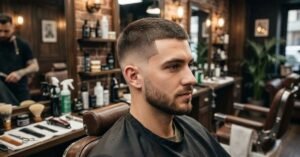
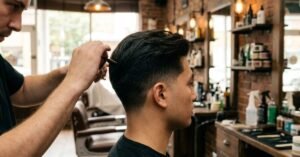
Low taper fade blonde hair pairs a soft, gradual cut at the sides and back with a light color on top. The taper starts low, near the ear and the nape, so the cut stays clean without looking harsh. Blonde adds brightness, dimension, and texture, which makes the fade blend look softer than it does on dark hair.
It works on straight, wavy, and curly hair, and it fits offices, gyms, and nights out. This guide explains how the cut works, who it suits, the 10 best styles, what to tell your barber, how to style it, and how to protect bleached hair so it stays bright and healthy through 2026.
What is a low taper fade on blonde hair?

A low taper fade is a haircut where the sides and back get gradually shorter toward the ears and neckline. The shortening starts low on the head, so most of the length stays above the temples. On blonde hair, the same cut looks lighter and softer because pale strands blend into the skin.
Low taper fade vs low fade vs skin fade
| Cut | Where it starts | Shortest length | Overall look |
| Low taper fade | Just above the ear and nape | Short stubble, not bare skin | Soft, subtle, easy to grow out |
| Low fade | Just above the ear and nape | Often bare skin | Sharper, more contrast |
| Skin (bald) fade | Low, mid, or high | Bare skin | Very sharp, needs frequent upkeep |
Why does blonde hair change the look of the fade?
Blonde hair reflects light and has less contrast with skin than dark hair. That changes how the blend reads in a few ways:
- Softer gradient: The fade looks smoother because there is no dark shadow between lengths.
- Skin shows through: On very short blonde hair, the scalp becomes visible, so pale skin can look more exposed.
- Texture pops: Blonde highlights layers and movement on top, so cuts with texture look fuller.
- Regrowth is obvious: Dark roots stand out against bleached lengths, especially at the nape and temples.
Ask your barber to blend carefully around the ears. Light hair shows uneven lines more easily than you might expect.
Does a low taper fade suit your hair?

Most people can wear this cut. Hair texture, face shape, density, and hairline decide which version looks best, so check these four before booking.
Which hair textures work best?
The cut adapts to every texture, but the top should match what your hair does naturally.
- Straight hair: Best for crisp fringes, side parts, and slick backs. Fine straight hair may need texture powder for grip.
- Wavy hair: The easiest to style. It gives natural volume with little effort.
- Curly hair: The taper keeps the sides neat while the curls on top take center stage.
- Coily hair: Works well when the top is shaped by an experienced barber. Bleaching coily hair needs extra care, as it is more fragile.
What about face shape, density, and hairline?
Match the length on top to your face and hair density.
- Round face: Add height on top with a quiff or textured crop to lengthen the face.
- Square face: Soft texture or a side part balances a strong jaw.
- Oval face: Most styles work, so choose by lifestyle.
- Long face: Keep the top shorter or fringed to avoid adding height.
- Thin hair: Choose a lower taper and a shorter top, since thinner hair can look sparse when bleached.
- Receding hairline: A textured fringe or a Caesar cut can soften the temples.
10 best low taper fade blonde hair styles
Textured fringe and messy crop
1. Textured fringe.
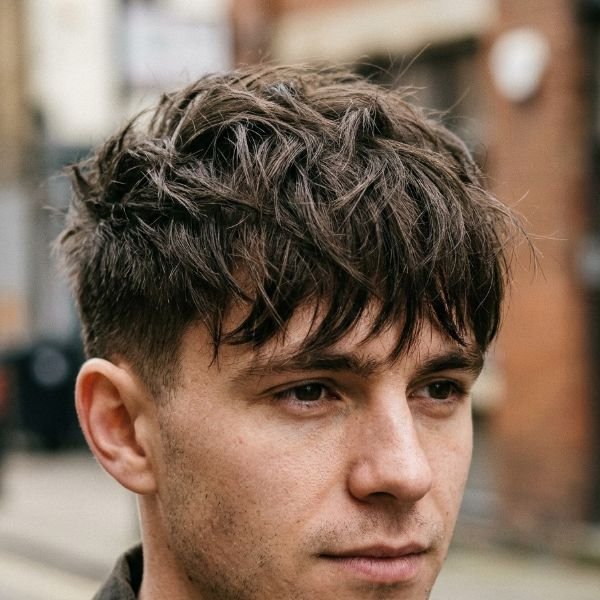
The top is cut with scissors and pushed forward into a choppy fringe, which is the front section of hair over the forehead. It is easy to wear and suits straight or wavy hair.
2. Messy crop.
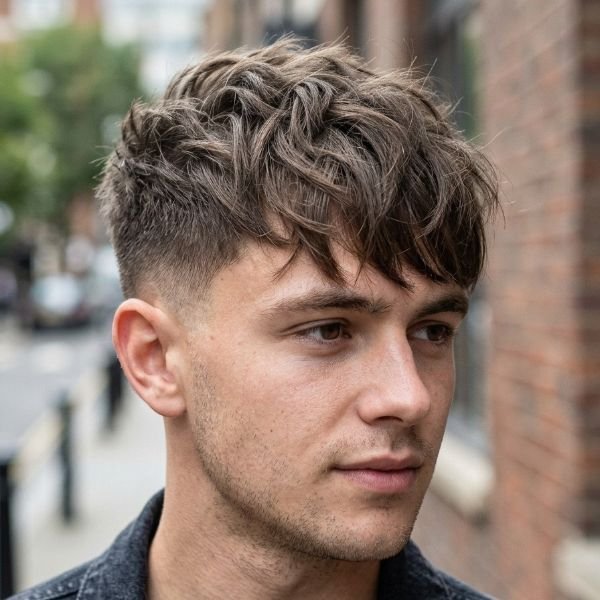
This is a short, uneven top with visible layers, styled with clay or paste. It adds volume to fine hair and hides cowlicks, the stubborn tufts that grow in odd directions.
Curly, wavy, and fluffy top
3. Curly top.
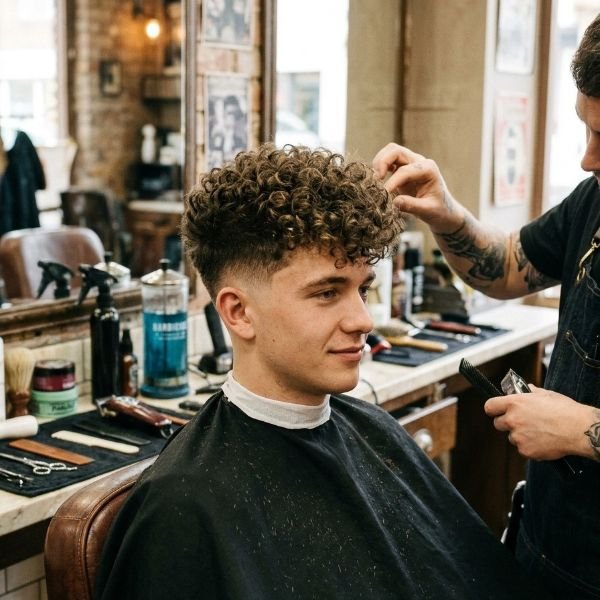
Keep 3 to 5 inches of length so the curls can form. A low taper fade keeps the sides tidy while blonde curls catch the light. Use a curl cream, not a heavy gel.
4. Wavy and fluffy top.

Cut the top longer and use a light mousse for body. Blow-drying it up and slightly back gives a fluffy, airy finish. This style grows out gracefully between visits.
Short crop, Caesar, and buzz cut
5. Short crop and Caesar cut.
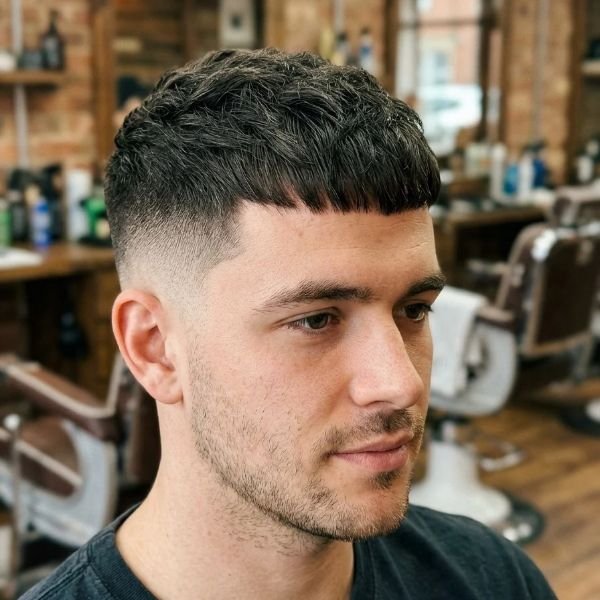
The Caesar is named after Julius Caesar, the Roman leader who was often shown with short hair combed forward. Today it means an even, short top with a straight fringe. It is low effort and works with a low taper fade.
6. Buzz cut.
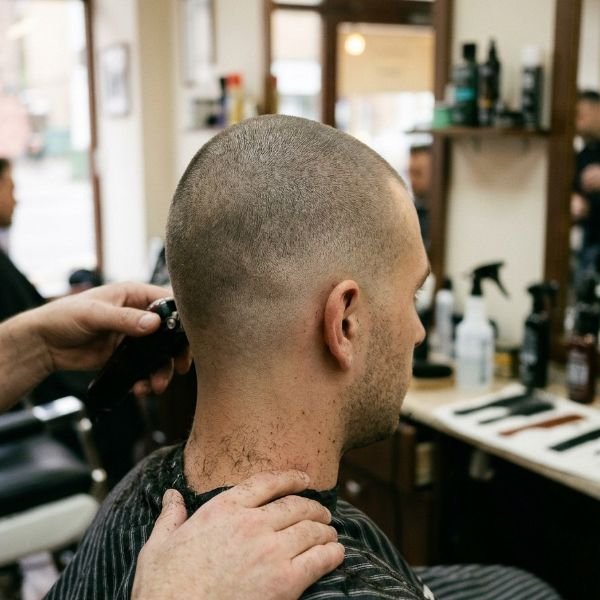
The whole top is cut with clippers to one length, often a #2 or #3 guard (the plastic attachment that sets cut length). Very light blonde can look almost translucent at this length, so choose a slightly longer guard if you dislike scalp show-through.
Quiff, side part, and slick back
7. Quiff.
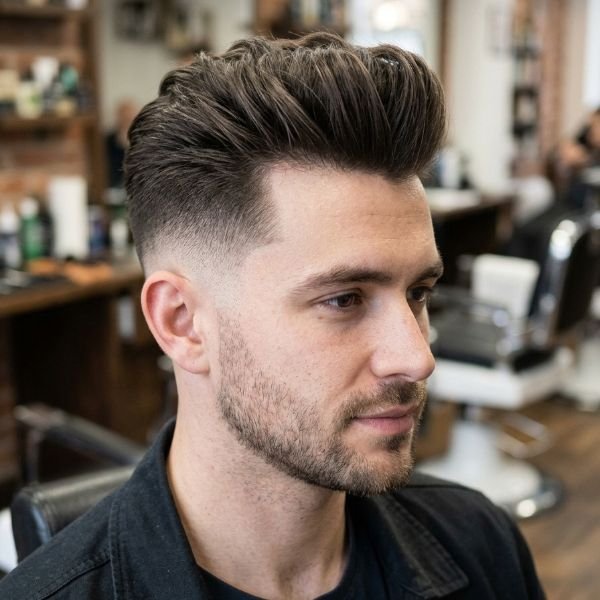
The front is lifted and swept up and back, with the sides kept short. It needs medium length on top and a blow dryer for the best lift.
8. Side part and slick back.

The side part is a neat parting set to one side, which suits office settings. The slick back combs the hair back with pomade, a styling product that gives shine and hold. On blonde hair, the polished finish looks bold and clean.
Blowout, mullet, and longer top
9 Blowout.
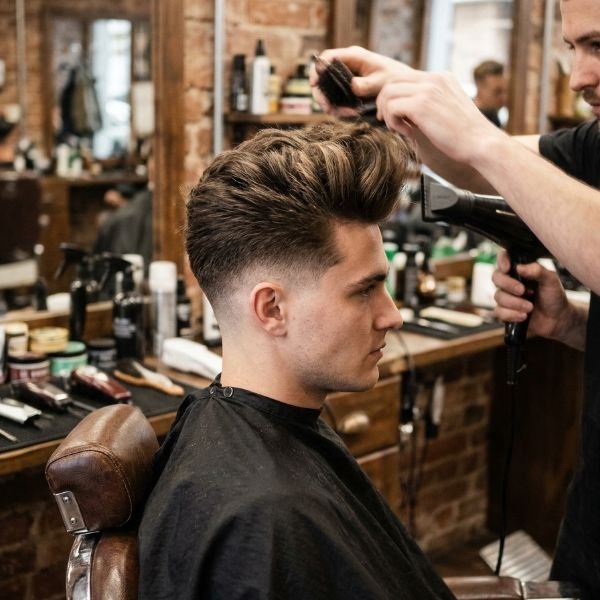
A blowout uses a dryer and brush to add volume and direction. Paired with a low taper, it gives a full, airy top that feels current and relaxed.
10. Mullet and longer top.

A mullet is short at the front and sides and longer at the back. A modern version keeps the back soft and blends the sides with a low taper. If you want a bigger change, a longer top with a low taper adds contrast without a harsh edge.
How do you ask a barber for this haircut?
A clear request saves time and prevents a cut that is too short. Barbers work faster when they see exactly what you want.
What reference photos should you bring?
Bring two or three photos, not ten. Choose images that show these things:
- The front, side, and back of the cut.
- A similar hair texture and color to yours.
- The exact length on top you want.
- The shade of blonde you like, if you are changing color.
Avoid photos with heavy filters or unusual lighting, since they hide real hair texture.
What exactly should you say?
Use specific terms. This simple script works in most shops:
- “I’d like a low taper fade, starting just above the ear.”
- “Please keep some length at the bottom, not down to skin.”
- “Leave about [x inches] on top, with texture.”
- “Blend carefully around the ears and neckline.”
- “Keep my sideburns natural” or “Square them off slightly.”
Tell the barber your color history. If your hair is bleached, ask them to avoid pulling the hair too tight with combs or clippers.
How do you style and maintain it?
Blonde hair needs more care than natural dark hair, but styling can stay simple.
What is the fastest daily styling routine?
Follow these five steps for a five-minute routine:
- Rinse or dampen your hair, and towel dry gently.
- Apply a heat protectant if you will use a dryer.
- Blow-dry the top, lifting at the roots.
- Add a pea-sized amount of clay, paste, or cream.
- Shape with your fingers and set with a light mist of spray.
Matte products usually look better than shiny gels on messy and textured styles. Use a lighter product on fine blonde hair so it does not look greasy.
How often should you refresh the cut and color?
The low taper fade stays neat for a while, but it does grow out. Here are typical timelines:
- Haircut refresh: Every 2 to 4 weeks for a sharp look.
- Root touch-up: Every 4 to 8 weeks, depending on how fast your hair grows and how dark your roots are.
- Toning: Every 4 to 6 weeks if brassiness appears.
Fade lines are most noticeable around week three. If you want a lower-maintenance routine, ask for a longer taper.
How do you keep blonde hair bright without over-toning?
Toning means using a color product to cancel unwanted yellow or orange tones. Purple shampoo does this with violet pigment. Use it too often and hair can turn dull, gray, or lilac.
- Use purple shampoo once a week, or every second wash.
- Leave it on for two to three minutes, not twenty.
- Switch to a sulfate-free shampoo and a moisturizing conditioner on other days.
- Rinse with cooler water, which helps protect color.
- Wear a hat in strong sun, and rinse hair after swimming to remove chlorine.
What are the risks and common mistakes?
Bleaching is the biggest risk with this style. Planning ahead helps you avoid most of the damage.
What should you know before bleaching?
Bleach lifts natural pigment, and that weakens the hair shaft. A study in The Journal of Dermatology, Significant damage of the skin and hair following hair bleaching, covers the harm repeated bleaching can cause to hair and skin. The American Academy of Dermatology (AAD), the largest dermatology association in the United States, also shares advice on avoiding hair damage.
Keep these points in mind:
- Have a professional colorist handle dark or previously dyed hair.
- Do a strand test first to see how your hair reacts.
- Space bleaching sessions by about 8 to 10 weeks when possible.
- Do not bleach irritated or sunburned skin.
- Stop and see a dermatologist if your scalp burns, blisters, or sheds excessively.
Short sides make this easier. Because a low taper fade removes length at the sides and back, less hair needs lightening there.
Which haircut and color mistakes should you avoid?
- Going too short on the sides: Pale skin shows through and can make the cut look harsh.
- Skipping regular trims: The taper loses its shape fast.
- Over-washing: It strips color and dries out bleached strands.
- Using too much purple shampoo: It causes dull, uneven tone.
- Ignoring skin tone: Cool blondes suit cool skin, and golden blondes suit warm skin.
- Applying too much product: Heavy wax weighs down fine hair and shows build-up.
- Bleaching again too soon: It raises the risk of breakage.
What are the best alternatives?
If this exact combination is not right for you, these options keep a similar feel:
- Mid taper fade: Starts higher for a bolder look.
- Drop fade: Curves behind the ear for a more modern line.
- Scissor-cut taper: Softer than clippers and good for longer hair.
- Ash or sandy blonde: Less demanding on color upkeep than platinum.
- Blonde highlights on natural hair: Less bleach and easier regrowth.
- Silver or white-blonde: Dramatic, but it needs more toning.
Frequently asked questions
What is a low taper fade?
It is a haircut that gradually shortens the sides and back, starting low near the ear and nape. The top stays longer.
Does a low taper fade work on blonde hair?
Yes. Blonde hair gives the blend a soft, light look, though skin can show through if you go too short.
Is a low taper fade the same as a skin fade?
No. A taper leaves short hair at the edges, while a skin fade goes down to bare skin.
How long does a low taper fade last?
It looks sharp for about 2 to 4 weeks before the lines soften.
How often should I bleach my hair?
Wait about 8 to 10 weeks between sessions when possible, and have a professional handle major lightening.
How do I stop my blonde hair from turning yellow?
Use purple shampoo once a week, limit heat, and avoid chlorine and strong sun without protection.
What should I tell my barber?
Ask for a low taper fade starting above the ear, with natural length at the bottom and the top length you want. Bring a photo.
Can men and women wear this style?
Yes. The cut works on any gender and any hair type, depending on the top style you choose.