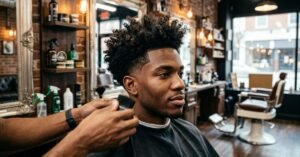
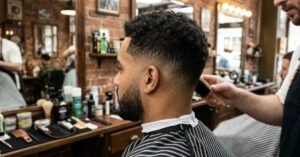
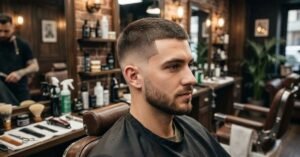
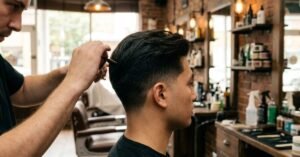
A mid taper fade for straight hair gives you clean, short sides and a top that holds its shape. Straight hair does not hide anything, so the blend shows up clearly. That is good news if the cut is done well, and a problem if it is not.
This guide explains what the cut is, who it suits, and how it compares with other tapers. You will also get eight styles, a script to read to your barber, home styling steps and a realistic touch-up schedule.
What is a mid taper fade on straight hair?
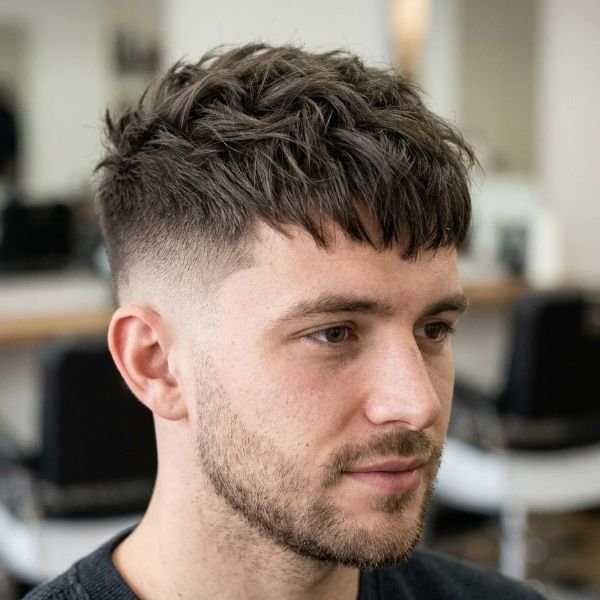
A mid taper fade on straight hair shortens the sides and back gradually, starting around the middle of the sides and finishing at the sideburns and neckline. The top stays longer, so the contrast between the sides and the top creates the shape.
In plain terms:
- Starts: about halfway up the sides, near ear level.
- Ends: at the sideburns and the nape.
- Bottom length: short, but often not bare skin.
- Top: any length you choose.
What makes it a “mid” taper rather than a mid fade?
The word “mid” tells you where the blend begins. The word “taper” tells you how far the shortening goes. A taper usually leaves some hair at the edges, while a fade blends all the way down to skin and often wraps further around the head.
Barbers use the two words loosely, so do not rely on the name. Say where the blend starts and how short it finishes.
How does straight hair change the finished look?
Straight hair lies flat and reflects light, so every line is visible. That brings three effects:
- The blend is easy to see. Smooth gradients look sharp, and rough spots look obvious.
- The top holds a clean outline. Straight strands keep a shape, such as a side part or a crop, without much effort.
- Volume needs help. Straight hair tends to sit down, so texture spray or a blow dry adds lift.
Is a mid taper fade a good choice for straight hair?

Yes, for most men. A mid taper fade for straight hair frames the top neatly, works with short and long styles, and looks right in an office or on a weekend. John Frieda notes that mid fades tend to suit oval and diamond faces, and that is a useful starting point.
It may be a poor fit if you hate frequent visits, or if you have very fine hair that looks thin when the sides are cut short. In those cases, a softer taper may be better.
How it compares with a low taper, mid fade, and high taper
| Cut | Starts | Bottom | Contrast | Upkeep |
|---|---|---|---|---|
| Low taper | Near sideburns and nape | Short | Low | Lowest |
| Mid taper fade | Middle of the sides | Short to very short | Medium | Medium |
| Mid fade | Around the temple, wraps head | Often skin | Medium to high | High |
| High taper | Around the temples | Very short | High | High |
Quick guide:
- Choose a low taper for a subtle, easy cut.
- Choose a mid taper for balance.
- Choose a mid fade for a sharper, skin level finish.
- Choose a high taper for bold contrast.
What to decide before booking the haircut
Make two decisions first. They shape everything your barber does.
What top length and style do you want?

Pick the top first. A short top needs almost no styling. A medium top allows a side part or a quiff. A long top gives movement and flow. Then check how much time you want to spend styling each morning.
How short and how high should the taper go?
Choose the starting point and the bottom length. Clipper guard numbers help you describe the finish. A number 1 guard leaves about 1/8 inch, a 2 leaves about 1/4 inch and a 3 leaves about 3/8 inch. You can also ask for “just above skin” if you want it very tight.
If you are unsure, start longer. A barber can always cut shorter next time.
Which mid taper fade styles work best with straight hair?
Here are eight styles, grouped by top length.
Short tops that need the least daily work
- Textured crop.
About 1 to 2 inches, cut with scissors and pushed forward. It is simple, tidy and quick. - Short Caesar fringe.
A short, straight fringe combed forward with a neat edge. It suits men who want a clean front line. - Short brush up.
The front is lifted slightly with a little paste. It gives a bit of height without much effort.
Medium-length styles that add texture or structure
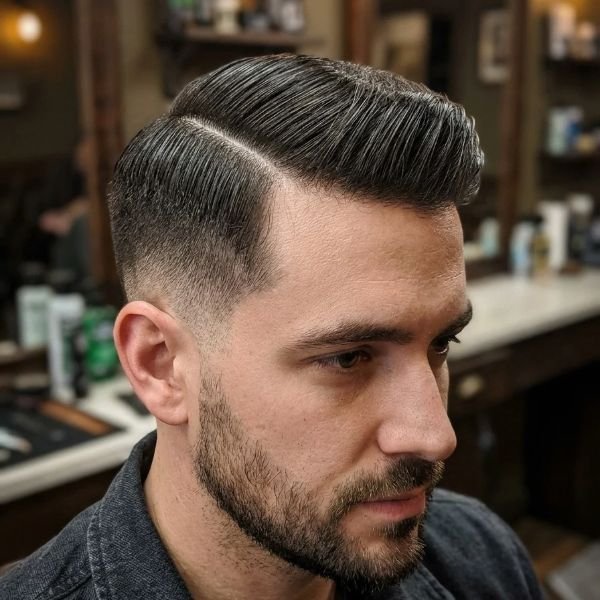
- Side part.
About 3 to 4 inches, parted on one side and combed neatly. It looks sharp for work and formal settings. - Textured quiff.
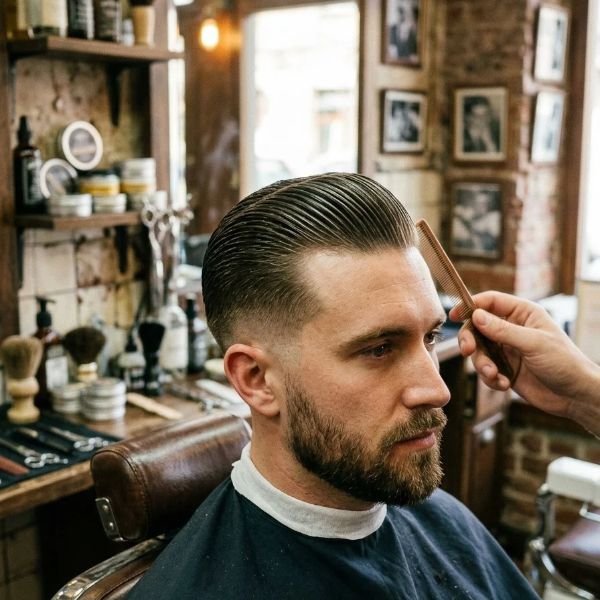
The front is lifted and the top is broken up with point cutting. It adds volume and personality. - Slick back.
The hair is combed back with a light pomade. The mid taper keeps the sides tidy and the shape polished.
Longer styles that preserve flow and movement
- Swept back flow. A longer top is brushed back and left to move. The taper keeps the sides slim while the length stays natural.
- Long textured fringe. The front falls forward with soft layers. It suits men who want a relaxed look with clean sides.
Choosing the right version for your hair and face
How density and strand thickness change the cut
- Thick, coarse straight hair: needs layering or thinning with shears so the top does not stand out like a block.
- Medium hair: holds most styles without trouble.
- Fine straight hair: looks best with a little more length on top and a softer taper, since very short sides can make thin hair look sparse. Use powder or texture spray for lift.
How face and head shape influence the silhouette
- Oval or diamond: a mid taper suits both.
- Round: add height on top with a quiff or brush up to lengthen the face.
- Square: most styles work. A softer top balances a strong jaw.
- Long or narrow: avoid too much height. A fringe or flatter top can help.
Head shape matters too. If the sides of your head are flat, ask your barber to check the blend from every angle.
How much styling and upkeep can you commit to?
Be realistic:
- Five minutes or less: choose a textured crop or Caesar.
- Ten minutes: choose a side part or quiff.
- Happy to blow dry: choose a swept back flow or a long fringe.
Also think about the barber schedule. Mid tapers look sharpest for the first two to three weeks, so decide how often you will visit.
What to ask your barber for
Cover four details: sides, top, neckline and finish. Bring photos from the front, side and back.
- Sides: “Mid taper fade, starting around the middle of the sides.”
- Bottom length: “Down to a number 1 or 2 at the sideburns and neckline.”
- Top: “About 3 inches on top, point cut for texture.”
- Neckline: “Tapered neckline” for a natural look, or “blocked” for a harder edge.
- Finish: “Natural hairline” or “sharp line up.”
Show a photo, but also say the words. A photo only shows one angle.
How to style a mid taper fade on straight hair at home
- Start with damp hair. Towel dry until it stops dripping.
- Add prep. A little sea salt or texture spray gives straight hair grip and body.
- Blow dry for shape. Dry the top upward and back for volume, or flat and forward for a crop.
- Choose a product. Matte clay or paste adds texture. A light pomade gives a polished finish. Avoid heavy gels that look stiff.
- Use a small amount. Rub a pea sized amount between your palms and work it through from the roots.
- Set the shape. Comb the part or fringe into place, and check the sides in a mirror.
Tips:
- Straight hair gets greasy quickly, so wash it every one to two days if needed and condition the ends.
- Lightweight products work best. Heavy products can flatten the top.
- If your hair falls flat by lunchtime, a quick spritz of texture spray brings it back.
How often does a mid taper fade need maintenance?
A mid taper fade on straight hair looks best for the first two to three weeks. Hair grows about half an inch a month, so the blend softens as it grows out.
Use this guide:
- Every 2 to 3 weeks: for the sharpest edges and a crisp line up.
- Every 3 to 4 weeks: a good balance for most men.
- Every 4 to 6 weeks: fine if you prefer a softer, grown in look.
Low tapers last longer between visits. Mid fades and skin fades need more frequent trims. Between appointments, you can tidy the neckline lightly with a trimmer, but leave the blend to your barber.
Frequently asked questions
Is a mid taper fade good for straight hair?
Yes. A mid taper fade on straight hair shows a clean blend and holds the top shape well.
What is the difference between a mid taper and a mid fade?
A mid taper usually leaves more hair at the edges, while a mid fade often goes to skin with stronger contrast.
How long should straight hair be on top for a mid taper?
Most men keep 1 to 4 inches on top, depending on whether they want a crop, a side part or a quiff.
What guard number should I ask for on a mid taper fade?
A number 1 or 2 at the bottom suits most men, or ask for just above skin for a tighter finish.
How often should I get a mid taper fade touched up?
Every 2 to 3 weeks keeps it sharp, and every 4 to 6 weeks works for a softer look.
Does a mid taper fade work with fine or thinning straight hair?
It can, but keep the top longer and the taper softer so the sides do not highlight thin areas.
What products work best on straight hair with a mid taper fade?
Matte clay, paste, sea salt spray and a light pomade, depending on the finish you want.
Can I wear a mid taper fade to the office?
Yes. A side part or short crop with a natural hairline looks neat in a professional setting.
What to do before your appointment
Use this checklist before you book a mid taper fade on straight hair:
- Decide your top length and style.
- Choose where the taper should start and how short the bottom goes.
- Save photos showing the front, side and back.
- Pick a natural hairline or a sharp line up.
- Mention cowlicks, thinning or sensitive skin.
- Ask how often you should come back.
- Ask your barber how to style it at home.
In short, a mid taper fade for straight hair works because the blend and the top shape both show clearly. Pick the style that fits your time and your face, give your barber specific details, and keep to a regular trim schedule. Do those three things and the cut will look sharp from the first day to the last.
Want more taper fade guides?
If you are still comparing options, read about the low taper, the high taper and the mid fade next. Each one changes the contrast and upkeep, so seeing them side by side makes the choice easier.