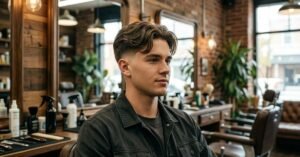
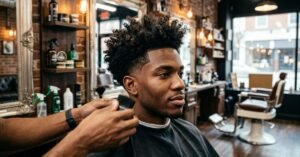
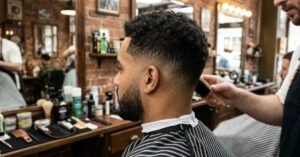
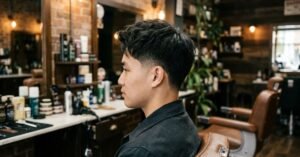
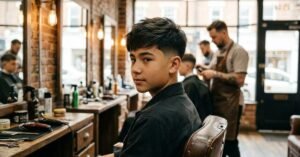
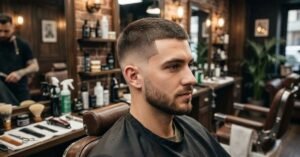
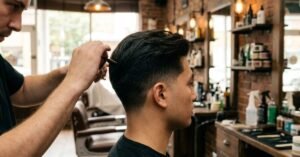
A burst fade for curly hair is a clipper cut that curves in a half circle around the ear and into the neckline, while the curls on top keep their length and shape. Low, mid, and high versions change how bold the contrast looks. for
The best choice depends on your curl pattern, density, face shape, and how often you can visit a barber. This guide covers each style, how to match it to your hair, the exact words to say in the chair, and how to style, protect, and grow it out step by step. It also explains what to do when bumps, patchy blends, or flat curls appear after the cut.
What is a burst fade on curly hair?

A burst fade shortens the hair in a rounded arc around the ear. The arc then runs into the neckline, and the hair above it stays long. On curls, the top keeps its natural spring while the sides get clean and tight.
Luxe Digital describes the shape as a fade that curves in a half circle around the ear. That curve is what separates it from a straight fade or a gradual taper.
Which parts of the haircut can be customized?
Almost every part of a burst fade can change. Each choice shifts the final look, so decide on them before you sit down.
- Height: where the arc starts (low, mid, or high).
- Finish: how short the shortest point gets (bare skin, a zero guard, a shadow, or a guard number).
- Top length: how many inches stay on top, judged on dry hair.
- Back and neckline: curly, tapered, blocked, or long enough for a mullet.
- Top shape: rounded, fringe, frohawk, or a defined crop.
- Front edge: a sharp line-up or a natural hairline.
Why does the burst shape work with curls?
Curls need contrast to look defined. Short sides make a full top look intentional rather than bulky.
The arc also keeps weight at the back and crown. That helps the head keep a rounded outline instead of a sudden step. And because the fade does the shaping, the top can be left mostly alone, which protects your curl pattern.
Will a burst fade suit your curls?

Most curl types can wear it. The result depends on hair traits first and head shape second.
What hair factors matter most?
These factors decide how the fade will look and how long it will last:
- Curl pattern: The Andre Walker system, created by a celebrity stylist, ranks hair from 1 (straight) to 4 (coily), with letters a to c for tightness. Curly Nikki notes the style is worn on textures from 2a to 4c.
- Density: Thick hair holds a strong contrast. Fine or low density hair can look sparse under a high skin fade, so Taper Trends suggests a low or mid shadow burst instead.
- Strand thickness: Coarse strands show a fade line clearly. Thin strands blend softly.
- Shrinkage: Curls shrink as they dry, so top length should be judged dry.
- Growth patterns: Cowlicks and crown swirls change where the arc should sit. Point them out before clippers touch your head.
- Tight coils and height: High fades can work on tight coils when the barber blends slowly. A rushed blend looks patchy.
What face, head-shape, and lifestyle factors matter?
| Face shape | Best starting height | Why it works |
| Oval | Any height | Balanced proportions suit most versions |
| Round | Mid to high with extra top volume | Height on top slims the face |
| Square | Mid | Curls soften strong jaw angles |
| Diamond | Low to mid | Tight sides avoid extra width at the cheeks |
| Long | Low with a fringe | A tall top on a high fade makes the face look longer |
Lifestyle matters just as much:
- Dress codes: Schools, workplaces, and the military may limit skin fades. A low burst or burst taper is the safest.
- Styling time: Short, loose curls need little. Longer tops need a routine.
- Upkeep: High skin fades need the most visits.
- Sport and headwear: Helmets and caps flatten the top, so plan for refresh time.
- Scalp sensitivity: Very close cuts can irritate some skin (see the irritation section below).
Should you choose a low, mid, or high burst fade?

| Low | Mid | High | |
| Arc starts | Just above the hairline, near the ear | Around the temple midpoint | Near the temple and above |
| Contrast | Subtle | Balanced | Strong |
| Side length kept | Most | Moderate | Least |
| Best for | First timers, dress codes, easy grow out | Everyday default | Bold, high contrast looks |
Use this quick rule:
- Choose low if you want a soft look or a long gap between cuts.
- Choose mid if you want visible contrast without extra upkeep.
- Choose high if the fade itself should be part of the look and you accept more visits.
Barbers do not place heights in exactly the same spot. A “mid” at one shop can look like a “low mid” at another. Bring photos to avoid surprises.
Which curly burst fade style should you show your barber?
Pick the group that matches your comfort level. Each style below includes a short line you can read out.
Which options look subtle and grow out softly?
Low shadow burst fade

The arc stays close to the ear and finishes in a soft shadow instead of bare skin. It reads as a neat haircut first and a fade second.
Low burst fade with short curls or cropped coils

Short curls give a tidy, structured shape and need almost no styling. Ask the barber to keep the curls short but still curly, not buzzed flat.
Low burst fade with a natural or tapered neckline
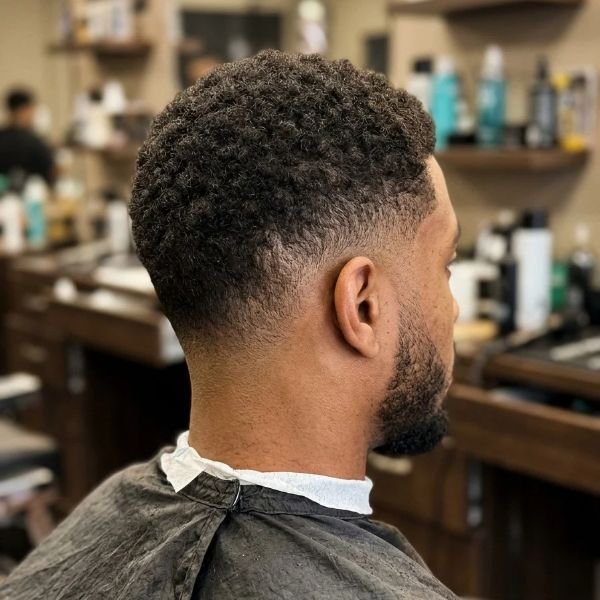
A natural neckline leaves the nape curly and soft. A tapered neckline cleans it up gradually. Both avoid a hard line that shows quickly as hair grows.
Which options balance contrast and everyday versatility?
Mid burst fade with defined curls

This is the most reliable all-rounder. Curls sit at two to four inches, and the mid arc gives clear contrast. It works for the office, the gym, and a night out.
Burst fade with curly fringe

The curls fall forward over the forehead, which softens the front and suits longer faces. Leave enough length for curls to reach the eyebrows once they dry.
Mid burst fade with a rounded curly top

The top is shaped into a soft dome that blends into the crown. It suits oval and square faces and looks tidy with little effort.
Which options preserve length and make a bolder statement?
High burst fade with volume

The arc climbs near the temple and the top stands tall. This is the strongest contrast, so a slow, careful blend matters most on tight curls.
Curly burst-fade mullet

Short sides sit beside a longer, curly back. Because the arc leaves the nape alone, the mullet length has room to show. It is not the same as a plain burst fade, though the two often appear together.
Curly frohawk or mohawk

The sides drop away and a strip of curls runs front to back. Keep the fade mid or high for sharp contrast. A tall frohawk on a long face can add height, so balance it with length at the sides.
Burst fade vs drop fade vs taper: what is the difference?
| Burst fade | Drop fade | Taper | |
| Shape | Half circle around the ear | Line dips behind the ear | Gradual, even blend at the edges |
| Look | Rounded and soft arc | Angular and sharp | Subtle and classic |
| Often paired with | Mullet, mohawk, curls | Short crops, waves | Almost any style |
How do you ask your barber for a curly burst fade?
Clear words beat vague ones. “Burst fade” alone leaves too much open.
Which six decisions should you make first?
Decide these in order before booking:
- Height: low, mid, or high.
- Finish: skin, zero, shadow, or a guard number. Do not assume “burst” means skin.
- Top length: in inches, judged on dry hair.
- Back and neckline: curly, tapered, blocked, or mullet length.
- Top shape: rounded, fringe, or frohawk.
- Front edge: sharp line-up or natural hairline.
What should your barber brief and reference photos include?
Show two or three photos: one front, one side, and one from behind. Choose images of similar curl texture to yours.
Also tell your barber:
- Your curl type and how much it shrinks.
- Your cowlicks, crown swirl, or thin spots.
- That you want a dry cut or near dry cut, with no thinning shears.
- Whether your skin gets bumps from close cuts.
- That you prefer clippers over a razor on the neckline.
Here is a script you can adapt:
“I’d like a mid burst fade curving around my ears, finished at a short guard, not skin. Keep the top natural at about three inches on dry hair, no thinning, and a tapered neckline. I get bumps with close shaves, so please use clippers, not a razor.”
Pick a barber who cuts textured hair often. Kurli points out that blending a fade into tight curls takes practice.
How should you style a curly burst fade?
The fade holds its own shape, so styling is mostly about the top. Define the curls, avoid frizz, and keep the edges neat.
What is the fastest daily routine?
This routine takes five to ten minutes:
- Mist your hair with water until it is damp, not dripping.
- Rake a curl cream through with your fingers.
- Scrunch upward to encourage curl clumps.
- Add a light gel for hold if your curls loosen by midday.
- Dry with a diffuser on low to medium heat, or air dry.
- Do not touch the curls until they are fully dry, then fluff gently at the roots.
A diffuser spreads airflow evenly, which lifts the roots and adds body without roughing up the curls.
How do you care for curly hair between cuts?
Dry curls look fuzzy against a clean fade. Hydration is the main job.
What should wash-day care include?
A basic wash day looks like this:
- Cleanse with a gentle shampoo and focus on the scalp.
- Condition generously and detangle with your fingers or a wide tooth comb while the conditioner is in.
- Deep condition about once a week if your hair feels dry.
- Apply leave in conditioner, then your styling product, while hair is wet.
- Protect your faded sides from sun. The skin there is newly exposed and can burn.
How should you protect curls overnight?
Friction is the enemy. Sleep on a satin or silk pillowcase, or wear a satin bonnet. Longer tops can be gathered loosely on top of the head. In the morning, refresh with a water mist and a little cream instead of a full wash.
How often should you refresh a curly burst fade?
A common range is every two to four weeks for mid and high fades, and four to six weeks for low fades. Treat that as a rough start, not a rule.
What signals matter more than a fixed calendar?
Watch for these signs:
- The arc looks blurry or hazy near the ear.
- The neckline has lost its shape.
- The top feels heavy and no longer holds its dome or fringe.
- Edges look fuzzy even after styling.
- You notice new growth behind the ears first, since that area grows fast.
Higher and closer fades show regrowth sooner. Low shadow cuts forgive more.
How do you grow out a curly burst fade cleanly?
A clean grow out takes planning, not just waiting. Follow these steps:
- Ask your barber for a taper or a low burst at your next visit instead of skin.
- Keep the neckline neat with a quick tidy every few weeks.
- Let the sides lengthen while the top stays shaped.
- Switch to a mid taper when the sides reach a few inches.
- Condition more often, because longer curls dry out faster.
- Trim only the ends and shape the sides once the blend disappears.
What can go wrong, and how do you fix it?
Most problems come from communication, wet cutting, or too much contrast. Most are fixable.
Which haircut or styling mistakes are most common?
| Problem | Likely cause | Fix |
| Top looks too short after drying | Cut wet, shrinkage ignored | Ask for dry cutting and give inches |
| Patchy or harsh fade | High fade on tight or sparse curls | Go lower or ask for a slower blend |
| Frizzy top | Thinning shears or heavy brushing | Skip thinning; use cream and a diffuser |
| Uneven arc | Cowlick or head shape ignored | Point out swirls first; ask for balance checks |
| Fade looks too bold | Skin finish and high start | Ask for a shadow or guard finish |
| Flat curls | Product on dry hair or over-touching | Style while damp; avoid touching as it dries |
When should irritation or bumps change the plan?
Close cuts can irritate curly hair. A condition called pseudofolliculitis barbae (razor bumps) happens when cut curly hairs curve back and pierce the skin. A review in the Journal of Drugs in Dermatology notes it is more likely in people with curly hair. A separate set of bumps, called acne keloidalis nuchae, can form at the back of the head and neck.
Change your plan if you notice:
- Red or dark bumps along the neckline or behind the ears.
- Itching or pain after each cut.
- Pustules, swelling, or signs of infection.
What to do:
- Ask for a longer finish such as a shadow or guard number, and for clippers instead of a razor.
- Avoid picking or squeezing the bumps.
- Let the area rest between cuts when possible.
University of Iowa Health Care advises that stopping shaving or plucking helps active bumps improve within weeks. If they persist, scar, or look infected, see a dermatologist. GoodRx adds that infection risk exists but is rarely serious.
What are the best alternatives to a curly burst fade?
If the burst shape does not fit your head, hair, or dress code, try one of these:
- Low taper: gentle, easy to grow out, and workable for most curls.
- Mid taper or taper fade: clean sides without the circular arc.
- Drop fade: a sharper line that dips behind the ear.
- Temple fade: short around the temples with natural length elsewhere.
- Undercut with curly top: a sharper contrast with a hard disconnect.
- Scissor-cut sides: soft, natural, and the lowest upkeep.
Curly burst fade FAQs
Is a burst fade good for curly hair?
Yes, because the short arc around the ear makes curls look defined while the top keeps its natural shape.
Which burst fade height is best for curls?
A low or mid burst is the safest. A high burst works too when the blend is gradual.
Does a burst fade work on tight coils or 4c hair?
Yes. Ask for a slow blend, dry cutting, and a shape that keeps the top full.
How long should curls be on top?
Two to four inches on dry hair suits most people. Ask your barber to account for shrinkage.
How often do I need a refresh?
Most people need one every two to four weeks for mid or high fades. Low fades can wait longer.
Can I get a burst fade with a beard?
Yes. Blend the beard into the burst arc at the sideburn so the line looks continuous.
What should I say to my barber?
Say the height, the finish, the top length in inches, the neckline, and ask for a dry cut with no thinning.